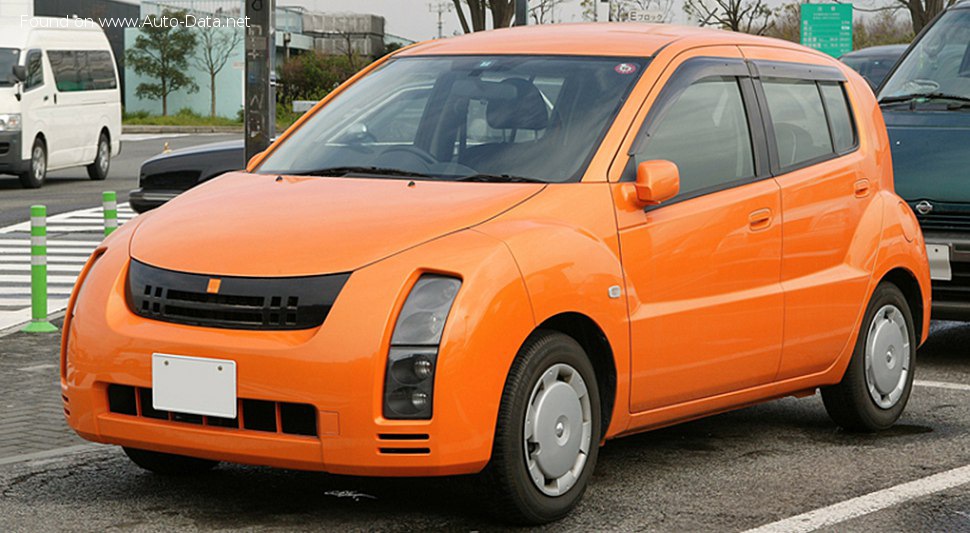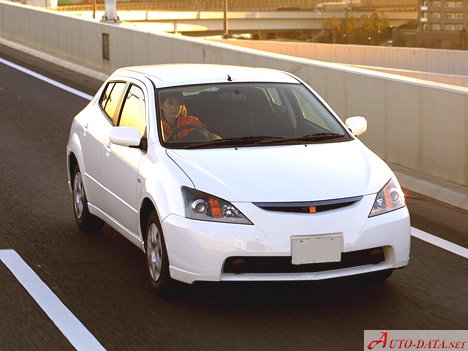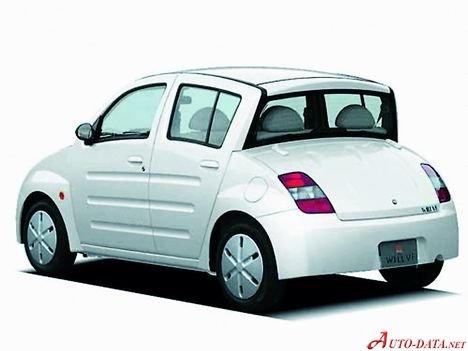
The Toyota Will Vi 1.3 i 16V, produced between 2000 and 2001, was a compact sedan primarily aimed at the Japanese domestic market (JDM). Positioned as an affordable and practical vehicle, the Will Vi represented Toyota’s effort to cater to the needs of first-time car buyers and those seeking economical transportation. While not officially sold in the United States, understanding the Will Vi provides insight into Toyota’s global strategy during the early 2000s and the features valued by Japanese consumers at the time. It competed with other subcompact sedans like the Nissan Bluebird Sylphy and Honda Civic. The “Vi” designation signified a variation within the Will lineup, typically indicating a focus on value and efficiency.
Toyota Will Vi: An Overview
The Toyota Will was a series of compact cars produced from 1997 to 2001. The Will Vi, introduced in 2000, was a facelifted version offering updated styling and minor mechanical refinements. It was designed to appeal to a younger demographic with its relatively modern aesthetics and focus on fuel economy. The vehicle’s compact dimensions made it well-suited for navigating crowded urban environments, a key consideration in Japanese cities. The Will Vi’s success was largely dependent on its competitive pricing and Toyota’s reputation for reliability.
Engine & Performance
The Toyota Will Vi 1.3 i 16V was powered by the 2NZ-FE 1.3-liter inline-four cylinder gasoline engine. This naturally aspirated engine produced 88 horsepower at 6000 rpm and 123 Nm (90.72 lb-ft) of torque at 4400 rpm. While not a performance-oriented vehicle, the 2NZ-FE provided adequate power for everyday driving. The engine featured multi-port fuel injection and a double overhead camshaft (DOHC) valvetrain, contributing to its relatively efficient operation. The engine’s power-to-weight ratio was 10.7 kg/Hp, and its torque-to-weight ratio was 7.6 kg/Nm. The Will Vi was equipped with a four-speed automatic transmission, delivering power to the front wheels. Maximum speed was rated at 165 km/h (102.53 mph). Fuel economy figures were respectable for the era, achieving approximately 8 liters per 100 kilometers (29.4 US mpg) in urban driving and 5 liters per 100 kilometers (47 US mpg) on the highway.
Design & Features
The Toyota Will Vi was a four-door sedan with a relatively conservative, yet modern, design for its time. Its exterior styling featured rounded edges and a simple, uncluttered aesthetic. The interior was designed to maximize space within the compact dimensions, offering seating for five passengers. Features included standard amenities such as air conditioning, power steering, and an AM/FM radio. Safety features, while not as comprehensive as those found in modern vehicles, included an Anti-lock Braking System (ABS). The vehicle’s dimensions were 3670 mm (144.49 in) in length, 1660 mm (65.35 in) in width, and 1580 mm (62.2 in) in height, with a wheelbase of 2370 mm (93.31 in). The curb weight of the Will Vi was 940 kg (2072.35 lbs). The 165/65 R15 tires provided a comfortable ride and adequate grip for typical driving conditions.
Technical Specifications
| Brand | Toyota |
| Model | Will |
| Generation | Will Vi |
| Type (Engine) | 1.3 i 16V (88 Hp) |
| Start of production | January, 2000 |
| End of production | December, 2001 |
| Powertrain Architecture | Internal Combustion engine |
| Body type | Sedan |
| Seats | 5 |
| Doors | 4 |
| Fuel consumption (urban) | 8 l/100 km (29.4 US mpg) |
| Fuel consumption (extra urban) | 5 l/100 km (47 US mpg) |
| Fuel Type | Petrol (Gasoline) |
| Maximum speed | 165 km/h (102.53 mph) |
| Weight-to-power ratio | 10.7 kg/Hp |
| Weight-to-torque ratio | 7.6 kg/Nm |
| Power | 88 Hp @ 6000 rpm |
| Power per litre | 67.7 Hp/l |
| Torque | 123 Nm @ 4400 rpm (90.72 lb.-ft. @ 4400 rpm) |
| Engine layout | Front, Transverse |
| Engine Model/Code | 2NZ-FE |
| Engine displacement | 1299 cm3 (79.27 cu. in.) |
| Number of cylinders | 4 |
| Engine configuration | Inline |
| Cylinder Bore | 75 mm (2.95 in.) |
| Piston Stroke | 73.5 mm (2.89 in.) |
| Compression ratio | 10.5:1 |
| Number of valves per cylinder | 4 |
| Fuel injection system | Multi-port manifold injection |
| Engine aspiration | Naturally aspirated engine |
| Valvetrain | DOHC |
| Engine oil capacity | 3.7 l (3.91 US qt | 3.26 UK qt) |
| Coolant | 4.4 l (4.65 US qt | 3.87 UK qt) |
| Kerb Weight | 940 kg (2072.35 lbs.) |
| Fuel tank capacity | 45 l (11.89 US gal | 9.9 UK gal) |
| Length | 3670 mm (144.49 in.) |
| Width | 1660 mm (65.35 in.) |
| Height | 1580 mm (62.2 in.) |
| Wheelbase | 2370 mm (93.31 in.) |
| Front track | 1450 mm (57.09 in.) |
| Rear track | 1430 mm (56.3 in.) |
| Drivetrain Architecture | ICE, Front wheel drive |
| Drive wheel | Front wheel drive |
| Number of gears | 4 |
| Gearbox type | automatic transmission |
| Front suspension | Spring Strut |
| Rear suspension | Coil spring |
| Front brakes | Ventilated discs |
| Rear brakes | Drum |
| Assisting systems | ABS (Anti-lock braking system) |
| Steering type | Steering rack and pinion |
| Power steering | Hydraulic Steering |
| Tires size | 165/65 R15 |
The Toyota Will Vi 1.3 i 16V, while not a groundbreaking vehicle, represents a significant example of Toyota’s commitment to providing affordable and reliable transportation to a broad range of consumers. Its focus on fuel efficiency and practicality made it a popular choice in the Japanese market during its production run. Although never sold in the US, it exemplifies the engineering principles and market considerations that shaped Toyota’s global success.