
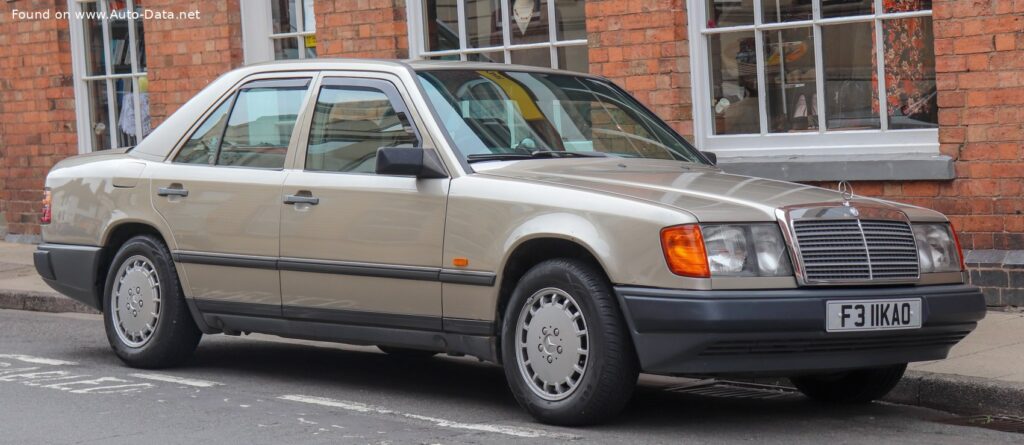
The Mercedes-Benz W124 300 D represents a pivotal point in the manufacturer’s mid-size sedan lineage, produced from March 1984 to August 1989. Part of the W124 series, it was designed as a replacement for the W201 (190E) and W123 models, offering a blend of luxury, durability, and advanced engineering for its time. The 300 D, specifically, was a diesel-powered variant aimed at buyers prioritizing fuel efficiency and longevity. While not initially a high-volume seller in the United States due to evolving emissions regulations and a growing preference for gasoline engines, the W124 series, and the 300 D in particular, gained a strong reputation for its build quality and reliability, becoming a sought-after classic among enthusiasts.
The Mercedes-Benz W124 300 D: A Legacy of Engineering
The W124 series was a significant departure from its predecessors, incorporating substantial improvements in safety, comfort, and overall refinement. Mercedes-Benz invested heavily in research and development, resulting in a vehicle that set new standards for its class. The 300 D, powered by a robust inline-six diesel engine, offered a compelling alternative to gasoline-powered competitors, particularly in European markets where diesel fuel was more affordable and readily available. Its design prioritized passenger safety, featuring a reinforced passenger cell and crumple zones, innovations that were relatively advanced for the mid-1980s.
Engine & Performance
The heart of the W124 300 D is its 3.0-liter (2996 cm³) inline-six cylinder diesel engine, designated the OM 603 D 30 / 603.912. This engine produces 109 horsepower at 5000 rpm and 210 Nm (154.89 lb.-ft.) of torque at 2200 rpm. While the horsepower figure might seem modest by modern standards, the engine’s torque delivery provides strong low-end and mid-range acceleration, making it well-suited for long-distance cruising and hauling passengers. The engine utilizes precombustion chamber injection, a technology common in Mercedes-Benz diesels of the era, to improve combustion efficiency and reduce emissions. Acceleration from 0 to 100 km/h (0-62 mph) takes approximately 13.7 seconds, and it achieves a maximum speed of 190 km/h (118.06 mph). Fuel economy is a strong point, with combined cycle consumption rated at 7.4 l/100 km (31.8 US mpg, 38.2 UK mpg). The engine’s longitudinal front-engine layout contributes to balanced handling characteristics. A five-speed manual transmission was standard, providing drivers with precise control over the powertrain.
Design & Features
The W124 300 D is a four-door sedan with a classic, understated design. Its body lines are characterized by clean surfaces, a relatively upright stance, and a focus on aerodynamic efficiency. The interior is spacious and well-appointed, offering comfortable seating for five passengers. The dashboard layout is functional and ergonomically designed, with clear instrumentation and easy-to-reach controls. Features included power steering (hydraulic), disc brakes on all four wheels, and a robust suspension system – wishbone front suspension and independent multi-link coil spring rear suspension – designed to provide a comfortable ride and stable handling. Safety features, while not as comprehensive as those found in modern vehicles, were advanced for the time and included a reinforced passenger cell and crumple zones. The trunk offers a generous 520 liters (18.36 cu. ft.) of storage space. The W124’s build quality is renowned, with attention paid to detail and the use of high-quality materials, contributing to its longevity and enduring appeal.
Technical Specifications
| Brand | Mercedes-Benz |
| Model | W124 |
| Generation | W124 |
| Type (Engine) | 300 D (109 Hp) |
| Start of production | March, 1984 |
| End of production | August, 1989 |
| Powertrain Architecture | Internal Combustion engine |
| Body type | Sedan |
| Seats | 5 |
| Doors | 4 |
| Fuel consumption (urban) | 9.8 l/100 km (24 US mpg, 28.8 UK mpg, 10.2 km/l) |
| Fuel consumption (extra urban) | 5.4 l/100 km (43.6 US mpg, 52.3 UK mpg, 18.5 km/l) |
| Fuel consumption (combined) | 7.4 l/100 km (31.8 US mpg, 38.2 UK mpg, 13.5 km/l) |
| Fuel Type | Diesel |
| Acceleration 0 – 100 km/h | 13.7 sec |
| Acceleration 0 – 62 mph | 13.7 sec |
| Acceleration 0 – 60 mph | 13 sec |
| Maximum speed | 190 km/h (118.06 mph) |
| Weight-to-power ratio | 14.3 kg/Hp, 69.9 Hp/tonne |
| Weight-to-torque ratio | 7.4 kg/Nm, 134.6 Nm/tonne |
| Power | 109 Hp @ 5000 rpm |
| Power per litre | 36.4 Hp/l |
| Torque | 210 Nm @ 2200 rpm (154.89 lb.-ft. @ 2200 rpm) |
| Engine layout | Front, Longitudinal |
| Engine Model/Code | OM 603 D 30 / 603.912 |
| Engine displacement | 2996 cm³ (182.83 cu. in.) |
| Number of cylinders | 6 |
| Engine configuration | Inline |
| Cylinder Bore | 87 mm (3.43 in.) |
| Piston Stroke | 84 mm (3.31 in.) |
| Compression ratio | 22:1 |
| Number of valves per cylinder | 2 |
| Fuel injection system | Precombustion chamber injection |
| Engine aspiration | Naturally aspirated engine |
| Valvetrain | SOHC |
| Engine oil capacity | 7.5 l (7.93 US qt | 6.6 UK qt) |
| Coolant | 9.5 l (10.04 US qt | 8.36 UK qt) |
| Kerb Weight | 1560 kg (3439.21 lbs.) |
| Max. weight | 2050 kg (4519.48 lbs.) |
| Max load | 490 kg (1080.27 lbs.) |
| Trunk (boot) space – minimum | 520 l (18.36 cu. ft.) |
| Fuel tank capacity | 70 l (18.49 US gal | 15.4 UK gal) |
| Length | 4740 mm (186.61 in.) |
| Width | 1740 mm (68.5 in.) |
| Height | 1431 mm (56.34 in.) |
| Wheelbase | 2800 mm (110.24 in.) |
| Front track | 1501 mm (59.09 in.) |
| Rear (Back) track | 1491 mm (58.7 in.) |
| Drivetrain Architecture | Rear wheel drive |
| Number of gears and type of gearbox | 5 gears, manual transmission |
| Front suspension | Wishbone |
| Rear suspension | Independent multi-link suspension, Coil spring |
| Front brakes | Disc |
| Rear brakes | Disc |
| Steering type | Cone worm with recirculation balls |
| Power steering | Hydraulic Steering |
| Tires size | Front wheel tires: 195/65 R15Rear wheel tires: 195/65 R15 |
| Wheel rims size | Front wheel rims: 6.5J x 15Rear wheel rims: 6.5J x 15 |
The Mercedes-Benz W124 300 D remains a highly regarded vehicle, celebrated for its engineering excellence, durability, and timeless design. Its robust diesel engine and comfortable ride continue to appeal to enthusiasts and collectors, ensuring its place as a significant model in Mercedes-Benz history.
