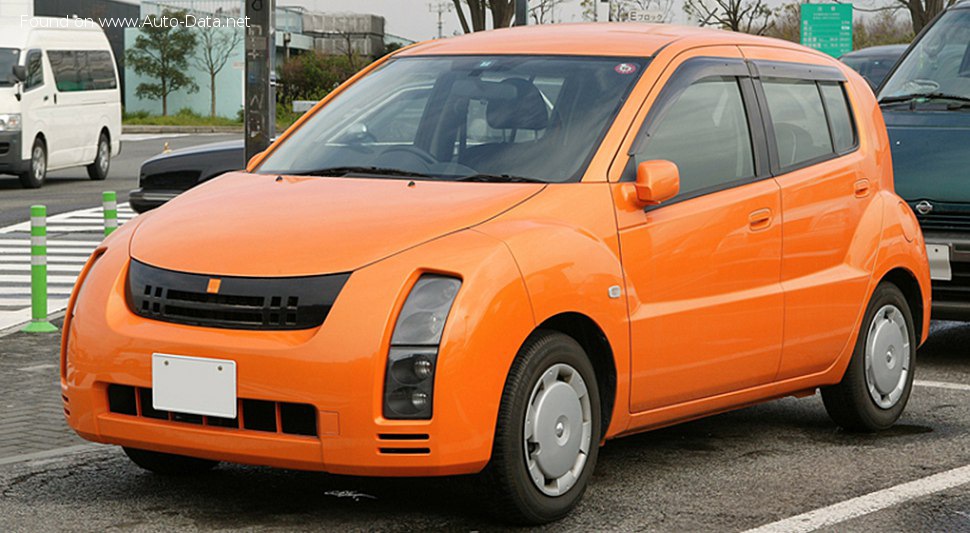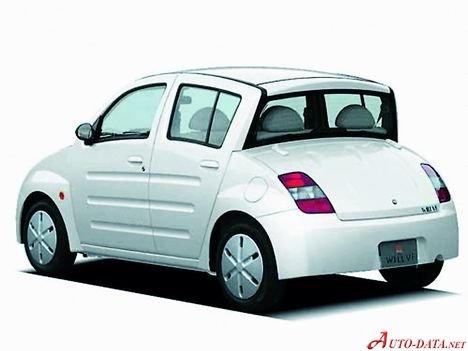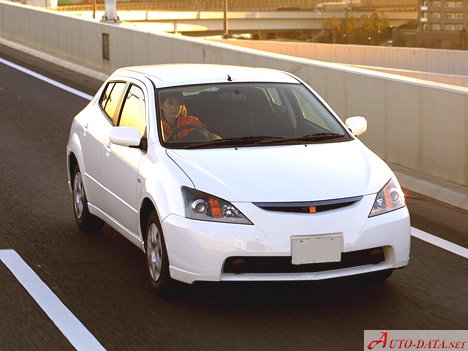
The Toyota Will VS, produced between 2001 and 2004, was a compact hatchback primarily aimed at the Japanese domestic market (JDM). It represented Toyota’s attempt to cater to a segment desiring a stylish, practical, and relatively affordable vehicle. While not officially sold in the United States, the Will VS offers a glimpse into Toyota’s design and engineering philosophies of the early 2000s. It competed with other Japanese Kei cars and subcompacts, offering a slightly larger and more refined experience than some of its rivals. The “VS” designation denoted a specific trim level within the Will range, focusing on value and practicality.
Toyota Will VS: An Overview
The Toyota Will VS 1.5 i, powered by the 1NZ-FE engine, was a popular choice within the Will lineup. It offered a balance between fuel efficiency, performance, and affordability. The vehicle was designed to appeal to young drivers and small families, prioritizing ease of use and a comfortable interior. The Will VS was a five-door hatchback, offering a practical cargo area and seating for five passengers. Its styling was contemporary for its time, featuring rounded edges and a relatively spacious cabin. The car’s focus was on providing a comfortable and reliable daily driver, rather than outright performance or luxury.
Engine & Performance
The heart of the Toyota Will VS 1.5 i is the 1NZ-FE 1.5-liter inline-four cylinder gasoline engine. This naturally aspirated engine produces 109 horsepower at 6000 rpm and 141 Nm (104 lb.-ft.) of torque at 4200 rpm. While not a powerhouse, the 1NZ-FE is known for its reliability and fuel efficiency. The engine features multi-port fuel injection and a double overhead camshaft (DOHC) valvetrain, contributing to its smooth operation. Power is delivered to the front wheels via a four-speed automatic transmission. The Will VS achieves a maximum speed of 200 km/h (124.27 mph). The weight-to-power ratio of 10.5 kg/Hp and a weight-to-torque ratio of 8.1 kg/Nm indicate a reasonably efficient powertrain for its class. The engine displacement of 1497 cm3 (91.35 cu. in.) places it within the subcompact engine category.
Design & Features
The Toyota Will VS is a five-door hatchback, offering a practical and versatile body style. Its dimensions – 4385 mm (172.64 in.) in length, 1720 mm (67.72 in.) in width, and 1430 mm (56.3 in.) in height – position it as a relatively compact vehicle, easy to maneuver in urban environments. The interior is designed with practicality in mind, offering comfortable seating for five passengers. While not laden with luxury features, the Will VS included standard amenities such as air conditioning, power steering, and an audio system. Safety features for the time included an Anti-lock Braking System (ABS). The vehicle’s suspension consists of a spring strut setup at the front and a trailing arm configuration at the rear, providing a comfortable ride quality. The tires are sized at 205/55 R16. The overall design aesthetic of the Will VS was intended to be modern and appealing to a younger demographic.
Technical Specifications
| Brand | Toyota |
| Model | Will |
| Generation | Will VS |
| Type (Engine) | 1.5 i (109 Hp) |
| Start of production | April, 2001 |
| End of production | April, 2004 |
| Powertrain Architecture | Internal Combustion engine |
| Body type | Hatchback |
| Seats | 5 |
| Doors | 5 |
| Fuel Type | Petrol (Gasoline) |
| Maximum speed | 200 km/h (124.27 mph) |
| Weight-to-power ratio | 10.5 kg/Hp |
| Weight-to-torque ratio | 8.1 kg/Nm |
| Power | 109 Hp @ 6000 rpm |
| Power per litre | 72.8 Hp/l |
| Torque | 141 Nm @ 4200 rpm (104 lb.-ft. @ 4200 rpm) |
| Engine layout | Front, Transverse |
| Engine Model/Code | 1NZ-FE |
| Engine displacement | 1497 cm3 (91.35 cu. in.) |
| Number of cylinders | 4 |
| Engine configuration | Inline |
| Cylinder Bore | 75 mm (2.95 in.) |
| Piston Stroke | 84.7 mm (3.33 in.) |
| Compression ratio | 10.5:1 |
| Number of valves per cylinder | 4 |
| Fuel injection system | Multi-port manifold injection |
| Engine aspiration | Naturally aspirated engine |
| Valvetrain | DOHC |
| Engine oil capacity | 3.7 l (3.91 US qt | 3.26 UK qt) |
| Coolant | 5.9 l (6.23 US qt | 5.19 UK qt) |
| Kerb Weight | 1140 kg (2513.27 lbs.) |
| Fuel tank capacity | 50 l (13.21 US gal | 11 UK gal) |
| Length | 4385 mm (172.64 in.) |
| Width | 1720 mm (67.72 in.) |
| Height | 1430 mm (56.3 in.) |
| Wheelbase | 2600 mm (102.36 in.) |
| Front track | 1490 mm (58.66 in.) |
| Rear (Back) track | 1470 mm (57.87 in.) |
| Drivetrain Architecture | ICE drives the front wheels |
| Drive wheel | Front wheel drive |
| Number of gears and type of gearbox | 4 gears, automatic transmission |
| Front suspension | Spring Strut |
| Rear suspension | Trailing arm |
| Front brakes | Ventilated discs |
| Rear brakes | Disc |
| Assisting systems | ABS (Anti-lock braking system) |
| Steering type | Steering rack and pinion |
| Power steering | Hydraulic Steering |
| Tires size | 205/55 R16 |
In conclusion, the Toyota Will VS 1.5 i was a practical and reliable hatchback designed for the Japanese market. While not a performance vehicle, it offered a comfortable ride, good fuel efficiency, and a contemporary design. Its significance lies in representing Toyota’s approach to compact car design during the early 2000s, prioritizing usability and affordability for a broad range of consumers.