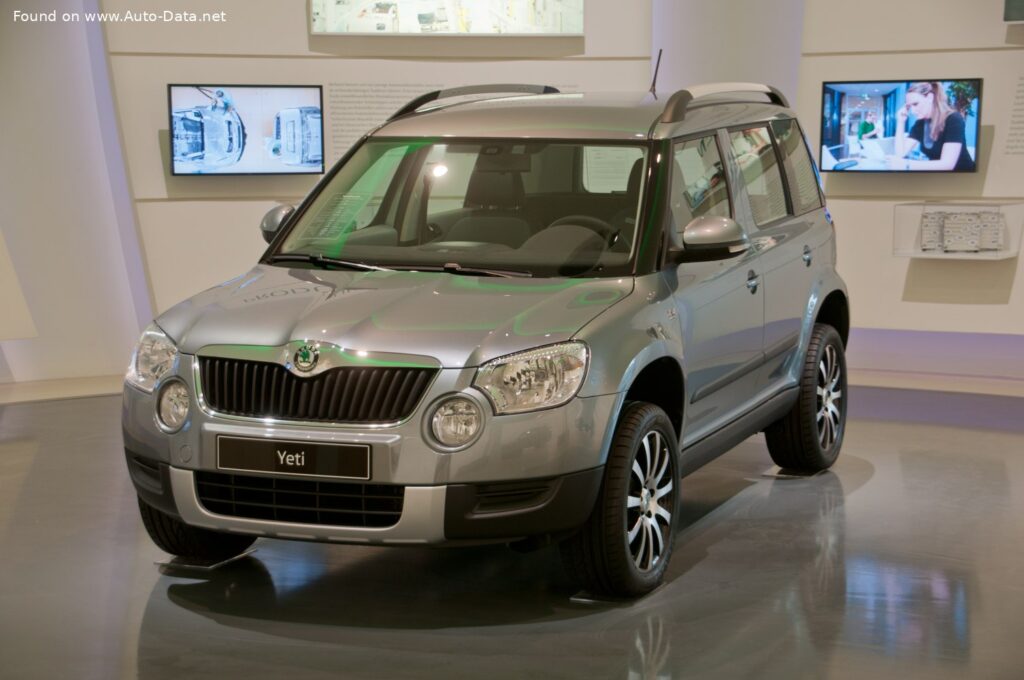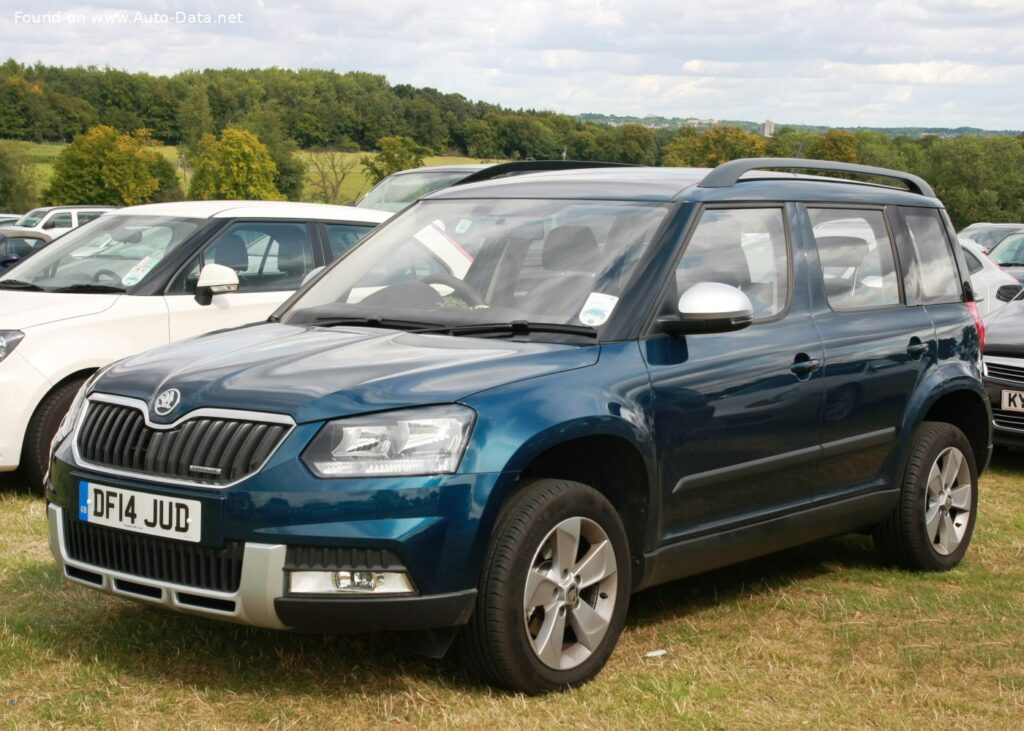
The Skoda Yeti, particularly the facelifted version introduced in 2013, represents a significant entry in the compact SUV segment, though its market presence was primarily focused on Europe. While not officially sold in the United States, the Yeti gained recognition for its practical design, spacious interior, and robust build quality. Positioned as a versatile vehicle for families and individuals seeking a blend of functionality and affordability, the Yeti offered a compelling alternative to more mainstream competitors. This article details the 2013-2015 Skoda Yeti 1.4 TSI (122 Hp) model, focusing on its technical specifications and characteristics.
Skoda Yeti 1.4 TSI (2013-2015): An Overview
The Yeti, launched in 2009, was Skoda’s first foray into the burgeoning compact SUV market. The 2013 facelift brought styling updates, improved interior materials, and enhanced technology. The 1.4 TSI engine variant, producing 122 horsepower, was a popular choice, offering a balance between performance and fuel efficiency. The Yeti distinguished itself with its boxy, yet appealing, design, maximizing interior space. It was praised for its comfortable ride, good handling, and a range of practical features. The Yeti’s success in Europe stemmed from its ability to cater to the needs of drivers seeking a compact, versatile, and reliable vehicle.
Engine & Performance
The 2013-2015 Skoda Yeti 1.4 TSI is powered by a 1.4-liter, inline-four cylinder gasoline engine, designated the EA111 / CAXA. This engine produces 122 horsepower at 5000 rpm and 200 Nm (147.51 lb.-ft.) of torque between 1500 and 4000 rpm. The engine utilizes direct fuel injection and is equipped with a turbocharger and intercooler to enhance performance and efficiency. Power is delivered to the front wheels via a six-speed manual transmission. The Yeti 1.4 TSI achieves a 0-100 km/h (0-62 mph) acceleration time of 10.6 seconds, and a 0-60 mph time of 10.1 seconds. Its maximum speed is rated at 185 km/h (114.95 mph). Fuel economy figures are respectable for its class, with combined fuel consumption rated at 6.4 l/100 km (36.8 US mpg, 44.1 UK mpg), and CO2 emissions of 148 g/km, meeting Euro 5 J emission standards. The engine’s power-to-weight ratio is 11.4 kg/Hp, and the torque-to-weight ratio is 7 kg/Nm.
Design & Features
The Skoda Yeti boasts a distinctive, upright SUV design. The 2013 facelift included revised front and rear bumpers, a new grille, and updated headlight and taillight designs. The vehicle is a five-door hatchback with a five-seat configuration. A key feature of the Yeti is its spacious interior, offering ample headroom and legroom for passengers. The rear seats are adjustable and can be folded down to increase cargo capacity. Trunk space ranges from a minimum of 415 liters (14.66 cu. ft.) to a maximum of 1665 liters (58.8 cu. ft.) with the rear seats folded. Standard safety features include ABS (Anti-lock Braking System). The Yeti’s design prioritizes practicality and functionality, making it a versatile vehicle for everyday use. Ride height (ground clearance) is 180 mm (7.09 in), providing adequate capability for varied road conditions. The vehicle’s dimensions are 4222 mm (166.22 in) in length, 1793 mm (70.59 in) in width, and 1691 mm (66.57 in) in height.
Technical Specifications
| Brand | Skoda |
| Model | Yeti |
| Generation | Yeti (facelift 2013) |
| Type (Engine) | 1.4 TSI (122 Hp) |
| Start of production | 2013 |
| End of production | 2015 |
| Powertrain Architecture | Internal Combustion engine |
| Body type | SUV |
| Seats | 5 |
| Doors | 5 |
| Fuel consumption (urban) | 7.9 l/100 km (29.8 US mpg, 35.8 UK mpg, 12.7 km/l) |
| Fuel consumption (extra urban) | 5.5 l/100 km (42.8 US mpg, 51.4 UK mpg, 18.2 km/l) |
| Fuel consumption (combined) | 6.4 l/100 km (36.8 US mpg, 44.1 UK mpg, 15.6 km/l) |
| CO2 emissions | 148 g/km |
| Fuel Type | Petrol (Gasoline) |
| Acceleration 0 – 100 km/h | 10.6 sec |
| Acceleration 0 – 62 mph | 10.6 sec |
| Acceleration 0 – 60 mph | 10.1 sec |
| Maximum speed | 185 km/h (114.95 mph) |
| Emission standard | Euro 5 J |
| Weight-to-power ratio | 11.4 kg/Hp |
| Weight-to-torque ratio | 7 kg/Nm |
| Power | 122 Hp @ 5000 rpm |
| Torque | 200 Nm @ 1500-4000 rpm (147.51 lb.-ft. @ 1500-4000 rpm) |
| Engine layout | Front, Transverse |
| Engine Model/Code | EA111 / CAXA |
| Engine displacement | 1390 cm3 (84.82 cu. in.) |
| Number of cylinders | 4 |
| Engine configuration | Inline |
| Cylinder Bore | 76.5 mm (3.01 in.) |
| Piston Stroke | 75.6 mm (2.98 in.) |
| Compression ratio | 10:1 |
| Number of valves per cylinder | 4 |
| Fuel injection system | Direct injection |
| Engine aspiration | Turbocharger, Intercooler |
| Valvetrain | DOHC |
| Engine oil capacity | 3.6 l (3.8 US qt | 3.17 UK qt) |
| Coolant | 7.7 l (8.14 US qt | 6.78 UK qt) |
| Kerb Weight | 1395 kg (3075.45 lbs.) |
| Max. weight | 1940 kg (4276.97 lbs.) |
| Max load | 545 kg (1201.52 lbs.) |
| Trunk (boot) space – minimum | 415 l (14.66 cu. ft.) |
| Trunk (boot) space – maximum | 1665 l (58.8 cu. ft.) |
| Fuel tank capacity | 55 l (14.53 US gal | 12.1 UK gal) |
| Length | 4222 mm (166.22 in.) |
| Width | 1793 mm (70.59 in.) |
| Width including mirrors | 1956 mm (77.01 in.) |
| Height | 1691 mm (66.57 in.) |
| Wheelbase | 2578 mm (101.5 in.) |
| Front track | 1541 mm (60.67 in.) |
| Rear (Back) track | 1537 mm (60.51 in.) |
| Front overhang | 877 mm (34.53 in.) |
| Rear overhang | 767 mm (30.2 in.) |
| Ride height (ground clearance) | 180 mm (7.09 in.) |
| Minimum turning circle | 10.32 m (33.86 ft.) |
| Drivetrain Architecture | Front wheel drive |
| Number of gears and type of gearbox | 6 gears, manual transmission |
| Front suspension | Independent, type McPherson with coil spring and anti-roll bar |
| Rear suspension | Independent multi-link spring suspension with stabilizer |
| Front brakes | Ventilated discs |
| Rear brakes | Disc |
| Assisting systems | ABS (Anti-lock braking system) |
| Steering type | Steering rack and pinion |
| Tires size | 215/60 R16; 225/50 R17 |
| Wheel rims size | 7J x 16; 7J x 17 |
The Skoda Yeti 1.4 TSI (2013-2015) offered a compelling package of practicality, efficiency, and affordability, making it a popular choice in the European compact SUV market. While not available in the US, its design and features demonstrate Skoda’s commitment to producing well-engineered and versatile vehicles.