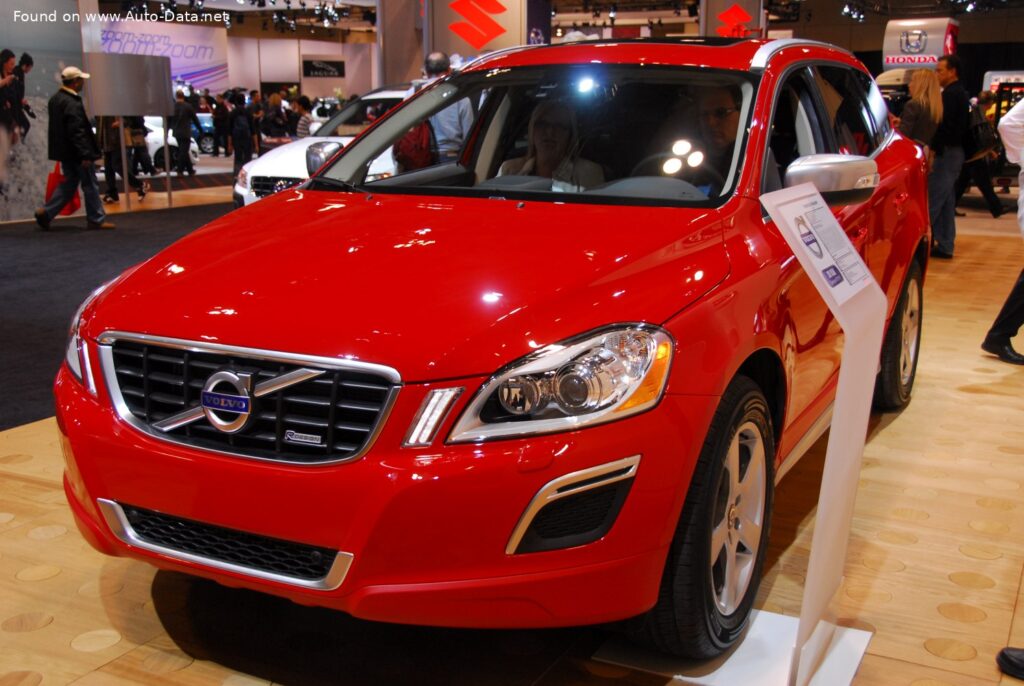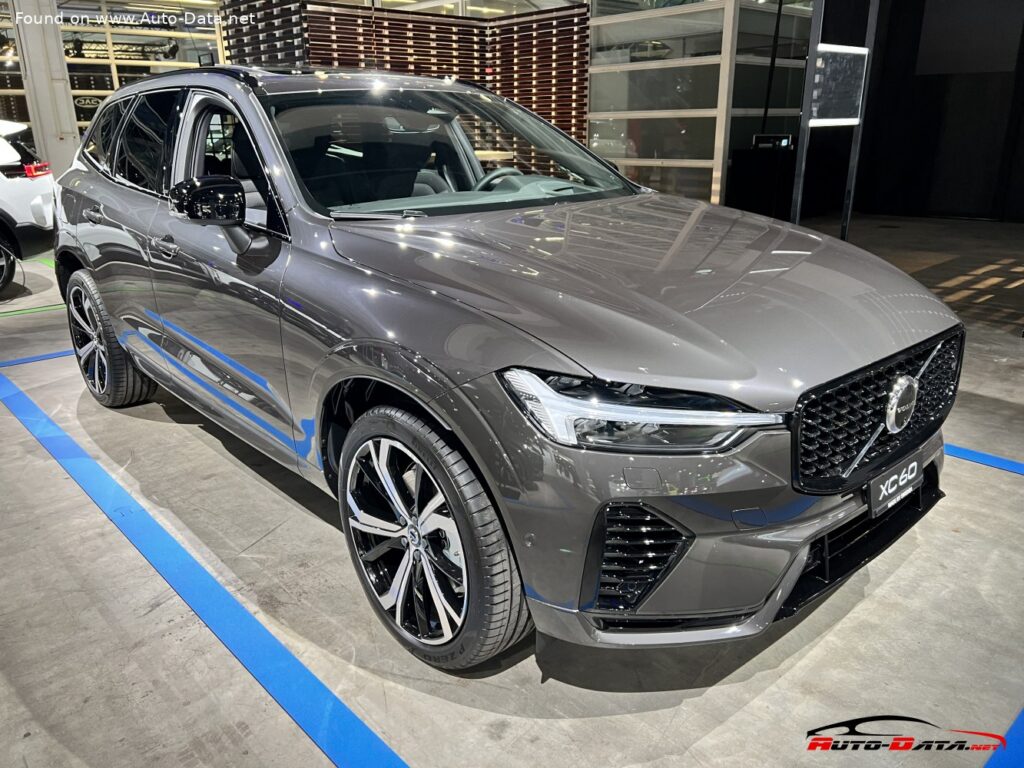
The Volvo XC60 II (facelift 2021) Recharge 2.0 T6 is a plug-in hybrid compact luxury SUV produced by the Swedish manufacturer Volvo Cars. Introduced in March 2021 and running through September 2021, this iteration represents a mid-cycle refresh of the second-generation XC60, launched in 2017. The “Recharge” designation signifies Volvo’s commitment to electrification, and the T6 variant denotes a specific powertrain configuration. Primarily sold in European and North American markets, the XC60 competes with vehicles like the Audi Q5, BMW X3, and Mercedes-Benz GLC, offering a blend of Scandinavian design, advanced safety features, and increasingly, electrified performance.
Volvo XC60 II Recharge: An Overview
The XC60 II facelift builds upon the success of the original XC60 II, refining its aesthetics and enhancing its technological offerings. The Recharge 2.0 T6 model specifically combines a turbocharged and supercharged 2.0-liter inline-four gasoline engine with an electric motor, creating a plug-in hybrid system. This powertrain aims to deliver both strong performance and improved fuel efficiency, while also allowing for a limited all-electric driving range. The vehicle is positioned as a premium offering, emphasizing comfort, safety, and a sophisticated driving experience.
Engine & Performance
The heart of the XC60 II Recharge 2.0 T6 is a 2.0-liter inline-four cylinder engine, designated B4204T46, which produces 253 horsepower at 5500 rpm and 350 Nm (258.15 lb.-ft.) of torque between 1700 and 5000 rpm. This engine utilizes both turbocharging and supercharging to provide a broad torque curve and responsive acceleration. Supplementing the internal combustion engine is an 87 horsepower electric motor, delivering 240 Nm (177.01 lb.-ft.) of torque. The combined system output results in a 0-60 mph acceleration time of approximately 5.6 seconds and a 0-100 km/h time of 5.9 seconds, with a maximum speed of 180 km/h (111.85 mph). Power is delivered to all four wheels via an eight-speed automatic transmission (Geartronic) and an all-wheel-drive system where the ICE drives the front wheels and the electric motor powers the rear wheels. This allows for operation in full electric mode, ICE-only mode, or a combined mode for optimal efficiency and performance. The weight-to-power ratio is 8.3 kg/Hp, and the weight-to-torque ratio is 6 kg/Nm.
Design & Features
The Volvo XC60 II (facelift 2021) maintains the sleek and minimalist Scandinavian design language characteristic of Volvo. As a compact SUV/Crossover, it features a five-door body style with seating for five passengers. The facelifted model incorporates subtle exterior updates, including revised front and rear bumpers, updated LED headlights with the signature “Thor’s Hammer” daytime running lights, and new wheel designs. Inside, the XC60 boasts a luxurious and spacious cabin with high-quality materials. Key features include a large vertically-oriented touchscreen infotainment system, a digital instrument cluster, and a premium sound system. Safety is a paramount concern for Volvo, and the XC60 is equipped with a comprehensive suite of advanced driver-assistance systems (ADAS), including automatic emergency braking, lane-keeping assist, adaptive cruise control, and blind-spot monitoring. The trunk offers 468 liters (16.53 cu. ft.) of space with the rear seats up, expanding to 1395 liters (49.26 cu. ft.) when folded down.
Electrification and Efficiency
A key aspect of the XC60 II Recharge 2.0 T6 is its plug-in hybrid capability. It features a 11.6 kWh lithium-ion battery pack located in the central tunnel, providing an all-electric range of 46-53 km (28.58 – 32.93 mi) based on the WLTP cycle, or 48-50 km (29.83 – 31.07 mi) based on the NEDC equivalent. Charging ports are standard, allowing for convenient recharging from external power sources. The vehicle exhibits an average energy consumption of 15.3-17.8 kWh/100 km (24.62 – 28.65 kWh/100 mi) on the WLTP cycle, translating to approximately 137-118 MPGe. CO2 emissions are rated at 54-64 g/km (WLTP) and 42-45 g/km (NEDC equivalent), demonstrating a significant reduction compared to conventional gasoline-powered vehicles. The battery operates at 400V.
Technical Specifications
| Brand | Volvo |
| Model | XC60 |
| Generation | XC60 II (facelift 2021) |
| Type (Engine) | Recharge 2.0 T6 (253 Hp) Plug-in Hybrid AWD Geartronic |
| Start of production | March, 2021 |
| End of production | September, 2021 |
| Powertrain Architecture | PHEV (Plug-in Hybrid Electric Vehicle) |
| Body type | SUV, Crossover |
| Seats | 5 |
| Doors | 5 |
| Combined fuel consumption (WLTP) | 2.4-2.8 l/100 km (98 – 84 US mpg, 117.7 – 100.9 UK mpg, 41.7 – 35.7 km/l) |
| CO2 emissions (WLTP) | 54-64 g/km |
| Fuel consumption (NEDC, WLTP equivalent) | 1.9-2 l/100 km (123.8 – 117.6 US mpg, 148.7 – 141.2 UK mpg, 52.6 – 50 km/l) |
| CO2 emissions (NEDC, WLTP equivalent) | 42-45 g/km |
| Fuel Type | Petrol / electricity |
| Acceleration 0 – 100 km/h | 5.9 sec |
| Acceleration 0 – 62 mph | 5.9 sec |
| Acceleration 0 – 60 mph | 5.6 sec |
| Maximum speed | 180 km/h (111.85 mph) |
| Emission standard | Euro 6d |
| Weight-to-power ratio | 8.3 kg/Hp, 120.8 Hp/tonne |
| Weight-to-torque ratio | 6 kg/Nm, 167.1 Nm/tonne |
| Gross battery capacity | 11.6 kWh |
| Battery voltage | 400 V |
| Battery technology | Lithium-ion (Li-Ion) |
| Battery location | In the central tunnel |
| All-electric range (WLTP) | 46-53 km (28.58 – 32.93 mi) |
| All-electric range (NEDC, WLTP equivalent) | 48-50 km (29.83 – 31.07 mi) |
| Average Energy consumption (WLTP) | 15.3-17.8 kWh/100 km (24.62 – 28.65 kWh/100 mi, 137 – 118 MPGe, 6.5 – 5.6 km/kWh, 4.1 – 3.5 mi/kWh) |
| Average Energy consumption (NEDC, WLTP equivalent) | 16.3-17.2 kWh/100 km (26.23 – 27.68 kWh/100 mi, 128 – 122 MPGe, 6.1 – 5.8 km/kWh, 3.8 – 3.6 mi/kWh) |
| Max speed (electric) | 125 km/h (77.67 mph) |
| Electric motor power | 87 Hp @ 7000 rpm (177.01 lb.-ft. @ 0-3000 rpm) |
| Electric motor Torque | 240 Nm @ 0-3000 rpm |
| Electric motor location | Rear axle, Transverse |
| Power | 253 Hp @ 5500 rpm |
| Torque | 350 Nm @ 1700-5000 rpm (258.15 lb.-ft. @ 1700-5000 rpm) |
| Engine layout | Front, Transverse |
| Engine Model/Code | B4204T46 |
| Engine displacement | 1969 cm3 (120.16 cu. in.) |
| Number of cylinders | 4 |
| Engine configuration | Inline |
| Cylinder Bore | 82 mm (3.23 in.) |
| Piston Stroke | 93.2 mm (3.67 in.) |
| Number of valves per cylinder | 4 |
| Fuel injection system | Direct injection |
| Engine aspiration | Turbocharging and Supercharger, Intercooler |
| Valvetrain | DOHC |
| Engine oil capacity | 5.6 l (5.92 US qt | 4.93 UK qt) |
| Kerb Weight | 2094 kg (4616.48 lbs.) |
| Max. weight | 2660 kg (5864.3 lbs.) |
| Max load | 566 kg (1247.82 lbs.) |
| Trunk (boot) space – minimum | 468 l (16.53 cu. ft.) |
| Trunk (boot) space – maximum | 1395 l (49.26 cu. ft.) |
| Fuel tank capacity | 70 l (18.49 US gal | 15.4 UK gal) |
| Max. roof load | 100 kg (220.46 lbs.) |
| Permitted trailer load with brakes (12%) | 2100 kg (4629.71 lbs.) |
| Permitted trailer load without brakes | 750 kg (1653.47 lbs.) |
| Permitted towbar download | 100 kg (220.46 lbs.) |
| Length | 4688 mm (184.57 in.) |
| Width | 1902 mm (74.88 in.) |
| Width including mirrors | 2117 mm (83.35 in.) |
| Height | 1658 mm (65.28 in.) |
| Wheelbase | 2865 mm (112.8 in.) |
| Front track | 1655 mm (65.16 in.) |
| Rear (Back) track | 1659 mm (65.31 in.) |
| Front overhang | 872 mm (34.33 in.) |
| Rear overhang | 951 mm (37.44 in.) |
| Ride height (ground clearance) | 216 mm (8.5 in.) |
| Drivetrain Architecture | The Internal combustion engine (ICE) permanently drives the front wheels of the vehicle, the electric motor drives the rear wheels of the vehicle, capable of running in full electric mode, only by the Internal combustion engine (ICE) or in mixed mode. |
| Drive wheel | All wheel drive (4×4) |
| Number of gears and type of gearbox | 8 gears, automatic transmission Geartronic |
| Front suspension | Double wishbone, Transverse stabilizer |
| Rear suspension | Transverse stabilizer, Leaf spring |
| Front brakes | Ventilated discs |
| Rear brakes | Ventilated discs |
| Assisting systems | ABS (Anti-lock braking system) |
| Steering type | Steering rack and pinion |
| Power steering | Electric Steering |
| Tires size | 235/60 R18 |
| Wheel rims size | 7.5J x 18 |