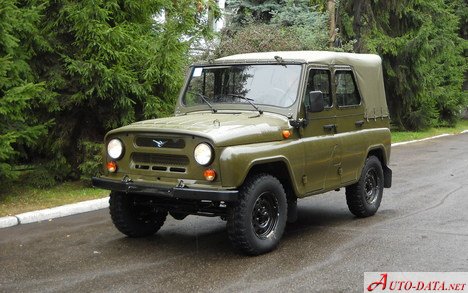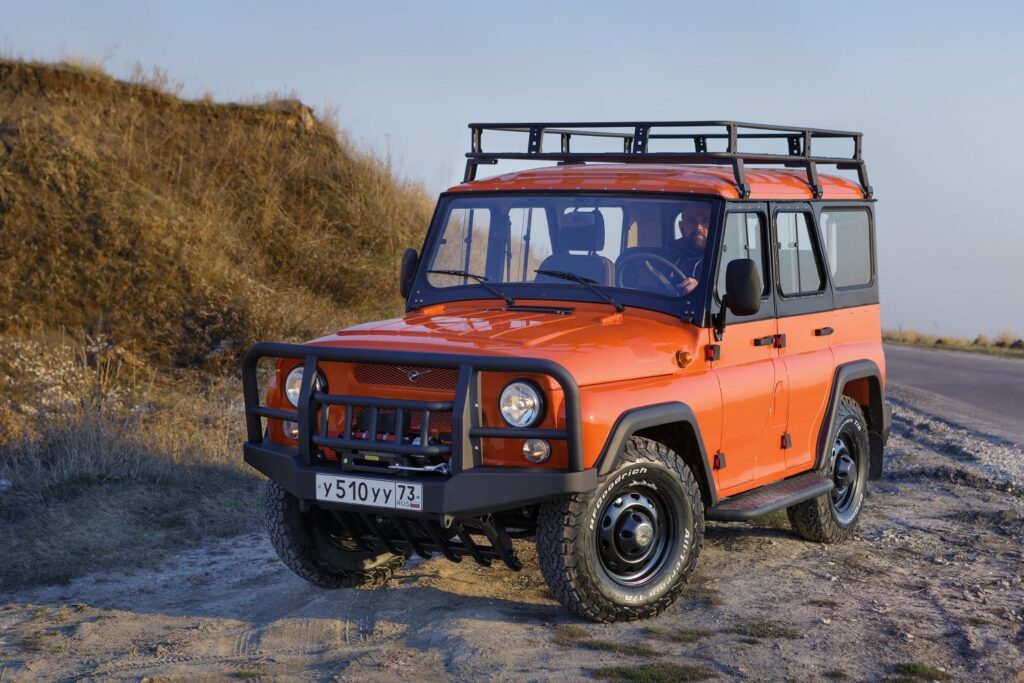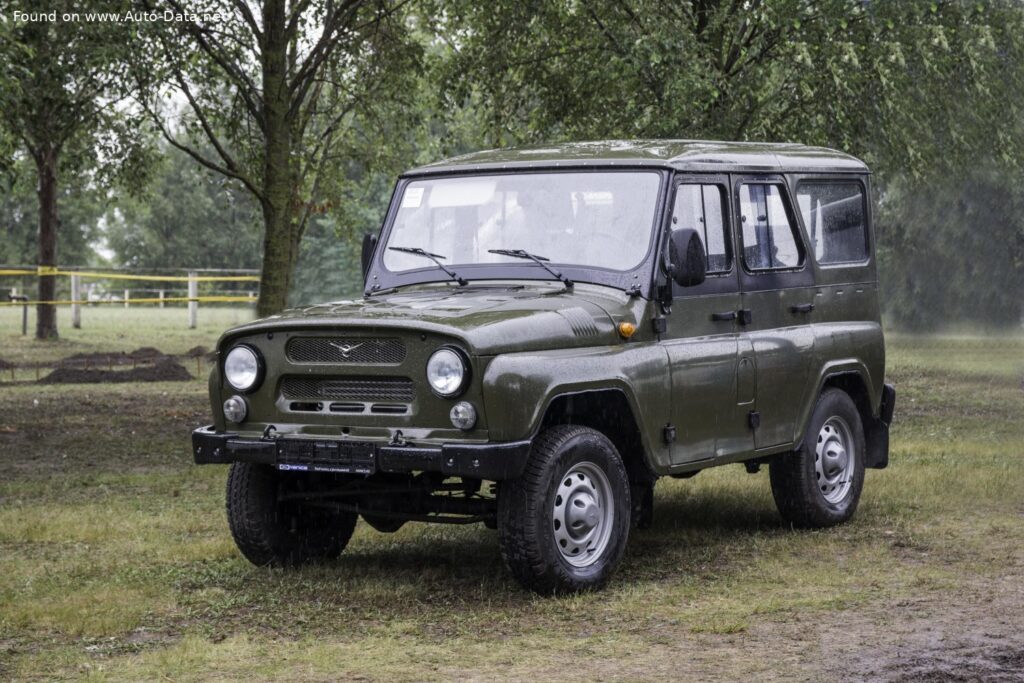
The UAZ Hunter (model 315195) is a Russian-built off-road vehicle produced by UAZ (Ulyanovsky Automobile Plant). Introduced in 2003, it represents a significant evolution of the UAZ-469, a vehicle originally designed for military use in the 1950s. While not officially sold in the United States, the Hunter is a popular vehicle in Russia and other parts of Eastern Europe, Central Asia, and South America, prized for its ruggedness, simplicity, and affordability. It fills a niche similar to the Suzuki Jimny or the older generations of Land Rover, offering serious off-road capability at a relatively low price point. The Hunter is known for its utilitarian design and robust construction, making it a favorite among farmers, hunters, and those needing a dependable vehicle for challenging terrain.
UAZ Hunter: A Legacy of Ruggedness
The UAZ Hunter is more than just a vehicle; it’s a continuation of a long line of Soviet and Russian off-roaders. The original UAZ-469, nicknamed the “Bobik,” was a direct descendant of the Willys Jeep, but adapted for the harsh conditions and logistical needs of the Soviet military. The Hunter modernized the basic design, incorporating improvements in comfort, safety, and reliability while retaining the core characteristics that made the UAZ-469 so successful. It’s a vehicle built for function over form, prioritizing durability and off-road performance above all else. The Hunter remains in production today, albeit with ongoing incremental updates, demonstrating its enduring appeal and practicality.
Engine & Performance
The UAZ Hunter 315195 is typically powered by a 2.89-liter (176.36 cubic inches) inline-four cylinder gasoline engine. This engine produces 84 horsepower at 4000 rpm and 189 Nm (139.4 lb.-ft.) of torque at 2500 rpm. While these figures may seem modest by modern standards, the engine’s low-end torque and robust construction are well-suited to off-road driving. The engine is longitudinally mounted and utilizes a carburetor fuel injection system, a characteristic of its era and contributing to its simplicity. Power is delivered to all four wheels via a five-speed manual transmission and a part-time four-wheel-drive system with a low-range gear. The Hunter’s weight-to-power ratio is 21.1 kg/Hp, and its weight-to-torque ratio is 9.4 kg/Nm. The vehicle has a maximum speed of 120 km/h (74.56 mph). The Hunter isn’t designed for speed or fuel efficiency; it’s built to conquer difficult terrain and provide reliable transportation in challenging conditions.
Design & Features
The UAZ Hunter features a classic body-on-frame construction, providing exceptional durability and off-road capability. It’s a five-door vehicle with seating for up to seven passengers, although space is at a premium, particularly in the rear. The exterior design is utilitarian and boxy, reflecting its origins as a military-inspired vehicle. The Hunter boasts a generous amount of ground clearance, essential for navigating rough terrain. The interior is spartan but functional, with durable materials designed to withstand heavy use. Features are basic, focusing on practicality rather than luxury. The Hunter offers a substantial amount of cargo space, ranging from 1130 liters (39.91 cubic feet) with the rear seats up to 2564 liters (90.55 cubic feet) with the seats folded down. Safety features are limited by the vehicle’s age and design, but typically include an Anti-lock Braking System (ABS). The Hunter’s design prioritizes functionality and durability, making it a capable and reliable off-road vehicle.
Technical Specifications
| Brand | UAZ |
| Model | Hunter |
| Generation | Hunter (315195) |
| Type (Engine) | 2.89 (84 Hp) |
| Start of production | 2003 |
| Powertrain Architecture | Internal Combustion engine |
| Body type | Off-road vehicle |
| Seats | 7 |
| Doors | 5 |
| Fuel Type | Petrol (Gasoline) |
| Maximum speed | 120 km/h (74.56 mph) |
| Weight-to-power ratio | 21.1 kg/Hp |
| Weight-to-torque ratio | 9.4 kg/Nm |
| Power | 84 Hp @ 4000 rpm |
| Power per litre | 29.1 Hp/l |
| Torque | 189 Nm @ 2500 rpm (139.4 lb.-ft. @ 2500 rpm) |
| Engine layout | Front, Longitudinal |
| Engine displacement | 2890 cm3 (176.36 cu. in.) |
| Number of cylinders | 4 |
| Engine configuration | Inline |
| Cylinder Bore | 100 mm (3.94 in.) |
| Piston Stroke | 92 mm (3.62 in.) |
| Compression ratio | 7:1 |
| Number of valves per cylinder | 2 |
| Fuel injection system | Carburettor |
| Engine aspiration | Naturally aspirated engine |
| Engine oil capacity | 5.8 l (6.13 US qt | 5.1 UK qt) |
| Kerb Weight | 1770 kg (3902.18 lbs.) |
| Max. weight | 2520 kg (5555.65 lbs.) |
| Max load | 750 kg (1653.47 lbs.) |
| Trunk (boot) space – minimum | 1130 l (39.91 cu. ft.) |
| Trunk (boot) space – maximum | 2564 l (90.55 cu. ft.) |
| Fuel tank capacity | 70 l (18.49 US gal | 15.4 UK gal) |
| Length | 4100 mm (161.42 in.) |
| Width | 2010 mm (79.13 in.) |
| Height | 2025 mm (79.72 in.) |
| Wheelbase | 2380 mm (93.7 in.) |
| Front track | 1445 mm (56.89 in.) |
| Rear (Back) track | 1445 mm (56.89 in.) |
| Drive wheel | All wheel drive (4×4) |
| Number of gears and type of gearbox | 5 gears, manual transmission |
| Front suspension | Coil spring |
| Rear suspension | Leaf spring |
| Front brakes | Disc |
| Rear brakes | Drum |
| Assisting systems | ABS (Anti-lock braking system) |
| Tires size | 225/75 R16 |
| Wheel rims size | 6.5J x 16 |