
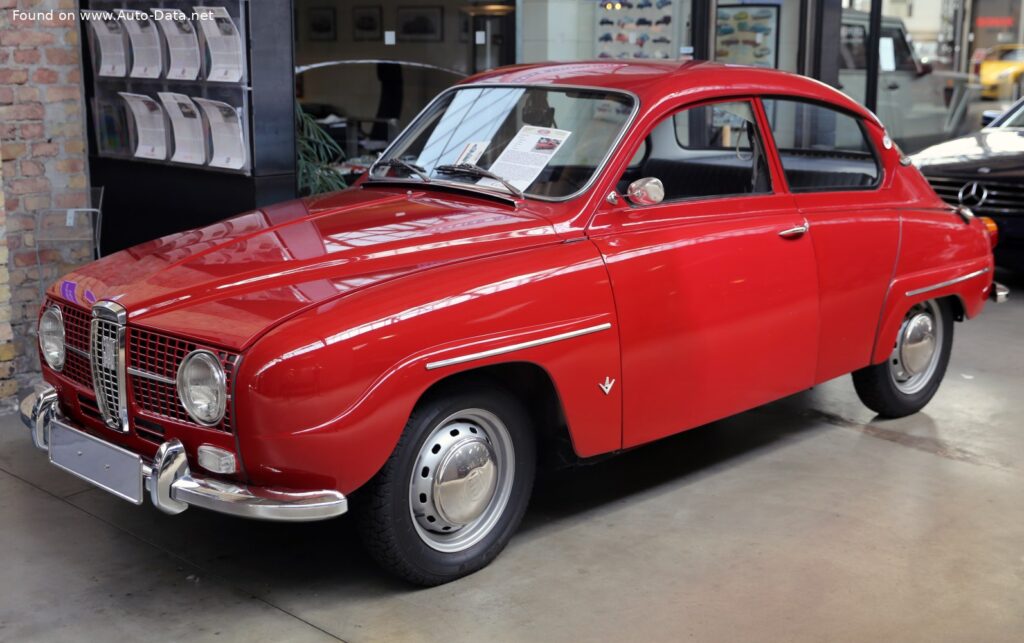
The Saab 96, particularly the 1.5 V4 variant produced between 1975 and 1977, represents a pivotal moment in the Swedish automaker’s history. This compact sedan, characterized by its distinctive design and front-wheel-drive layout, was a popular choice in Europe and laid the groundwork for Saab’s future models. While not officially sold in the United States during its production run, the 96’s innovative features and rally success garnered international recognition. The 1.5 V4 model, with its modest 63 horsepower, offered a practical and efficient transportation solution for the era, embodying Saab’s commitment to safety and functionality.
The Saab 96 1.5 V4: A Legacy of Innovation
The Saab 96 evolved from the earlier Saab 93, building upon its aerodynamic principles and engineering advancements. Introduced in 1960, the 96 underwent several revisions throughout its lifespan, culminating in the 1.5 V4 version. This iteration featured a Ford-sourced, transversely mounted V4 engine, a configuration relatively uncommon at the time. The 96 was designed with a focus on passenger safety, incorporating a robust crumple zone and a wrap-around windscreen, features that were ahead of their time. The car’s unique styling, with its sloping rear window and relatively small size, made it instantly recognizable. The 96’s success in motorsport, particularly in rallying, further cemented its reputation for durability and performance.
Engine & Performance
The heart of the Saab 96 1.5 V4 is a 1.5-liter (1498 cm3 or 91.41 cu. in.) Ford V4 engine, producing 63 horsepower at 4600 rpm and 115 Nm (84.82 lb.-ft.) of torque at 2500 rpm. This engine, while not exceptionally powerful by modern standards, provided adequate performance for the car’s weight and intended use. The power-to-weight ratio of 14.8 kg/Hp (67.7 Hp/tonne) and torque-to-weight ratio of 8.1 kg/Nm (123.7 Nm/tonne) contributed to a reasonably spirited driving experience. The engine’s transverse mounting, coupled with front-wheel drive, improved handling and traction, especially in adverse weather conditions. The 96’s top speed was approximately 145 km/h (90.1 mph). Fuel delivery was managed by a carburetor, a common technology for the period. The engine’s 9:1 compression ratio was typical for gasoline engines of the 1970s.
Design & Features
The Saab 96 is a two-door sedan with seating for five passengers. Its body style is characterized by a streamlined silhouette, designed to minimize drag and improve fuel efficiency. The car’s relatively compact dimensions – 4170 mm (164.17 in.) in length, 1575 mm (62.01 in.) in width, and 1473 mm (57.99 in.) in height – made it easy to maneuver in urban environments. The wheelbase measured 2500 mm (98.43 in.), providing a stable platform for the front-wheel-drive system. Safety was a key consideration in the 96’s design, with features such as a reinforced passenger compartment and a wrap-around windscreen. The interior was functional and practical, reflecting the car’s utilitarian ethos. The 96 featured disc brakes on the front wheels and drum brakes on the rear, providing adequate stopping power for the time. Steering was accomplished via a rack and pinion system, offering precise control. The fuel tank capacity was 38 liters (10.04 US gal | 8.36 UK gal).
Technical Specifications
| Brand | Saab |
| Model | 96 |
| Generation | 96 |
| Type (Engine) | 1.5 V4 (63 Hp) |
| Start of production | 1975 |
| End of production | 1977 |
| Powertrain Architecture | Internal Combustion engine |
| Body type | Sedan |
| Seats | 5 |
| Doors | 2 |
| Fuel Type | Petrol (Gasoline) |
| Maximum speed | 145 km/h (90.1 mph) |
| Weight-to-power ratio | 14.8 kg/Hp, 67.7 Hp/tonne |
| Weight-to-torque ratio | 8.1 kg/Nm, 123.7 Nm/tonne |
| Power | 63 Hp @ 4600 rpm |
| Power per litre | 42.1 Hp/l |
| Torque | 115 Nm @ 2500 rpm (84.82 lb.-ft. @ 2500 rpm) |
| Engine layout | Front, Transverse |
| Engine Model/Code | Ford V-4 |
| Engine displacement | 1498 cm3 (91.41 cu. in.) |
| Number of cylinders | 4 |
| Engine configuration | V-engine |
| Cylinder Bore | 90 mm (3.54 in.) |
| Piston Stroke | 58.86 mm (2.32 in.) |
| Compression ratio | 9:1 |
| Fuel injection system | Carburettor |
| Engine aspiration | Naturally aspirated engine |
| Engine oil capacity | 3.3 l (3.49 US qt | 2.9 UK qt) |
| Coolant | 7.1 l (7.5 US qt | 6.25 UK qt) |
| Kerb Weight | 930 kg (2050.3 lbs.) |
| Fuel tank capacity | 38 l (10.04 US gal | 8.36 UK gal) |
| Length | 4170 mm (164.17 in.) |
| Width | 1575 mm (62.01 in.) |
| Height | 1473 mm (57.99 in.) |
| Wheelbase | 2500 mm (98.43 in.) |
| Front track | 1240 mm (48.82 in.) |
| Rear (Back) track | 1230 mm (48.43 in.) |
| Drivetrain Architecture | The Internal combustion engine (ICE) drives the front wheels of the vehicle. |
| Drive wheel | Front wheel drive |
| Number of gears and type of gearbox | 4 gears, manual transmission |
| Front brakes | Disc |
| Rear brakes | Drum |
| Steering type | Steering rack and pinion |
The Saab 96 1.5 V4, while a relatively simple car by today’s standards, represents a significant chapter in automotive history. Its innovative design, focus on safety, and rally success established Saab as a unique and respected brand. The 96’s legacy continues to influence automotive design and engineering, reminding us of a time when ingenuity and practicality were paramount.
