
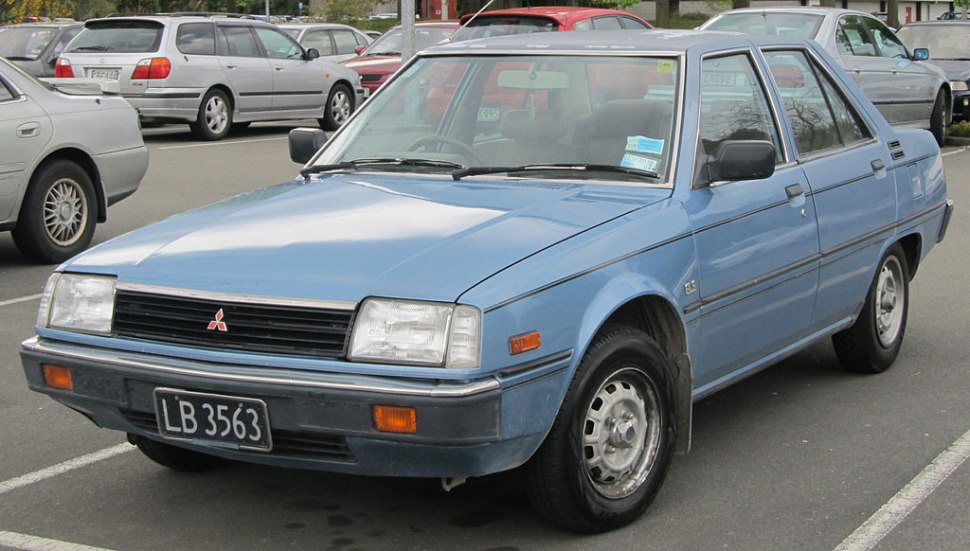
The Mitsubishi Tredia, known internally as the A21 series, was a compact sedan produced by Mitsubishi Motors from 1982 to 1987. Positioned as an affordable and practical vehicle, the Tredia aimed to compete in the burgeoning compact car market, particularly appealing to buyers seeking fuel efficiency and reliability. While not widely recognized in the United States, the Tredia was a significant model for Mitsubishi in several international markets, including Europe, Australia, and parts of Asia. The GLS 1.6 (A212) variant, powered by a 75 horsepower engine, represented a mid-range offering within the Tredia lineup, balancing performance with economy. This generation of Tredia served as a stepping stone for Mitsubishi, incorporating design and engineering elements that would influence future models.
Mitsubishi Tredia (A21_) GLS 1.6: An Overview
The Tredia occupied a crucial space in Mitsubishi’s product portfolio during the early 1980s. It was designed to offer a more modern alternative to the aging Mitsubishi Lancer, providing a fresh aesthetic and improved fuel economy. The A21 series Tredia was a front-wheel-drive sedan, a configuration becoming increasingly popular globally due to its packaging efficiency and improved traction in adverse conditions. The GLS 1.6 trim level signified a step up in features and refinement compared to the base models, typically including upgraded interior appointments and potentially additional convenience items. The Tredia’s relatively simple mechanical design contributed to its reputation for durability and ease of maintenance, making it a practical choice for everyday transportation.
Engine & Performance
The heart of the Tredia GLS 1.6 (A212) was a 1.6-liter, naturally aspirated four-cylinder gasoline engine. This engine produced 75 horsepower, a respectable figure for a compact car of its era. While not designed for outright speed, the engine provided adequate power for comfortable cruising and everyday driving. The engine featured a single overhead camshaft (SOHC) configuration, a common design choice for maximizing efficiency and minimizing complexity. Fuel delivery was managed by a carburetor, typical for vehicles of this period, before fuel injection became widespread. The Tredia’s front-wheel-drive layout, coupled with its relatively lightweight construction, contributed to reasonable fuel economy. The transmission options typically included a four-speed manual or a three-speed automatic, allowing buyers to choose a configuration that suited their driving preferences. Performance figures, while not extensively documented, suggest a 0-60 mph time in the range of 12-14 seconds, and a top speed around 90-95 mph. The focus was clearly on providing reliable and economical transportation rather than sporty performance.
Design & Features
The Mitsubishi Tredia’s design reflected the styling trends of the early 1980s, characterized by clean lines and a boxy silhouette. The sedan body style was the primary configuration offered, providing a practical and spacious interior for passengers and cargo. The front end featured a relatively simple grille and rectangular headlights, while the rear end incorporated a conventional trunk design. Interior appointments in the GLS 1.6 trim level were generally modest but functional. Cloth upholstery, basic instrumentation, and a simple dashboard layout were typical features. Safety features were limited by the standards of the time, generally consisting of seatbelts and a collapsible steering column. Air conditioning and a radio were often available as optional extras. The Tredia’s interior space was considered competitive for its class, offering comfortable seating for four adults. The trunk provided a reasonable amount of cargo capacity for everyday needs. The overall design philosophy prioritized practicality and affordability over luxury or stylistic extravagance.
Market Position and Significance
The Mitsubishi Tredia was primarily marketed in regions where compact, fuel-efficient sedans were in high demand. In Europe, it competed with models like the Ford Escort, Opel Kadett, and Volkswagen Jetta. In Australia, it offered a Japanese alternative to the locally produced Holden and Ford models. While Mitsubishi did offer some models in the United States during this period, the Tredia was not among them. The Tredia played a role in establishing Mitsubishi’s reputation for building reliable and affordable vehicles. It also served as a platform for testing and refining new technologies, such as front-wheel-drive systems and engine designs. The Tredia’s success in international markets helped to solidify Mitsubishi’s position as a global automotive manufacturer. The model was eventually replaced by the Mitsubishi Mirage in 1987, which continued Mitsubishi’s presence in the compact car segment.
Technical Specifications
| Brand | Mitsubishi |
| Model | Tredia |
| Generation | Tredia (A21_) |
| Type (Engine) | GLS 1.6 (A212) (75 Hp) |
| Start of production | 1982 |
| End of production | 1987 |
| Powertrain Architecture | Internal Combustion engine |
| Body type | Sedan |
| Fuel Type | Petrol (Gasoline) |
| Power | 75 Hp |
| Engine aspiration | Naturally aspirated engine |
