
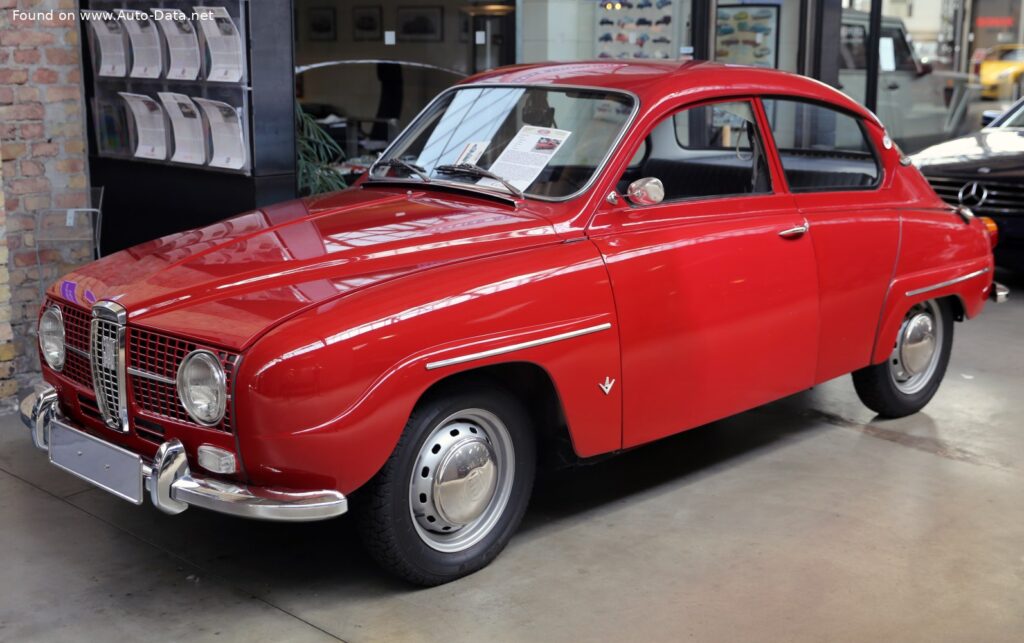
The Saab 96, particularly the 1.5 V4 variant produced between 1977 and 1980, represents a pivotal chapter in the history of the Swedish automaker. This compact sedan, characterized by its distinctive design and front-wheel-drive layout, was a mainstay of the European automotive landscape for over a decade. While never officially sold in large numbers in the United States, the Saab 96 gained a cult following among enthusiasts who appreciated its unique engineering and robust build quality. The 1.5 V4 model, with its modest 68 horsepower, offered a practical and economical transportation solution, embodying Saab’s commitment to innovative design and driver-focused engineering.
The Saab 96: A Legacy of Innovation
The Saab 96 evolved from the earlier Saab 93, building upon its aerodynamic principles and incorporating advancements in safety and comfort. Introduced in 1960, the 96 underwent several revisions throughout its production run, culminating in the 1.5 V4 version. The model was designed with a focus on practicality and durability, catering to the needs of European drivers who often faced harsh weather conditions and challenging road surfaces. Its relatively small size and nimble handling made it well-suited for navigating narrow city streets and winding country roads. The 96’s enduring appeal lies in its blend of Scandinavian simplicity, engineering ingenuity, and a loyal following that continues to this day.
Engine & Performance
The 1977-1980 Saab 96 1.5 V4 was powered by a Ford-sourced, 1.5-liter V4 engine. This engine, producing 68 horsepower at 4700 rpm and 115 Nm (84.82 lb-ft) of torque at 2500 rpm, provided adequate performance for its intended purpose. The engine’s transverse mounting, a relatively uncommon configuration at the time, contributed to the car’s front-wheel-drive layout and improved handling characteristics. The power-to-weight ratio of 73.1 Hp/tonne and torque-to-weight ratio of 123.7 Nm/tonne, while not exceptional by modern standards, were respectable for the era. The engine featured a single carburetor fuel injection system and a compression ratio of 9:1. The engine’s displacement of 1498 cm3 (91.41 cu. in.) and V-engine configuration, with a cylinder bore of 90 mm (3.54 in.) and piston stroke of 58.86 mm (2.32 in.), were key elements of its design. The engine required 3.3 liters (3.49 US qt) of oil and 5.8 liters (6.13 US qt) of coolant for optimal operation.
Design & Features
The Saab 96 was a two-door sedan with seating for five passengers. Its body design, while unconventional, was aerodynamically efficient for its time, contributing to improved fuel economy and stability. The car’s relatively short wheelbase of 2500 mm (98.43 in.) and overall length of 4300 mm (169.29 in.) made it easy to maneuver in tight spaces. The width of 1590 mm (62.6 in.) and height of 1470 mm (57.87 in.) provided a comfortable interior space for passengers. Safety features, while limited by the standards of the 1970s, included a robust chassis and a focus on visibility. The 96’s interior was characterized by its functional design and durable materials. The car’s front brakes were disc brakes, while the rear brakes were drum brakes. The steering system utilized a steering rack and pinion for precise control. The vehicle rode on 155/80 SR15 tires mounted on 4.5 x 15 inch wheel rims.
Technical Specifications: Saab 96 1.5 V4 (1977-1980)
| Brand | Saab |
| Model | 96 |
| Generation | 96 |
| Type (Engine) | 1.5 V4 (68 Hp) |
| Start of production | 1977 |
| End of production | 1980 |
| Powertrain Architecture | Internal Combustion engine |
| Body type | Sedan |
| Seats | 5 |
| Doors | 2 |
| Fuel Type | Petrol (Gasoline) |
| Weight-to-power ratio | 13.7 kg/Hp |
| Hp/tonne | 73.1 Hp/tonne |
| Weight-to-torque ratio | 8.1 kg/Nm |
| Nm/tonne | 123.7 Nm/tonne |
| Power | 68 Hp @ 4700 rpm |
| Power per litre | 45.4 Hp/l |
| Torque | 115 Nm @ 2500 rpm |
| Torque (lb.-ft.) | 84.82 lb.-ft. @ 2500 rpm |
| Engine layout | Front, Transverse |
| Engine Model/Code | Ford V-4 |
| Engine displacement | 1498 cm3 |
| Engine displacement (cu. in.) | 91.41 cu. in. |
| Number of cylinders | 4 |
| Engine configuration | V-engine |
| Cylinder Bore | 90 mm |
| Cylinder Bore (in.) | 3.54 in. |
| Piston Stroke | 58.86 mm |
| Piston Stroke (in.) | 2.32 in. |
| Compression ratio | 9:1 |
| Fuel injection system | Carburettor |
| Engine aspiration | Naturally aspirated engine |
| Engine oil capacity | 3.3 l |
| Engine oil capacity (US qt) | 3.49 US qt |
| Engine oil capacity (UK qt) | 2.9 UK qt |
| Coolant | 5.8 l |
| Coolant (US qt) | 6.13 US qt |
| Coolant (UK qt) | 5.1 UK qt |
| Kerb Weight | 930 kg |
| Kerb Weight (lbs.) | 2050.3 lbs. |
| Fuel tank capacity | 38 l |
| Fuel tank capacity (US gal) | 10.04 US gal |
| Fuel tank capacity (UK gal) | 8.36 UK gal |
| Length | 4300 mm |
| Length (in.) | 169.29 in. |
| Width | 1590 mm |
| Width (in.) | 62.6 in. |
| Height | 1470 mm |
| Height (in.) | 57.87 in. |
| Wheelbase | 2500 mm |
| Wheelbase (in.) | 98.43 in. |
| Front track | 1240 mm |
| Front track (in.) | 48.82 in. |
| Rear track | 1230 mm |
| Rear track (in.) | 48.43 in. |
| Drivetrain Architecture | Front wheel drive |
| Number of gears | 4 |
| Gearbox type | Manual transmission |
| Front brakes | Disc |
| Rear brakes | Drum |
| Steering type | Steering rack and pinion |
| Tires size | 155/80 SR15 |
| Wheel rims size | 4.5 x 15 |
The Saab 96 1.5 V4, despite its relatively modest specifications, remains a significant vehicle in automotive history. Its innovative design, front-wheel-drive layout, and focus on safety and practicality cemented its place as a beloved classic among Saab enthusiasts and a testament to Swedish engineering prowess.
