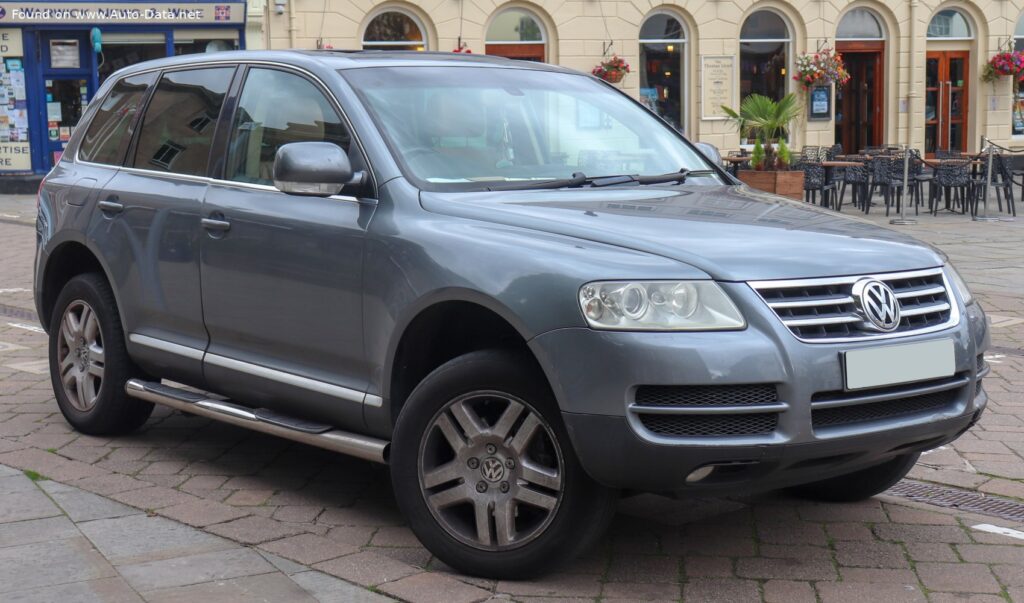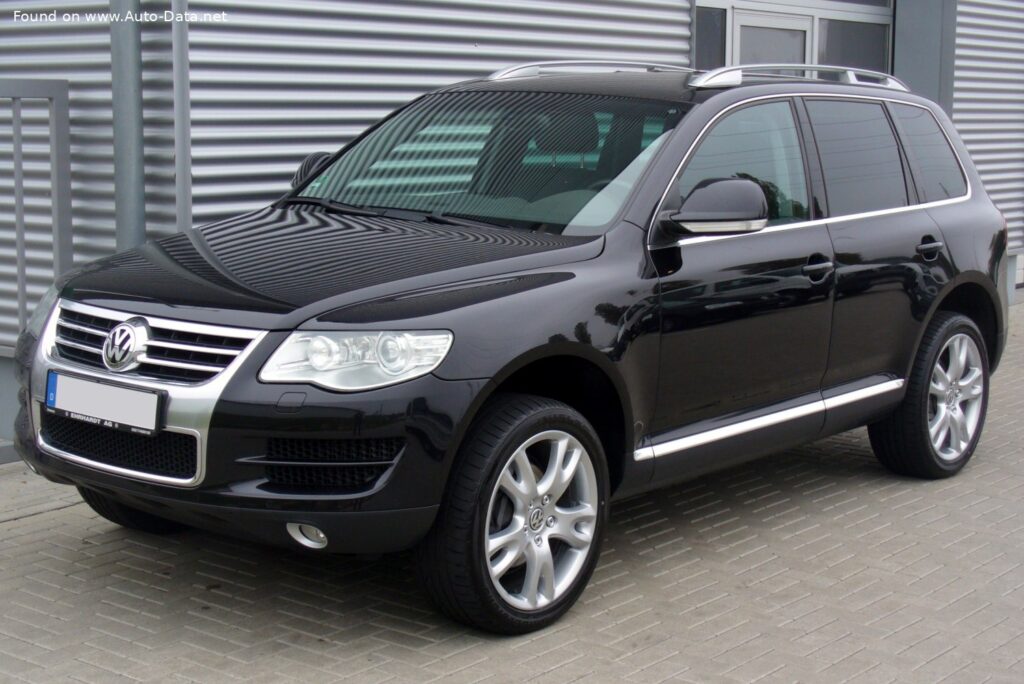
The Volkswagen Touareg I (7L), particularly the facelifted version introduced in 2006, represents Volkswagen’s initial foray into the burgeoning luxury SUV segment. Positioned as a competitor to vehicles like the Porsche Cayenne (with which it shares a platform) and the BMW X5, the Touareg aimed to offer a blend of on-road refinement and genuine off-road capability. The 6.0 W12 48V Sport model, produced from 2006 to 2010, stands as the flagship of the first-generation Touareg range, boasting a powerful and technologically advanced powertrain. While not widely sold in the United States in this high-performance configuration, the Touareg established a foothold for Volkswagen in the premium SUV market, particularly in Europe and other international markets.
Volkswagen Touareg I (7L) 6.0 W12 Sport: A Detailed Overview
The Touareg I, internally designated the 7L chassis code, was a significant vehicle for Volkswagen. It marked a departure from the company’s traditionally more economical offerings, venturing into a segment demanding luxury, performance, and advanced technology. The 2006 facelift brought cosmetic and mechanical updates, refining the vehicle’s appearance and enhancing its overall driving experience. The 6.0 W12 48V Sport variant, with its unique 48-volt electrical system, represented the pinnacle of Touareg engineering during this period.
Engine & Performance
The heart of the Touareg 6.0 W12 Sport is its 5.998-liter W12 engine, producing 500 horsepower at 6000 rpm and 550 Nm (405.66 lb.-ft.) of torque at 3500 rpm. This naturally aspirated W12 engine, designated BJN or CFRA, is notable for its compact design and smooth power delivery. The 48-volt electrical system was implemented to support the vehicle’s advanced electronic features and reduce electrical load. This engine delivers a power-to-weight ratio of 5.1 kg/Hp and a torque-to-weight ratio of 4.7 kg/Nm, contributing to its impressive performance. Acceleration from 0 to 100 km/h (0-62 mph) takes just 5.5 seconds, while 0-60 mph is achieved in a calculated 5.2 seconds. The Touareg W12 Sport boasts a top speed of 280 km/h (173.98 mph). Despite its performance capabilities, fuel economy is understandably compromised, with combined fuel consumption rated at 16.4 l/100 km (14.3 US mpg, 17.2 UK mpg).
Design & Features
The Touareg I (7L) is a five-door, five-seat SUV characterized by its robust build and sophisticated styling. The 2006 facelift brought subtle but noticeable changes to the front and rear fascias, including revised headlights and taillights. The W12 Sport model typically featured unique exterior trim elements, such as distinctive alloy wheels (20-inch) and chrome accents, to differentiate it from other Touareg variants. Inside, the cabin is appointed with high-quality materials and offers a comfortable and spacious environment. Key features include air suspension on both the front and rear axles, providing a smooth ride and adjustable ride height. Safety features, crucial for a vehicle in this segment, include ABS (Anti-lock Braking System) and ventilated disc brakes on all four wheels. The Touareg’s trunk space is generous, ranging from 520 liters (18.36 cu. ft.) with the rear seats up to 1550 liters (54.74 cu. ft.) with the seats folded down.
Technical Specifications
| Brand | Volkswagen |
| Model | Touareg |
| Generation | Touareg I (7L, facelift 2006) |
| Type (Engine) | 6.0 W12 48V Sport (500 Hp) |
| Start of production | 2006 |
| End of production | 2010 |
| Powertrain Architecture | Internal Combustion engine |
| Body type | SUV |
| Seats | 5 |
| Doors | 5 |
| Fuel consumption (urban) | 24 l/100 km (9.8 US mpg, 11.8 UK mpg, 4.2 km/l) |
| Fuel consumption (extra urban) | 13 l/100 km (18.1 US mpg, 21.7 UK mpg, 7.7 km/l) |
| Fuel consumption (combined) | 16.4 l/100 km (14.3 US mpg, 17.2 UK mpg, 6.1 km/l) |
| Fuel Type | Petrol (Gasoline) |
| Acceleration 0 – 100 km/h | 5.5 sec |
| Acceleration 0 – 62 mph | 5.5 sec |
| Acceleration 0 – 60 mph | 5.2 sec |
| Maximum speed | 280 km/h (173.98 mph) |
| Emission standard | Euro 5 |
| Weight-to-power ratio | 5.1 kg/Hp |
| Weight-to-torque ratio | 4.7 kg/Nm |
| Power | 500 Hp @ 6000 rpm |
| Power per litre | 83.4 Hp/l |
| Torque | 550 Nm @ 3500 rpm (405.66 lb.-ft. @ 3500 rpm) |
| Engine layout | Front, Longitudinal |
| Engine Model/Code | BJN, CFRA |
| Engine displacement | 5998 cm3 (366.02 cu. in.) |
| Number of cylinders | 12 |
| Engine configuration | W-engine |
| Cylinder Bore | 84 mm (3.31 in.) |
| Piston Stroke | 90.3 mm (3.56 in.) |
| Compression ratio | 10.75:1 |
| Number of valves per cylinder | 4 |
| Fuel injection system | Multi-port manifold injection |
| Engine aspiration | Naturally aspirated engine |
| Valvetrain | DOHC |
| Engine oil capacity | 14 l (14.79 US qt | 12.32 UK qt) |
| Coolant | 10 l (10.57 US qt | 8.8 UK qt) |
| Kerb Weight | 2560 kg (5643.83 lbs.) |
| Max. weight | 3250 kg (7165.02 lbs.) |
| Max load | 690 kg (1521.19 lbs.) |
| Trunk (boot) space – minimum | 520 l (18.36 cu. ft.) |
| Trunk (boot) space – maximum | 1550 l (54.74 cu. ft.) |
| Fuel tank capacity | 100 l (26.42 US gal | 22 UK gal) |
| Length | 4854 mm (191.1 in.) |
| Width | 2129 mm (83.82 in.) |
| Height | 1732 mm (68.19 in.) |
| Wheelbase | 2950 mm (116.14 in.) |
| Front track | 1640 mm (64.57 in.) |
| Rear (Back) track | 1650 mm (64.96 in.) |
| Drive wheel | All wheel drive (4×4) |
| Number of gears and type of gearbox | 6 gears, automatic transmission |
| Front suspension | Air suspension |
| Rear suspension | Air suspension |
| Front brakes | Ventilated discs |
| Rear brakes | Ventilated discs |
| Assisting systems | ABS (Anti-lock braking system) |
| Steering type | Steering rack and pinion |
| Power steering | Hydraulic Steering |
| Tires size | 275/40 R20 |
| Wheel rims size | 20 |
The Volkswagen Touareg I (7L) 6.0 W12 Sport represents a bold step for Volkswagen into the luxury SUV market. Its powerful engine, sophisticated features, and robust construction made it a compelling alternative to established competitors. While its high fuel consumption and relatively limited availability prevented it from becoming a mainstream success, it remains a desirable and technologically advanced vehicle for enthusiasts.