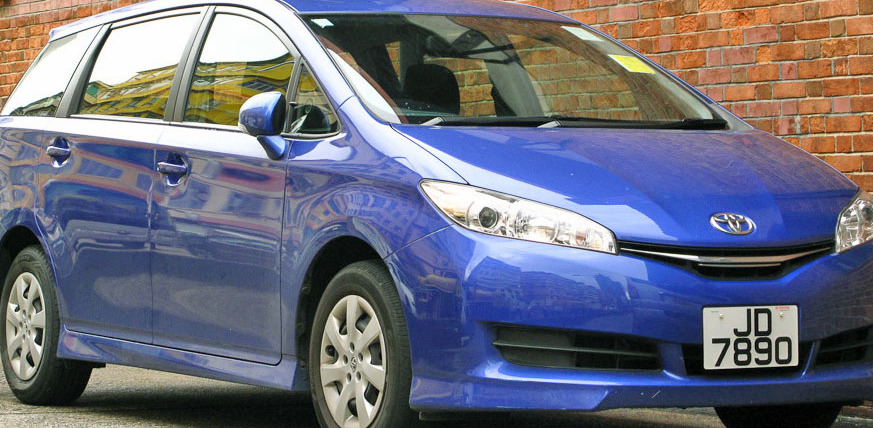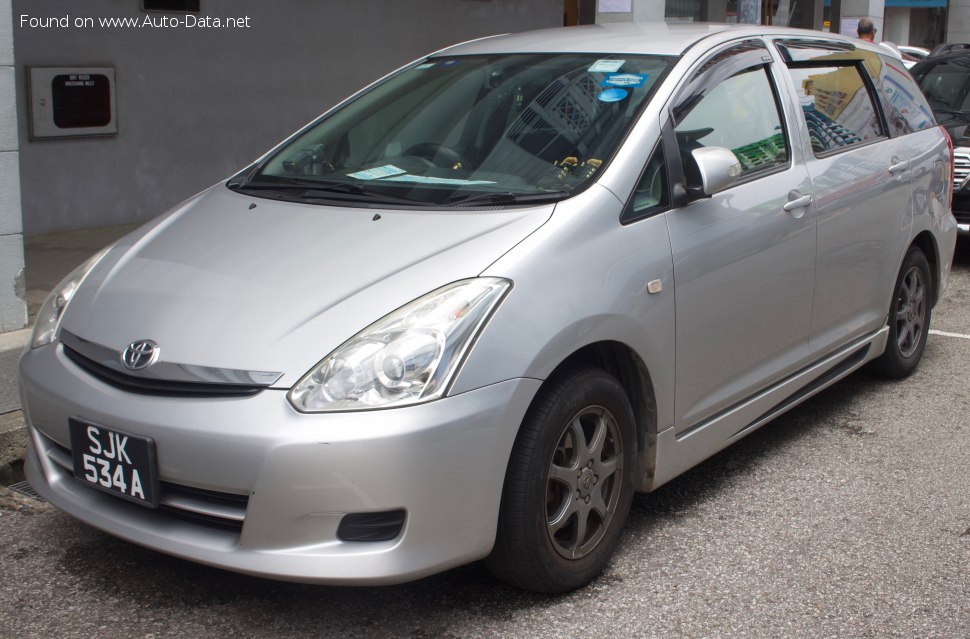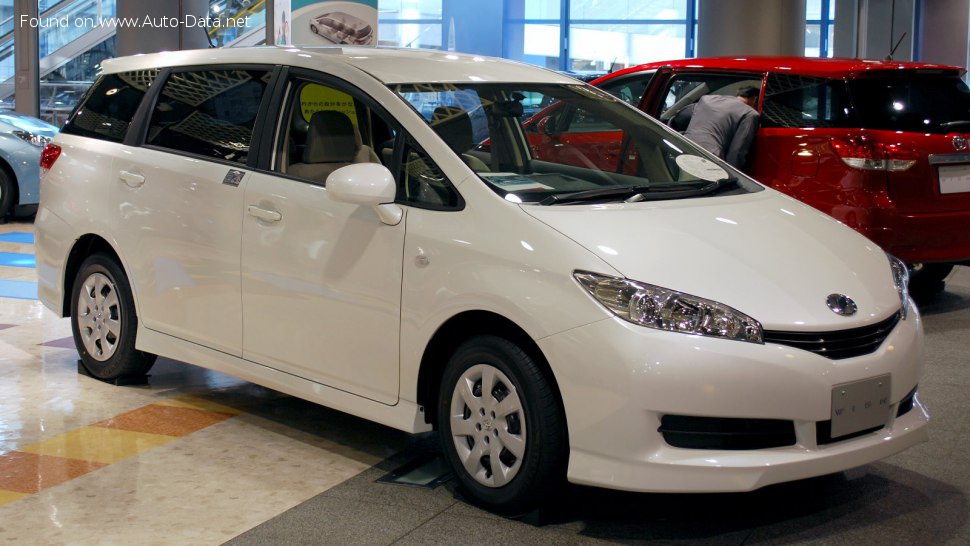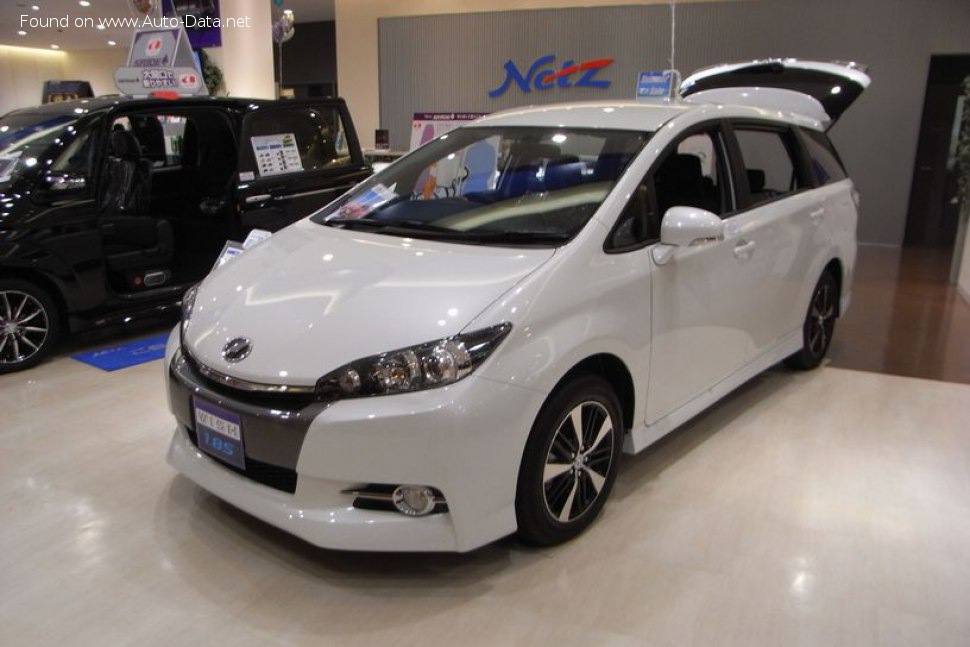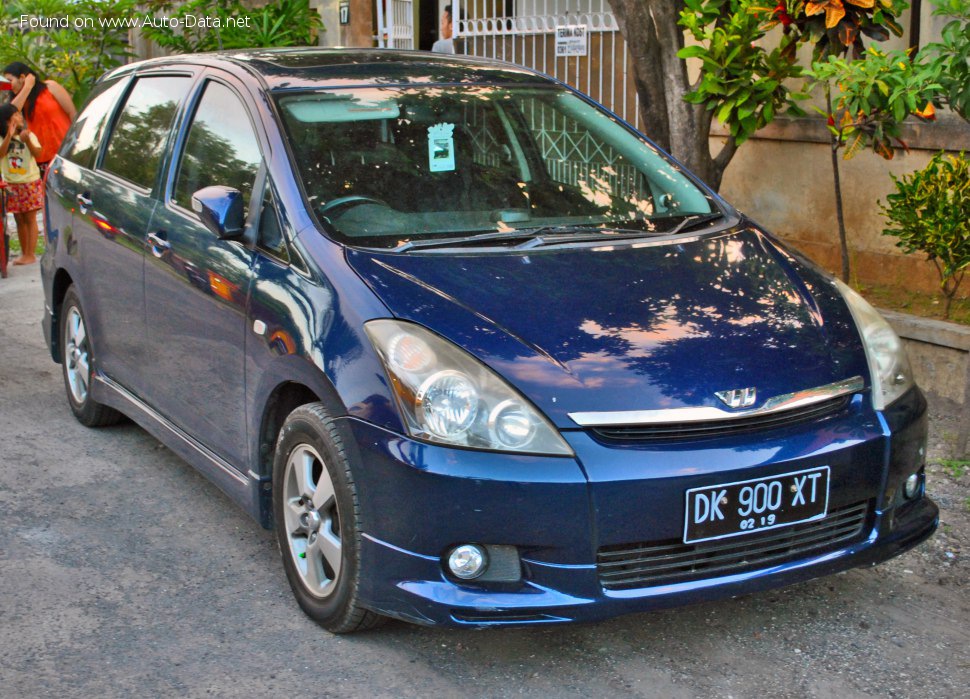
The Toyota Wish is a compact minivan that was primarily marketed in Japan, and to a lesser extent in other Asian markets, Europe, and Australia. Produced from 2003 to 2017 across three generations, the Wish aimed to provide a versatile and spacious vehicle in a smaller footprint than traditional minivans. The first generation, known as the Wish I (produced from 2003 to 2005), established the model’s core concept: a seven-seat configuration within a relatively compact body, appealing to families and individuals needing flexible passenger and cargo space. While never officially sold in the United States, the Wish represents Toyota’s response to the growing demand for multi-purpose vehicles in markets where larger minivans were impractical due to road conditions or parking limitations.
Toyota Wish I 1.8: An Overview
The Toyota Wish I, launched in January 2003 and continuing through August 2005, was the inaugural model in the Wish lineup. It distinguished itself with its unique three-row seating arrangement, offering seven passenger capacity in a body style that was more akin to a tall hatchback than a traditional minivan. This design approach allowed for a more manageable size for urban driving while still providing the practicality of multiple seating positions. The Wish I was offered with a range of engine options depending on the market, but the 1.8-liter engine, producing 132 horsepower, was a common configuration, particularly in markets like Japan and Australia. The vehicle’s focus was on providing a comfortable and practical transportation solution for families and small groups.
Engine & Performance
The Toyota Wish I 1.8 is powered by the 1ZZ-FE 1.8-liter inline-four cylinder gasoline engine. This naturally aspirated engine delivers 132 horsepower at 6000 rpm and 171 Nm (126.12 lb.-ft.) of torque at 4200 rpm. The engine features a double overhead camshaft (DOHC) valvetrain with four valves per cylinder, and utilizes multi-port fuel injection. The 1.8-liter engine provides adequate performance for everyday driving, with a power-to-weight ratio of 9.8 kg/Hp (101.5 Hp/tonne) and a torque-to-weight ratio of 7.6 kg/Nm (131.5 Nm/tonne). Power is delivered to the front wheels via a four-speed automatic transmission with Electronic Control Technology (ECT). Fuel consumption is rated at 6.9 liters per 100 kilometers (34.1 US mpg, 40.9 UK mpg, 14.5 km/l), making it reasonably efficient for its class and era. The engine’s transverse mounting contributes to efficient packaging within the vehicle’s compact footprint.
Design & Features
The Toyota Wish I is a five-door minivan characterized by its relatively high roofline and compact dimensions. Its design prioritizes interior space and practicality over overtly sporty aesthetics. The vehicle’s most notable feature is its seven-seat configuration, achieved through a clever arrangement of the second and third-row seats. The second row typically features a 60/40 split folding bench, while the third row consists of two individually foldable seats. This allows for a variety of seating and cargo configurations to suit different needs. The Wish I’s interior is designed with family use in mind, featuring durable materials and a functional layout. Safety features for the time included an Anti-lock Braking System (ABS) as standard equipment. The vehicle’s exterior styling is understated, with a focus on maximizing interior space and visibility. The overall design reflects Toyota’s commitment to providing a practical and reliable vehicle for everyday use.
Technical Specifications
| Brand | Toyota |
| Model | Wish |
| Generation | Wish I |
| Type (Engine) | 1.8 (132 Hp) Automatic |
| Start of production | January, 2003 |
| End of production | August, 2005 |
| Powertrain Architecture | Internal Combustion engine |
| Body type | Minivan |
| Seats | 7 |
| Doors | 5 |
| Fuel consumption (combined) | 6.9 l/100 km (34.1 US mpg, 40.9 UK mpg, 14.5 km/l) |
| Fuel Type | Petrol (Gasoline) |
| Weight-to-power ratio | 9.8 kg/Hp, 101.5 Hp/tonne |
| Weight-to-torque ratio | 7.6 kg/Nm, 131.5 Nm/tonne |
| Power | 132 Hp @ 6000 rpm |
| Power per litre | 73.6 Hp/l |
| Torque | 171 Nm @ 4200 rpm (126.12 lb.-ft. @ 4200 rpm) |
| Engine layout | Front, Transverse |
| Engine Model/Code | 1ZZ-FE |
| Engine displacement | 1794 cm3 (109.48 cu. in.) |
| Number of cylinders | 4 |
| Engine configuration | Inline |
| Cylinder Bore | 79 mm (3.11 in.) |
| Piston Stroke | 91.5 mm (3.6 in.) |
| Compression ratio | 10:1 |
| Number of valves per cylinder | 4 |
| Fuel injection system | Multi-port manifold injection |
| Engine aspiration | Naturally aspirated engine |
| Valvetrain | DOHC |
| Engine oil capacity | 3.7 l (3.91 US qt | 3.26 UK qt) |
| Coolant | 6.9 l (7.29 US qt | 6.07 UK qt) |
| Kerb Weight | 1300 kg (2866.01 lbs.) |
| Max. weight | 1685 kg (3714.79 lbs.) |
| Max load | 385 kg (848.78 lbs.) |
| Fuel tank capacity | 60 l (15.85 US gal | 13.2 UK gal) |
| Length | 4550 mm (179.13 in.) |
| Width | 1695 mm (66.73 in.) |
| Height | 1590 mm (62.6 in.) |
| Wheelbase | 2750 mm (108.27 in.) |
| Front track | 1480 mm (58.27 in.) |
| Rear track | 1465 mm (57.68 in.) |
| Ride height (ground clearance) | 155 mm (6.1 in.) |
| Minimum turning circle | 10.6 m (34.78 ft.) |
| Drivetrain Architecture | Front wheel drive, Internal Combustion engine |
| Drive wheel | Front wheel drive |
| Number of gears and type of gearbox | 4 gears, automatic transmission ECT |
| Front brakes | Ventilated discs |
| Rear brakes | Drum |
| Assisting systems | ABS (Anti-lock braking system) |
| Tires size | 195/65 R15 |
The Toyota Wish I, while not sold in the US market, represents a significant offering in the compact minivan segment, particularly in Asia. Its blend of practicality, space efficiency, and reasonable fuel economy made it a popular choice for families seeking a versatile vehicle in urban environments.