
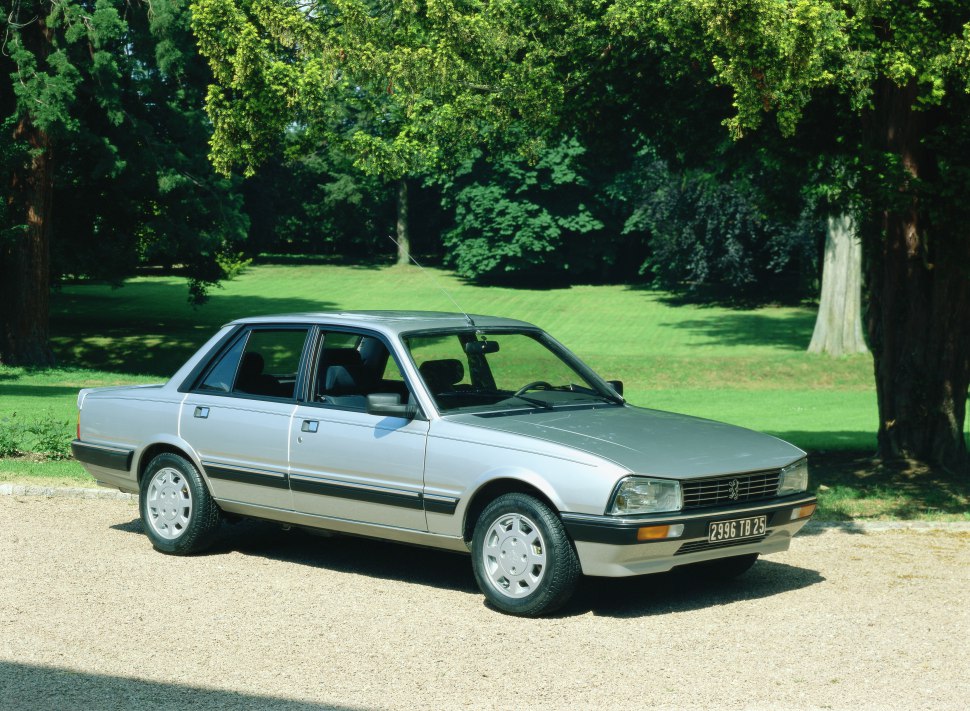
The Peugeot 505, specifically the 551A variant powered by the 1.8-liter engine, represents a significant step forward for the French automaker in the mid-size executive car segment. Produced from 1982 to 1985, this iteration of the 505 was primarily aimed at the European market, offering a blend of comfort, practicality, and relatively economical performance. While never officially sold in the United States, the 505, in its various forms, gained a reputation for durability and sophisticated engineering, becoming a popular choice for those seeking an alternative to German and British luxury sedans. The 505 was Peugeot’s replacement for the 504, a car that had enjoyed a remarkably long production run and established Peugeot as a maker of well-built, reliable vehicles. The 551A, with its 1.8-liter engine, served as the entry point to the 505 range, prioritizing fuel efficiency and affordability over outright performance.
Peugeot 505 (551A): A Detailed Overview
The 505 was a crucial model for Peugeot, designed to compete with established players like the BMW 5 Series, Mercedes-Benz E-Class (W123 at the time), and Audi 100. It represented a move upmarket for Peugeot, with a greater emphasis on refinement and technology. The 551A, distinguished by its 1.8-liter engine, was positioned as the more accessible version, appealing to buyers who valued practicality and running costs. The car’s design, penned by Pininfarina, was a departure from the more angular styling of the 504, adopting a more modern and streamlined aesthetic. The 505’s independent suspension, on all four wheels, was a key selling point, providing a comfortable ride and good handling characteristics. The 551A, while not the most powerful variant, offered a balanced driving experience suitable for everyday use and long-distance journeys.
Engine & Performance
The heart of the Peugeot 505 (551A) is the 105 XM7 1.8-liter, naturally aspirated inline-four cylinder gasoline engine. This engine produced 82 horsepower, which, while modest by modern standards, was adequate for the car’s weight and intended purpose. The engine’s design focused on reliability and fuel efficiency rather than outright performance. It featured a single overhead camshaft and a two-barrel carburetor, technologies common for the era. The engine’s torque output, while not specifically documented in available data, was sufficient for comfortable cruising and overtaking maneuvers on European roads. The powertrain was typically paired with a four-speed manual transmission, although a three-speed automatic transmission was also offered as an option. The 505’s performance figures were typical for a mid-size sedan of the early 1980s; acceleration was respectable, and the car was capable of reaching highway speeds without strain. The engine’s relatively simple design contributed to its longevity and ease of maintenance, making it a popular choice for those seeking a reliable and affordable vehicle.
Design & Features
The Peugeot 505 (551A) is a four-door sedan characterized by its elegant and understated design. Pininfarina’s influence is evident in the car’s clean lines, balanced proportions, and overall aesthetic appeal. The body featured a relatively low-slung profile and a spacious interior, offering comfortable seating for five passengers. The interior was designed with practicality and comfort in mind, featuring supportive seats, a well-laid-out dashboard, and ample storage space. Features such as power steering, central locking, and electric windows were often included, depending on the trim level. Safety features, while limited by the standards of the time, included front disc brakes and rear drum brakes, along with a robust chassis designed to protect occupants in the event of a collision. The 505’s independent suspension system, a key feature of the car, provided a smooth and comfortable ride, even on uneven road surfaces. The car’s build quality was generally considered to be high, with attention paid to detail and durability. The 551A, as the entry-level model, typically featured a more restrained level of trim compared to the higher-specification variants, but still offered a comfortable and well-equipped interior.
Technical Specifications
| Brand | Peugeot |
| Model | 505 |
| Generation | 505 (551A) |
| Type (Engine) | 1.8 (82 Hp) |
| Start of production | 1982 |
| End of production | 1985 |
| Powertrain Architecture | Internal Combustion engine |
| Body type | Sedan |
| Fuel Type | Petrol (Gasoline) |
| Power | 82 Hp |
| Engine Model/Code | 105 XM7 |
| Engine aspiration | Naturally aspirated engine |
| Engine oil capacity | 4.5 l / 4.76 US qt / 3.96 UK qt |
| Coolant capacity | 8.5 l / 8.98 US qt / 7.48 UK qt |
The Peugeot 505 (551A) 1.8, despite not being a performance icon, holds a significant place in automotive history. It represents Peugeot’s ambition to compete in the executive car market and offered a compelling alternative to its rivals. Its blend of comfort, practicality, and reliability made it a popular choice among European drivers, and its elegant design continues to be appreciated by enthusiasts today. While it never officially reached American shores, the 505’s reputation for durability and sophisticated engineering has earned it a dedicated following among those who appreciate classic European automobiles.
