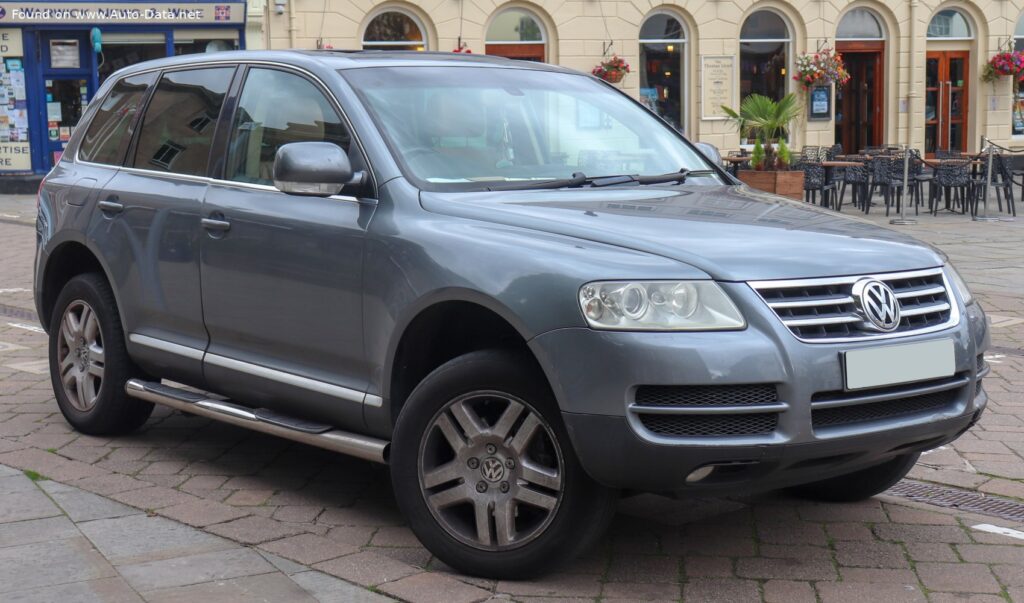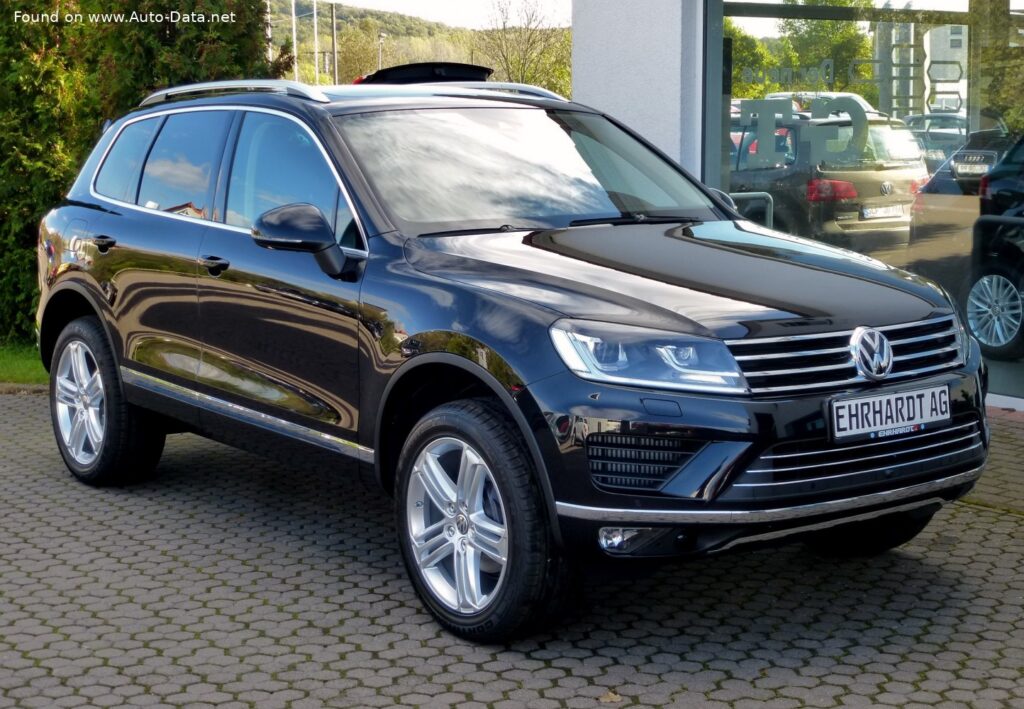
The Volkswagen Touareg II (7P), particularly the facelifted version introduced in 2014, represents a significant evolution in Volkswagen’s luxury SUV offerings. Produced from 2015 to 2018, this iteration of the Touareg aimed to blend off-road capability with on-road refinement, appealing to a market segment seeking a versatile and comfortable vehicle. While the Touareg wasn’t initially a major seller in the United States compared to other SUVs, it established a foothold as a sophisticated alternative, leveraging Volkswagen’s engineering prowess and a reputation for build quality. The 3.0 V6 TSI 4MOTION Tiptronic model, with its 320 horsepower engine, was a key variant in many European markets and offered a compelling balance of performance and efficiency.
Volkswagen Touareg II (7P) 3.0 V6 TSI: An Overview
The Touareg II, launched in 2010, was a substantial upgrade over its predecessor, sharing a platform with the Porsche Cayenne and Audi Q7. The 2014 facelift brought revised styling, enhanced technology, and updated engine options. The 3.0 V6 TSI model, equipped with Volkswagen’s supercharged and turbocharged engine, became a popular choice for buyers prioritizing power and responsiveness. The 4MOTION all-wheel-drive system, coupled with the Tiptronic eight-speed automatic transmission, provided confident handling in various conditions. This Touareg generation aimed to deliver a premium SUV experience, competing with established players like BMW, Mercedes-Benz, and Land Rover.
Engine & Performance
The heart of the Touareg II 3.0 V6 TSI is a 2.995-liter (182.77 cubic inches) V6 engine, producing 320 horsepower at 5700-6500 rpm and 440 Nm (324.53 lb.-ft.) of torque between 2900-4700 rpm. This engine utilizes a combination of supercharging and turbocharging, providing immediate response at low engine speeds and sustained power throughout the rev range. The supercharger assists the turbocharger at lower RPMs, eliminating turbo lag and delivering a more linear power delivery. The engine features direct injection and multi-port manifold injection for optimized fuel combustion. Paired with the eight-speed Tiptronic automatic transmission, the Touareg achieves a 0-60 mph (0-97 km/h) time of approximately 6.7 seconds and a 0-100 km/h (0-62 mph) time of 7 seconds. Its maximum speed is electronically limited to 235 km/h (146.02 mph). The weight-to-power ratio of 7 kg/Hp and weight-to-torque ratio of 5.1 kg/Nm contribute to its spirited performance.
Design & Features
The Touareg II is a five-door, five-seat SUV characterized by its robust yet elegant design. The 2014 facelift brought subtle but noticeable changes to the exterior, including revised headlights, a redesigned grille, and updated bumpers. The interior is focused on comfort and functionality, with high-quality materials and a well-designed dashboard. Key features include a spacious cabin, comfortable seating, and a generous cargo area. Trunk space ranges from a minimum of 580 liters (20.48 cubic feet) to a maximum of 1642 liters (57.99 cubic feet) with the rear seats folded down. The Touareg II offered optional features like air suspension, which enhanced ride comfort and provided adjustable ground clearance. Safety features were also a priority, with standard equipment including ABS, electronic stability control, and multiple airbags. The vehicle’s dimensions – a length of 4801 mm (189.02 in), a width of 1940 mm (76.38 in), and a height of 1709 mm (67.28 in) – provide a substantial presence on the road.
Technical Specifications
| Brand | Volkswagen |
| Model | Touareg |
| Generation | Touareg II (7P, facelift 2014) |
| Type (Engine) | 3.0 V6 TSI (320 Hp) 4MOTION Tiptronic |
| Start of production | September, 2015 |
| End of production | 2018 |
| Powertrain Architecture | Internal Combustion engine |
| Body type | SUV |
| Seats | 5 |
| Doors | 5 |
| Fuel consumption (combined) | 10.2 l/100 km (23.1 US mpg, 27.7 UK mpg, 9.8 km/l) |
| Fuel Type | Petrol (Gasoline) |
| Acceleration 0 – 100 km/h | 7 sec |
| Acceleration 0 – 62 mph | 7 sec |
| Acceleration 0 – 60 mph | 6.7 sec |
| Maximum speed | 235 km/h (146.02 mph) |
| Weight-to-power ratio | 7 kg/Hp |
| Weight-to-torque ratio | 5.1 kg/Nm |
| Power | 320 Hp @ 5700-6500 rpm |
| Power per litre | 106.8 Hp/l |
| Torque | 440 Nm @ 2900-4700 rpm (324.53 lb.-ft. @ 2900-4700 rpm) |
| Engine layout | Front, Longitudinal |
| Engine displacement | 2995 cm3 (182.77 cu. in.) |
| Number of cylinders | 6 |
| Engine configuration | V-engine |
| Cylinder Bore | 84.5 mm (3.33 in.) |
| Piston Stroke | 89 mm (3.5 in.) |
| Number of valves per cylinder | 4 |
| Fuel injection system | Direct injection and Multi-port manifold injection |
| Engine aspiration | Supercharger, Intercooler |
| Valvetrain | DOHC |
| Kerb Weight | 2244 kg (4947.17 lbs.) |
| Trunk (boot) space – minimum | 580 l (20.48 cu. ft.) |
| Trunk (boot) space – maximum | 1642 l (57.99 cu. ft.) |
| Fuel tank capacity | 100 l (26.42 US gal | 22 UK gal) |
| Length | 4801 mm (189.02 in.) |
| Width | 1940 mm (76.38 in.) |
| Width including mirrors | 2208 mm (86.93 in.) |
| Height | 1709 mm (67.28 in.) |
| Wheelbase | 2893 mm (113.9 in.) |
| Ride height (ground clearance) | 201 mm (7.91 in.) |
| Minimum turning circle | 11.9 m (39.04 ft.) |
| Approach angle | 30° |
| Departure angle | 30° |
| Ramp-over (brakeover) angle | 27° |
| Climb angle | 45° |
| Wading depth | 580 mm (22.83 in.) |
| Drivetrain Architecture | All wheel drive (4×4). ICE drives all four wheels. |
| Number of gears and type of gearbox | 8 gears, automatic transmission Tiptronic |
| Front suspension | Coil spring, Double wishbone, Transverse stabilizer, Air Suspension – Optional |
| Rear suspension | Double wishbone, Transverse stabilizer, Coil spring, Air Suspension – Optional |
| Front brakes | Ventilated discs |
| Rear brakes | Ventilated discs |
| Assisting systems | ABS (Anti-lock braking system) |
| Steering type | Steering rack and pinion |
| Power steering | Electric Steering |
| Tires size | 255/55 R18; 265/50 R19; 275/45 R20 |
| Wheel rims size | 8J x 18; 8.5J x 19; 9J x 20 |