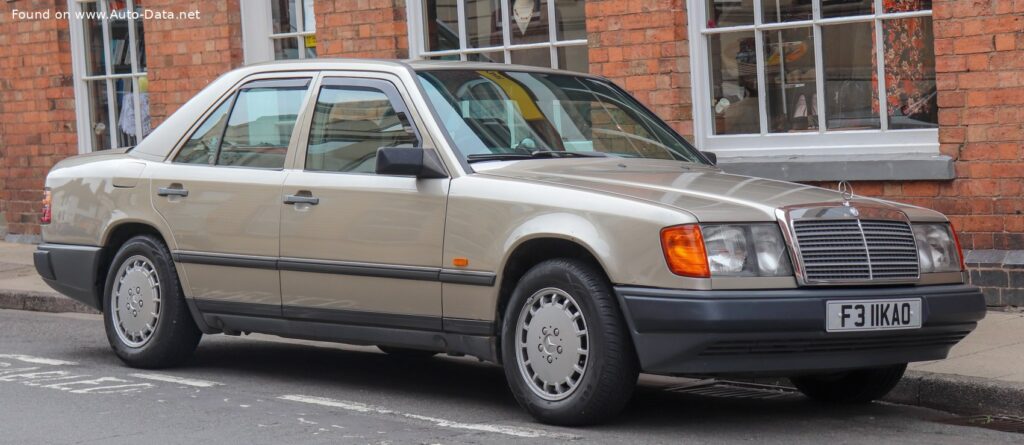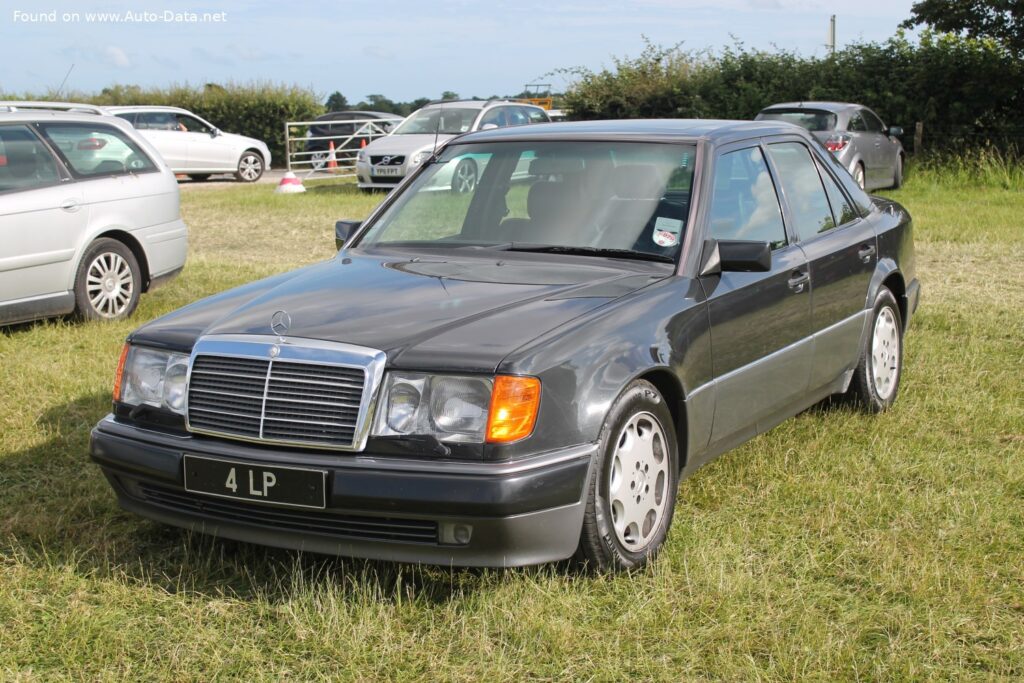
The Mercedes-Benz W124, produced from 1985 to 1996, represented a significant leap forward in engineering and design for the German automaker. The facelifted version, introduced in 1989, refined the already successful W124 platform, addressing minor criticisms and solidifying its reputation for build quality and durability. Among the various engine options available, the 250 D Turbo, producing 126 horsepower, offered a compelling blend of performance and fuel efficiency, particularly appealing to European buyers seeking a comfortable and economical long-distance touring vehicle. This model was not widely sold in the United States, where Mercedes-Benz focused on larger, more powerful offerings. The W124, in all its iterations, became a benchmark for mid-size luxury sedans, influencing automotive design and engineering for years to come.
Mercedes-Benz W124 250 D Turbo (1989-1993)
The W124 250 D Turbo, produced between September 1989 and July 1993, was a key variant within the W124 range. It catered to a market increasingly focused on diesel efficiency without sacrificing acceptable performance. The addition of a turbocharger to the 2.5-liter five-cylinder diesel engine significantly boosted power output compared to naturally aspirated versions, making it a popular choice for those covering substantial mileage. The W124’s robust construction and advanced (for its time) safety features further enhanced its appeal, establishing it as a reliable and sophisticated vehicle.
Engine & Performance
The heart of the W124 250 D Turbo is its OM 602 D 25 A / 602.962 2.5-liter inline five-cylinder diesel engine. This engine, displacing 2497 cm³ (152.38 cu. in.), benefits from a turbocharger and precombustion chamber fuel injection, delivering 126 horsepower at 4600 rpm and 231 Nm (170.38 lb.-ft.) of torque at 2800 rpm. The turbocharger significantly improves responsiveness and allows for a higher power-to-weight ratio. The engine’s longitudinal front-mounted layout contributes to balanced handling. Acceleration from 0 to 100 km/h (0-62 mph) takes 12.3 seconds, while 0 to 60 mph is achieved in approximately 11.7 seconds. The vehicle boasts a maximum speed of 198 km/h (123.03 mph). The engine’s relatively high compression ratio of 22:1 is typical for diesel engines of the era, contributing to its efficiency. The power-to-weight ratio is 11.4 kg/Hp, and the torque-to-weight ratio is 6.2 kg/Nm.
Design & Features
The W124 250 D Turbo is a four-door sedan with a classic, understated Mercedes-Benz design. The 1989 facelift brought subtle but important changes, including revised front and rear styling, improved aerodynamics, and enhanced interior appointments. The vehicle seats five passengers comfortably. Safety was a key consideration in the W124’s design, and the 250 D Turbo was equipped with an Anti-lock Braking System (ABS) as standard, a relatively advanced feature for the time. The suspension utilizes a wishbone setup at the front and an independent multi-link suspension at the rear, providing a comfortable ride and good handling characteristics. Hydraulic power steering further enhances the driving experience. The vehicle’s dimensions are 4740 mm (186.61 in) in length, 1740 mm (68.5 in) in width, and 1428 mm (56.22 in) in height, with a wheelbase of 2800 mm (110.24 in). The standard tire size is 195/65 R15 on 6.5J x 15 inch rims.
Technical Specifications
| Brand | Mercedes-Benz |
| Model | W124 |
| Generation | W124 (facelift 1989) |
| Type (Engine) | 250 D Turbo (126 Hp) |
| Start of production | September, 1989 |
| End of production | July, 1993 |
| Powertrain Architecture | Internal Combustion engine |
| Body type | Sedan |
| Seats | 5 |
| Doors | 4 |
| Fuel consumption (urban) | 9.6 l/100 km (24.5 US mpg, 29.4 UK mpg, 10.4 km/l) |
| Fuel consumption (extra urban) | 5.6 l/100 km (42 US mpg, 50.4 UK mpg, 17.9 km/l) |
| Fuel consumption (combined) | 7.4 l/100 km (31.8 US mpg, 38.2 UK mpg, 13.5 km/l) |
| Fuel Type | Diesel |
| Acceleration 0 – 100 km/h | 12.3 sec |
| Acceleration 0 – 62 mph | 12.3 sec |
| Acceleration 0 – 60 mph | 11.7 sec |
| Maximum speed | 198 km/h (123.03 mph) |
| Weight-to-power ratio | 11.4 kg/Hp |
| Weight-to-torque ratio | 6.2 kg/Nm |
| Power | 126 Hp @ 4600 rpm |
| Power per litre | 50.5 Hp/l |
| Torque | 231 Nm @ 2800 rpm (170.38 lb.-ft. @ 2800 rpm) |
| Engine layout | Front, Longitudinal |
| Engine Model/Code | OM 602 D 25 A / 602.962 |
| Engine displacement | 2497 cm3 (152.38 cu. in.) |
| Number of cylinders | 5 |
| Engine configuration | Inline |
| Cylinder Bore | 87 mm (3.43 in.) |
| Piston Stroke | 84 mm (3.31 in.) |
| Compression ratio | 22:1 |
| Number of valves per cylinder | 2 |
| Fuel injection system | Precombustion chamber injection |
| Engine aspiration | Turbocharger |
| Valvetrain | SOHC |
| Engine oil capacity | 7 l (7.4 US qt | 6.16 UK qt) |
| Coolant | 9.5 l (10.04 US qt | 8.36 UK qt) |
| Kerb Weight | 1440 kg (3174.66 lbs.) |
| Max. weight | 2010 kg (4431.29 lbs.) |
| Max load | 570 kg (1256.63 lbs.) |
| Fuel tank capacity | 70 l (18.49 US gal | 15.4 UK gal) |
| Length | 4740 mm (186.61 in.) |
| Width | 1740 mm (68.5 in.) |
| Height | 1428 mm (56.22 in.) |
| Wheelbase | 2800 mm (110.24 in.) |
| Front track | 1501 mm (59.09 in.) |
| Rear track | 1491 mm (58.7 in.) |
| Minimum turning circle | 11 m (36.09 ft.) |
| Drivetrain Architecture | Rear wheel drive |
| Number of gears | 5 gears, manual transmission |
| Front suspension | Wishbone |
| Rear suspension | Independent multi-link suspension |
| Front brakes | Ventilated discs |
| Rear brakes | Disc |
| Assisting systems | ABS (Anti-lock braking system) |
| Steering type | Cone worm with recirculation balls |
| Power steering | Hydraulic Steering |
| Tires size | Front/Rear: 195/65 R15 |
| Wheel rims size | Front/Rear: 6.5J x 15 |
The Mercedes-Benz W124 250 D Turbo remains a highly regarded vehicle, celebrated for its engineering excellence, durability, and comfortable driving experience. While not a high-performance sports sedan, it offered a refined and practical option for discerning buyers who valued quality and reliability above all else.