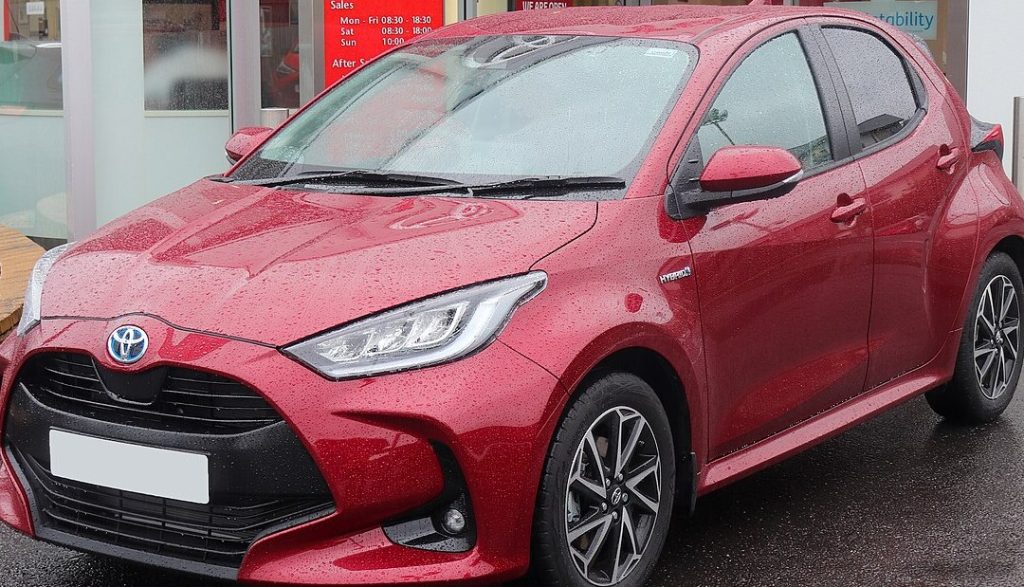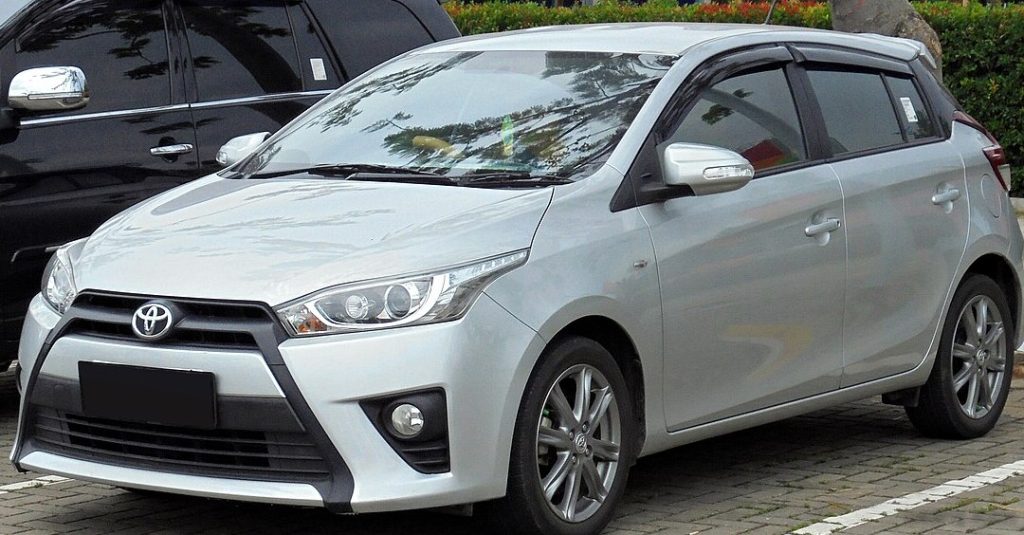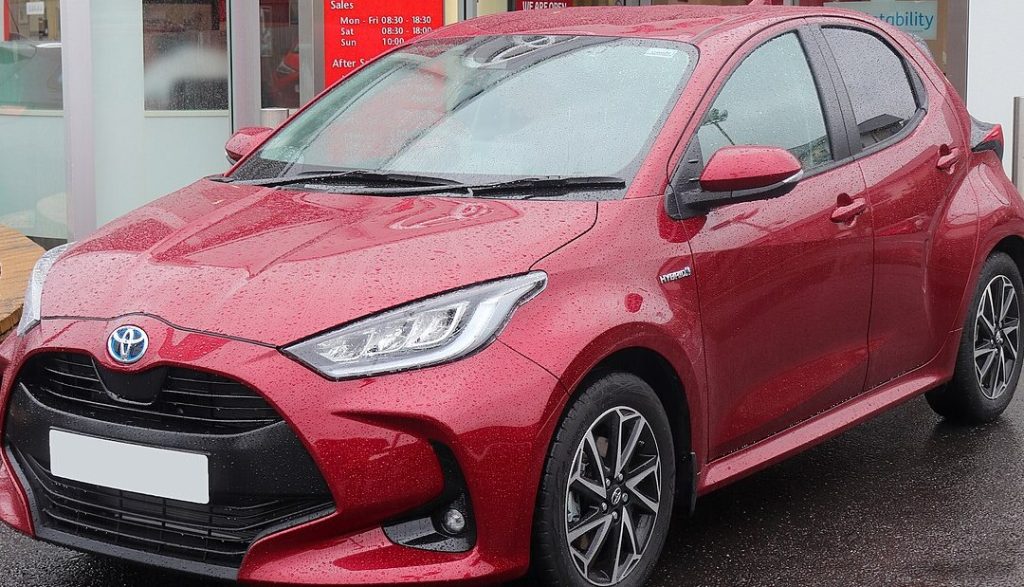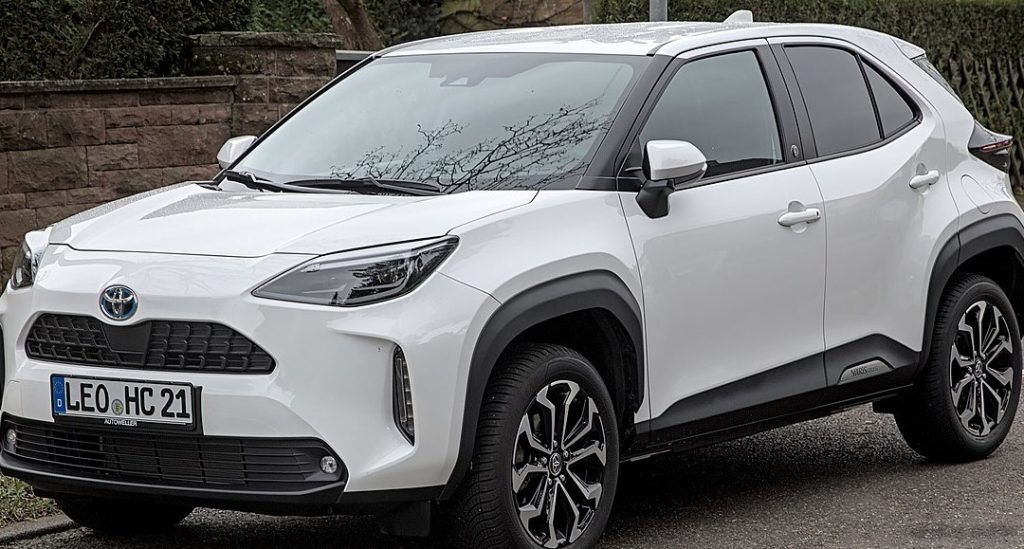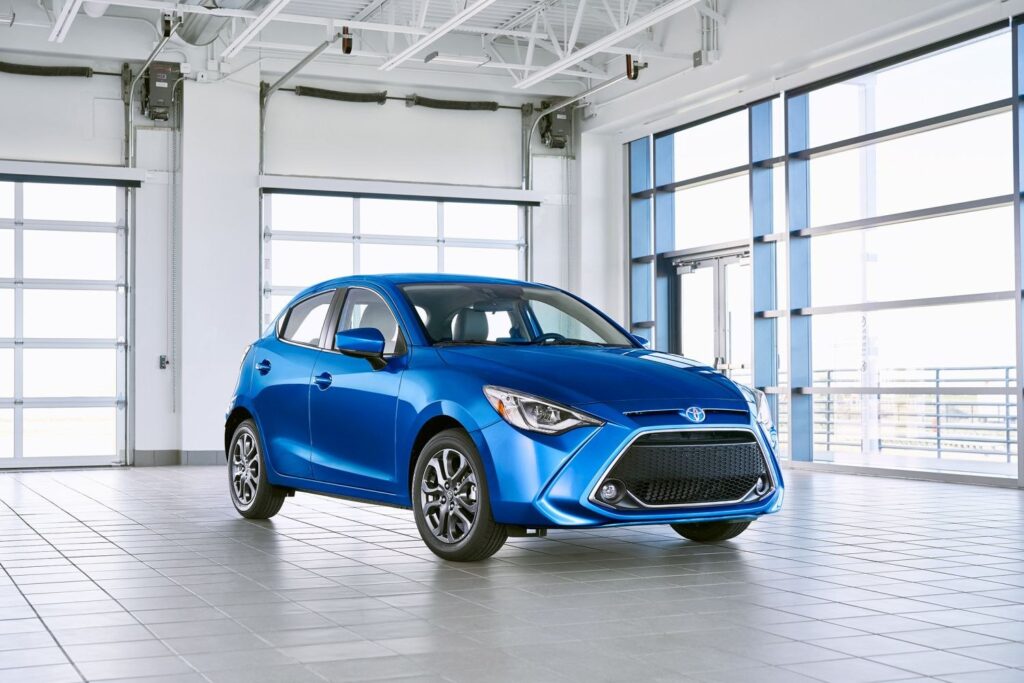
The Toyota Yaris Hatchback, specifically the facelifted version released for the 2019 and 2020 model years, represents Toyota’s entry into the subcompact hatchback segment in the United States. While the Yaris nameplate has a longer history globally, particularly in Europe and Japan, this iteration was primarily aimed at providing an affordable and fuel-efficient option for American consumers. This generation of the Yaris was a rebadged version of the Mazda2, a result of a partnership between the two automakers, bringing Mazda’s renowned chassis engineering to Toyota’s reliability and market reach. The 2019 facelift brought minor cosmetic updates and continued the focus on practicality and economy.
Toyota Yaris Hatchback (USA) (Facelift 2019): An Overview
The Yaris Hatchback occupied a niche in the US market, catering to buyers seeking a small, maneuverable, and economical vehicle. It competed with other subcompacts like the Honda Fit, Nissan Versa Note, and Kia Rio. The 1.5-liter engine and automatic transmission configuration was a popular choice, offering a balance between affordability and ease of driving. Despite its relatively short production run in this specific facelifted form (2019-2020), it remains a notable example of Toyota’s commitment to offering a diverse range of vehicles to meet varying consumer needs.
Engine & Performance
The 2019-2020 Toyota Yaris Hatchback was powered by a 1.5-liter inline four-cylinder gasoline engine, designated the 2NR-FE. This engine produced 106 horsepower at 6000 rpm and 140 Nm (103.26 lb.-ft.) of torque at 4000 rpm. While not designed for outright speed, the engine provided adequate power for city driving and highway cruising. The engine featured a direct injection fuel system and a double overhead camshaft (DOHC) valvetrain, contributing to its efficiency and responsiveness. Power was delivered to the front wheels via a six-speed automatic transmission. The Yaris boasted a weight-to-power ratio of 10.2 kg/Hp and a weight-to-torque ratio of 7.8 kg/Nm, indicating a reasonably efficient powertrain. Fuel economy figures were a key selling point, with combined fuel consumption rated at 6.7 l/100 km (35.1 US mpg, 42.2 UK mpg, 14.9 km/l). Urban fuel consumption was 7.4 l/100 km (31.8 US mpg), and extra-urban consumption was 5.9 l/100 km (39.9 US mpg). The engine also included a particulate filter, reflecting increasing emissions standards.
Design & Features
The Toyota Yaris Hatchback is a five-door hatchback, offering seating for five passengers. Its compact dimensions – 4105 mm (161.61 in.) in length, 1694 mm (66.69 in.) in width, and 1514 mm (59.61 in.) in height – made it easy to maneuver in urban environments and park in tight spaces. The vehicle’s design prioritized practicality and functionality over flamboyant styling. The interior was designed to be user-friendly, with a focus on maximizing space within the small footprint. Trunk space was a respectable 449 liters (15.86 cu. ft.).
Safety features included an Anti-lock Braking System (ABS). While not equipped with the advanced driver-assistance systems common in newer vehicles, the Yaris provided a basic level of safety for its price point. The steering system utilized an electric power steering rack and pinion, offering responsive and precise handling. The suspension consisted of an independent McPherson strut setup at the front and a torsion beam at the rear, providing a comfortable ride quality for everyday driving. The Yaris’s 140 mm (5.51 in.) of ground clearance allowed it to navigate minor road imperfections with ease.
Technical Specifications
| Brand | Toyota |
| Model | Yaris |
| Generation | Yaris Hatchback (USA) (facelift 2019) |
| Type (Engine) | 1.5 (106 Hp) Automatic |
| Start of production | 2019 |
| End of production | 2020 |
| Powertrain Architecture | Internal Combustion engine |
| Body type | Hatchback |
| Seats | 5 |
| Doors | 5 |
| Fuel consumption (urban) | 7.4 l/100 km (31.8 US mpg) |
| Fuel consumption (extra urban) | 5.9 l/100 km (39.9 US mpg) |
| Fuel consumption (combined) | 6.7 l/100 km (35.1 US mpg) |
| Fuel Type | Petrol (Gasoline) |
| Weight-to-power ratio | 10.2 kg/Hp |
| Weight-to-torque ratio | 7.8 kg/Nm |
| Power | 106 Hp @ 6000 rpm |
| Torque | 140 Nm @ 4000 rpm (103.26 lb.-ft. @ 4000 rpm) |
| Engine layout | Front, Transverse |
| Engine Model/Code | 2NR-FE |
| Number of cylinders | 4 |
| Engine configuration | Inline |
| Cylinder Bore | 74.5 mm (2.93 in.) |
| Piston Stroke | 85.8 mm (3.38 in.) |
| Compression ratio | 12:1 |
| Number of valves per cylinder | 4 |
| Fuel injection system | Direct injection |
| Engine aspiration | Naturally aspirated |
| Valvetrain | DOHC |
| Engine oil capacity | 3.4 l (3.59 US qt | 2.99 UK qt) |
| Kerb Weight | 1086-1109 kg (2394.22 – 2444.93 lbs.) |
| Trunk (boot) space | 449 l (15.86 cu. ft.) |
| Fuel tank capacity | 44 l (11.62 US gal | 9.68 UK gal) |
| Length | 4105 mm (161.61 in.) |
| Width | 1694 mm (66.69 in.) |
| Height | 1514 mm (59.61 in.) |
| Wheelbase | 2570 mm (101.18 in.) |
| Front track | 1494 mm (58.82 in.) |
| Rear track | 1483 mm (58.39 in.) |
| Ride height | 140 mm (5.51 in.) |
| Minimum turning circle | 9.8 m (32.15 ft.) |
| Drivetrain | Front wheel drive |
| Number of gears | 6 |
| Gearbox type | Automatic transmission |
| Front suspension | Independent, McPherson with coil spring and anti-roll bar |
| Rear suspension | Torsion |
| Front brakes | Ventilated discs |
| Rear brakes | Drum |
| Assisting systems | ABS (Anti-lock braking system) |
| Steering type | Steering rack and pinion |
| Power steering | Electric |
The Toyota Yaris Hatchback (USA) (facelift 2019) 1.5 (106 Hp) Automatic, while a relatively short-lived model in the American market, offered a compelling combination of affordability, fuel efficiency, and practicality. Its Mazda-derived chassis provided a surprisingly engaging driving experience for a subcompact vehicle, and its focus on essential features made it a sensible choice for budget-conscious buyers.