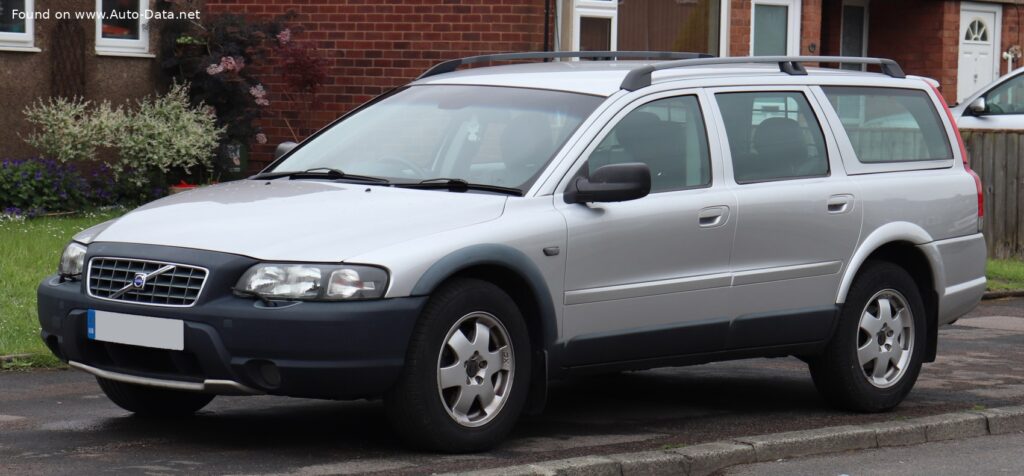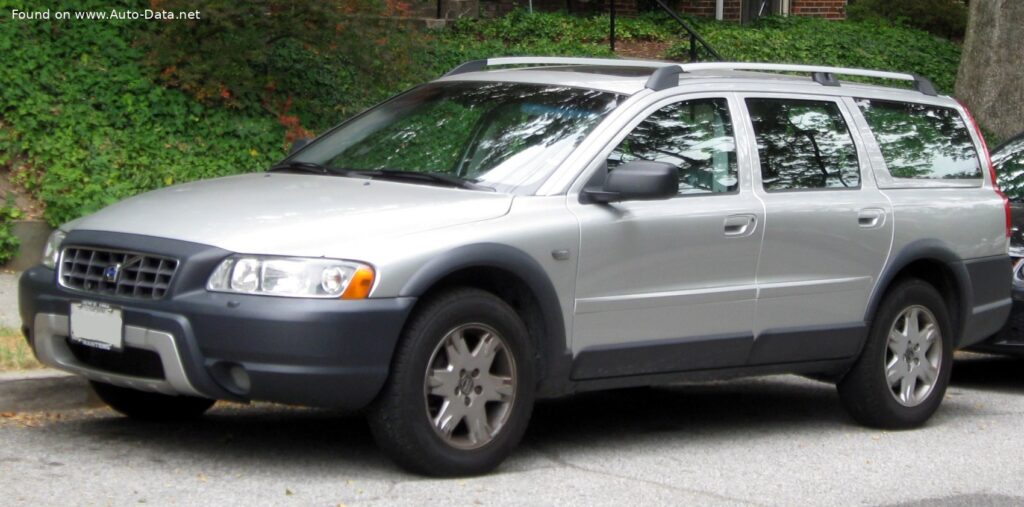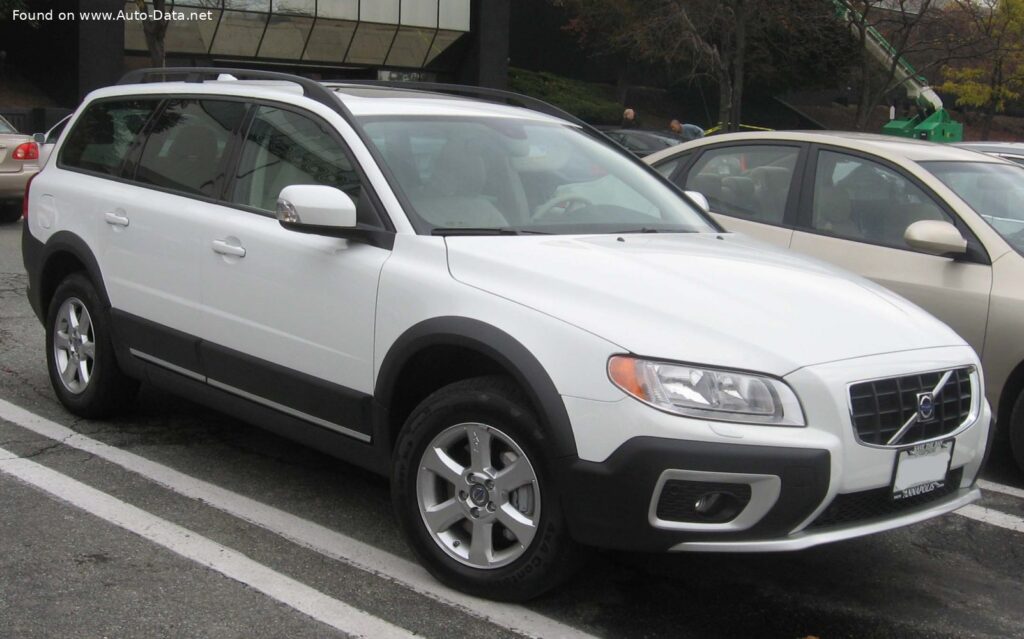
The Volvo XC70 II 3.0 T6, produced from 2008 to 2010, represents the second generation of Volvo’s rugged, all-wheel-drive wagon. Positioned as a crossover estate, the XC70 aimed to blend the practicality of a station wagon with the capability of a sport utility vehicle. While not officially sold in the United States during these specific model years, the XC70 was a popular alternative to traditional SUVs in the European market, appealing to buyers seeking a more refined and car-like driving experience with added versatility. It built upon the foundation of the Volvo V70, adding increased ground clearance, robust exterior cladding, and standard all-wheel drive, making it suitable for varied terrains and weather conditions.
Volvo XC70 II 3.0 T6: An Overview
The XC70 II 3.0 T6 is characterized by its 3.0-liter inline-six engine, producing 285 horsepower and 400 Nm (295 lb-ft) of torque. This model combined a comfortable ride with respectable performance, making it a practical choice for families and individuals alike. The “T6” designation signifies the top-tier engine option available for the XC70 II, paired with Volvo’s Geartronic six-speed automatic transmission and an all-wheel-drive system. The vehicle’s design emphasized safety, a hallmark of the Volvo brand, and offered a spacious interior with ample cargo capacity.
Engine & Performance
At the heart of the XC70 II 3.0 T6 lies Volvo’s B6304T2 3.0-liter inline-six cylinder engine. This engine, displacing 2953 cm3 (180.2 cu. in.), benefits from twin-scroll turbocharging and an intercooler, enabling it to deliver a robust 285 horsepower at 5950 rpm and 400 Nm (295.02 lb-ft) of torque between 1500 and 4800 rpm. This broad torque curve provides strong acceleration and effortless cruising. The engine features multi-port fuel injection and a double overhead camshaft (DOHC) valvetrain with four valves per cylinder. The engine’s power translates to a 0-100 km/h (0-62 mph) acceleration time of 7.6 seconds, and a 0-60 mph time of approximately 7.2 seconds. The top speed is electronically limited to 210 km/h (130.49 mph). Fuel economy is rated at 11.5 liters per 100 kilometers (20.5 US mpg) combined, with 16.6 l/100km (14.2 US mpg) in urban settings and 8.5 l/100km (27.7 US mpg) on the open road. The engine meets Euro 5 emission standards.
Design & Features
The XC70 II maintains the classic Volvo station wagon profile, but with distinct crossover elements. These include increased ride height (210 mm / 8.27 in), protective lower body cladding, and roof rails. The vehicle’s dimensions are 4838 mm (190.47 in) in length, 1861 mm (73.27 in) in width, and 1604 mm (63.15 in) in height. The wheelbase measures 2815 mm (110.83 in). The interior offers seating for five passengers and provides a generous 575 liters (20.31 cu. ft.) of trunk space, expandable to 1600 liters (56.5 cu. ft.) with the rear seats folded down. Safety features, a Volvo hallmark, include ABS (Anti-lock Braking System) and a robust chassis designed to protect occupants in the event of a collision. The XC70 II also features an electrically assisted power steering system and independent suspension – McPherson struts at the front and a multi-link setup at the rear – for a comfortable and controlled ride. The vehicle’s approach, departure, and ramp-over angles are 19°, 24°, and 18° respectively, enhancing its off-road capability.
Technical Specifications
| Brand | Volvo |
| Model | XC70 |
| Generation | XC70 II |
| Type (Engine) | 3.0 T6 (285 Hp) AWD Geartronic |
| Start of production | 2008 |
| End of production | 2010 |
| Powertrain Architecture | Internal Combustion engine |
| Body type | Station wagon (estate), Crossover |
| Seats | 5 |
| Doors | 5 |
| Fuel consumption (economy) – urban | 16.6 l/100 km (14.2 US mpg) |
| Fuel consumption (economy) – extra urban | 8.5 l/100 km (27.7 US mpg) |
| Fuel consumption (economy) – combined | 11.5 l/100 km (20.5 US mpg) |
| CO2 emissions | 269 g/km |
| Fuel Type | Petrol (Gasoline) |
| Acceleration 0 – 100 km/h | 7.6 sec |
| Acceleration 0 – 62 mph | 7.6 sec |
| Acceleration 0 – 60 mph | 7.2 sec |
| Maximum speed | 210 km/h (130.49 mph) |
| Emission standard | Euro 5 |
| Weight-to-power ratio | 6.2 kg/Hp |
| Weight-to-torque ratio | 4.4 kg/Nm |
| Power | 285 Hp @ 5950 rpm |
| Torque | 400 Nm @ 1500-4800 rpm (295.02 lb.-ft.) |
| Engine layout | Front, Transverse |
| Engine Model/Code | B6304T2 |
| Engine displacement | 2953 cm3 (180.2 cu. in.) |
| Number of cylinders | 6 |
| Engine configuration | Inline |
| Cylinder Bore | 82 mm (3.23 in.) |
| Piston Stroke | 93.2 mm (3.67 in.) |
| Compression ratio | 9.3:1 |
| Number of valves per cylinder | 4 |
| Fuel injection system | Multi-port manifold injection |
| Engine aspiration | Twin-scroll turbo, Intercooler |
| Valvetrain | DOHC |
| Engine oil capacity | 7.4 l (7.82 US qt | 6.51 UK qt) |
| Coolant | 8.9 l (9.4 US qt | 7.83 UK qt) |
| Kerb Weight | 1769 kg (3899.98 lbs.) |
| Max. weight | 2400 kg (5291.09 lbs.) |
| Max load | 631 kg (1391.12 lbs.) |
| Trunk (boot) space – minimum | 575 l (20.31 cu. ft.) |
| Trunk (boot) space – maximum | 1600 l (56.5 cu. ft.) |
| Fuel tank capacity | 70 l (18.49 US gal | 15.4 UK gal) |
| Max. roof load | 100 kg (220.46 lbs.) |
| Permitted trailer load with brakes (12%) | 1800 kg (3968.32 lbs.) |
| Permitted trailer load without brakes | 750 kg (1653.47 lbs.) |
| Permitted towbar download | 75 kg (165.35 lbs.) |
| Length | 4838 mm (190.47 in.) |
| Width | 1861 mm (73.27 in.) |
| Width including mirrors | 2119 mm (83.43 in.) |
| Height | 1604 mm (63.15 in.) |
| Wheelbase | 2815 mm (110.83 in.) |
| Front track | 1614 mm (63.54 in.) |
| Rear (Back) track | 1580 mm (62.2 in.) |
| Front overhang | 979 mm (38.54 in.) |
| Rear overhang | 1045 mm (41.14 in.) |
| Ride height (ground clearance) | 210 mm (8.27 in.) |
| Minimum turning circle (turning diameter) | 12 m (39.37 ft.) |
| Drivetrain Architecture | All wheel drive (4×4) |
| Number of gears and type of gearbox | 6 gears, automatic transmission Geartronic |
The Volvo XC70 II 3.0 T6 offered a compelling package for buyers seeking a versatile and capable wagon. Its blend of performance, safety, and practicality cemented its position as a popular choice in the European market, and a desirable alternative to more conventional SUVs.