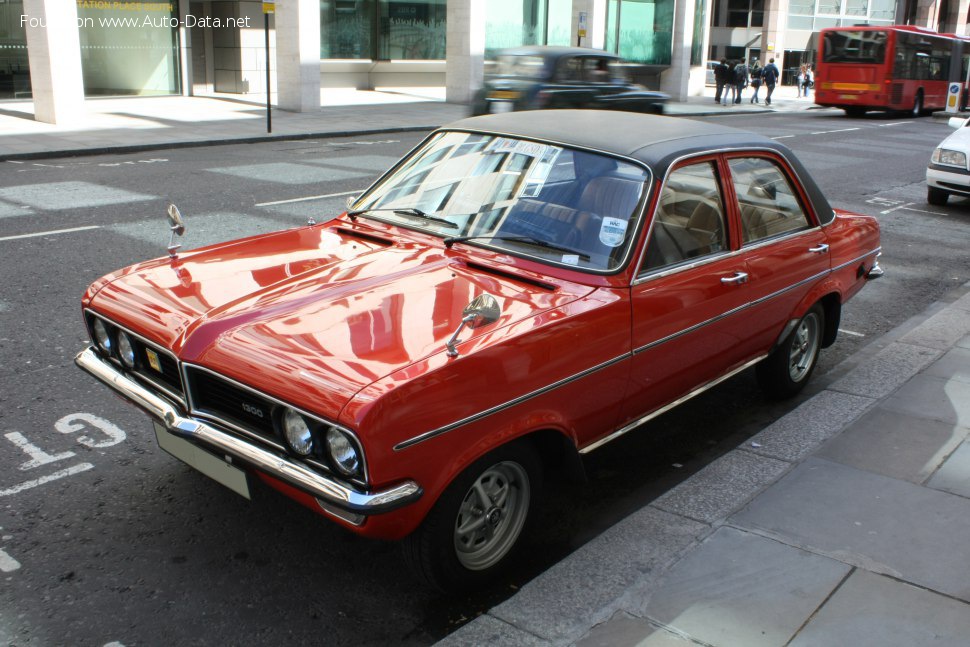
The Vauxhall Viva HC 2300, produced between 1972 and 1973, represents a significant evolution in the Viva lineage. As the third generation of the Viva, the HC model aimed to address criticisms leveled at its predecessors, offering increased space, improved comfort, and a more modern design. While the Viva nameplate had been a staple of the British automotive market since 1963, the HC variant, particularly the 2300cc engine option, represented a move upmarket, attempting to compete with larger family saloons. The Viva HC was exclusively a European market vehicle; Vauxhall, as a brand, did not have a significant presence in North America. However, understanding the HC’s development provides insight into the broader trends of British automotive engineering during the early 1970s.
Vauxhall Viva HC 2300: A Detailed Overview
The Viva HC was a direct response to changing consumer demands and the need for a more competitive offering in the small to medium-sized family car segment. The previous Viva models, while popular, were often criticized for their cramped interiors and somewhat dated styling. The HC addressed these concerns with a larger body shell, a redesigned interior, and a wider range of engine options, culminating in the potent 2300cc variant. This model aimed to provide a blend of practicality, affordability, and respectable performance for the British motorist.
Engine & Performance
The heart of the Viva HC 2300 is its 2.3-liter (2279 cm3 or 139.07 cu. in.) inline-four cylinder engine. This engine produced 110 horsepower (Hp) at 5200 rpm and 190 Newton-meters (Nm) of torque at 3000 rpm, equating to 140.14 lb.-ft. The engine featured a naturally aspirated configuration and an overhead camshaft (OHC) valvetrain. The power-to-weight ratio of 7.4 kg/Hp and 134.6 Hp/tonne indicates a reasonably sprightly performance for a vehicle of its era. Similarly, the torque-to-weight ratio of 4.3 kg/Nm and 232.6 Nm/tonne suggests good responsiveness. The engine’s 8.5:1 compression ratio was typical for the time, balancing performance with the fuel quality available. The engine required 4.6 liters (4.86 US qt | 4.05 UK qt) of engine oil and 8 liters (8.45 US qt | 7.04 UK qt) of coolant for optimal operation. The drivetrain consisted of a rear-wheel drive configuration coupled with a 4-speed manual transmission.
Design & Features
The Viva HC was available as a 2-door or 4-door saloon (sedan). The body style represented a significant departure from the earlier Viva models, adopting a more angular and contemporary aesthetic. The HC’s design incorporated larger windows and a more spacious cabin, addressing a key criticism of previous models. While safety features were relatively basic by modern standards, the HC did offer improvements over its predecessors, including a reinforced passenger safety cell. Interior appointments were functional and focused on durability, with vinyl upholstery and simple instrumentation being common. The trunk (boot) space offered a maximum capacity of 346/566 liters (12.22 cu. ft.), providing ample room for luggage and cargo. The vehicle’s dimensions – 4138 mm (162.91 in.) in length, 1643 mm (64.69 in.) in width, and 1348 mm (53.07 in.) in height – positioned it squarely within the compact family car segment. The wheelbase measured 2461 mm (96.89 in.), contributing to a stable ride.
Technical Specifications
| General Information | |
| Brand | Vauxhall |
| Model | Viva |
| Generation | Viva HC |
| Type (Engine) | 2300 (110 Hp) |
| Start of production | 1972 |
| End of production | 1973 |
| Powertrain Architecture | Internal Combustion engine |
| Body type | Sedan |
| Seats | 4 |
| Doors | 2-4 |
| Performance Specs | |
| Fuel Type | Petrol (Gasoline) |
| Weight-to-power ratio | 7.4 kg/Hp |
| Power/tonne | 134.6 Hp/tonne |
| Weight-to-torque ratio | 4.3 kg/Nm |
| Torque/tonne | 232.6 Nm/tonne |
| Engine Specs | |
| Power | 110 Hp @ 5200 rpm |
| Power per litre | 48.3 Hp/l |
| Torque | 190 Nm @ 3000 rpm / 140.14 lb.-ft. @ 3000 rpm |
| Engine displacement | 2279 cm3 / 139.07 cu. in. |
| Number of cylinders | 4 |
| Engine configuration | Inline |
| Cylinder Bore | 97.54 mm / 3.84 in. |
| Piston Stroke | 76.2 mm / 3 in. |
| Compression ratio | 8.5:1 |
| Engine aspiration | Naturally aspirated |
| Valvetrain | OHC |
| Engine oil capacity | 4.6 l / 4.86 US qt | 4.05 UK qt |
| Coolant | 8 l / 8.45 US qt | 7.04 UK qt |
| Space, Volume and Weights | |
| Kerb Weight | 817-941 kg / 1801.18 – 2074.55 lbs. |
| Max. weight | 1243-1445 kg / 2740.35 – 3185.68 lbs. |
| Max load | 426-504 kg / 939.17 – 1111.13 lbs. |
| Trunk (boot) space – maximum | 346/566 l / 12.22 cu. ft. |
| Dimensions | |
| Length | 4138 mm / 162.91 in. |
| Width | 1643 mm / 64.69 in. |
| Height | 1348 mm / 53.07 in. |
| Wheelbase | 2461 mm / 96.89 in. |
| Front track | 1306 mm / 51.42 in. |
| Rear (Back) track | 1308 mm / 51.5 in. |
| Ride height (ground clearance) | 127 mm / 5 in. |
| Minimum turning circle (turning diameter) | 9.62 m / 31.56 ft. |
| Drivetrain, Brakes and Suspension Specs | |
| Drivetrain Architecture | ICE, Rear wheel drive |
| Drive wheel | Rear wheel drive |
| Number of gears and type of gearbox | 4 gears, manual transmission |
The Vauxhall Viva HC 2300, while not a groundbreaking vehicle, represented a solid and dependable offering in the early 1970s British automotive landscape. Its combination of improved space, respectable performance, and affordability made it a popular choice for families seeking a practical and reliable saloon. Though largely unknown outside of Europe, the Viva HC played a role in the evolution of Vauxhall’s model range and reflected the design and engineering trends of its time.