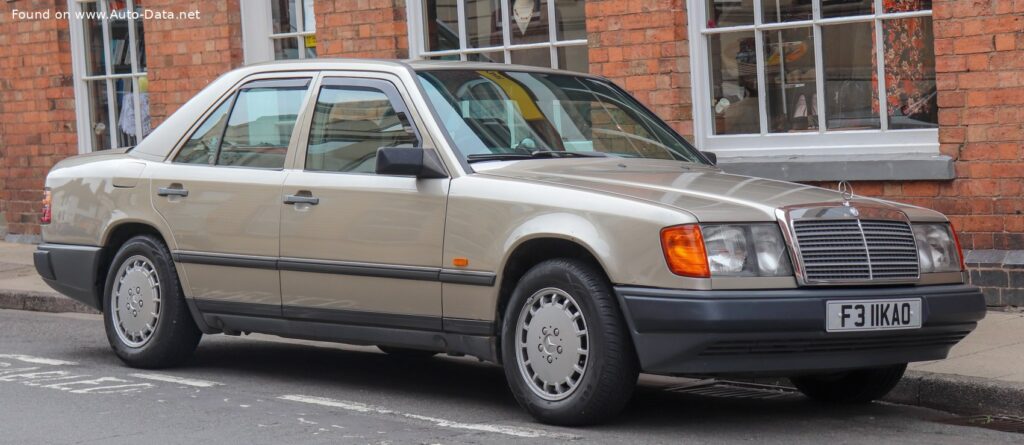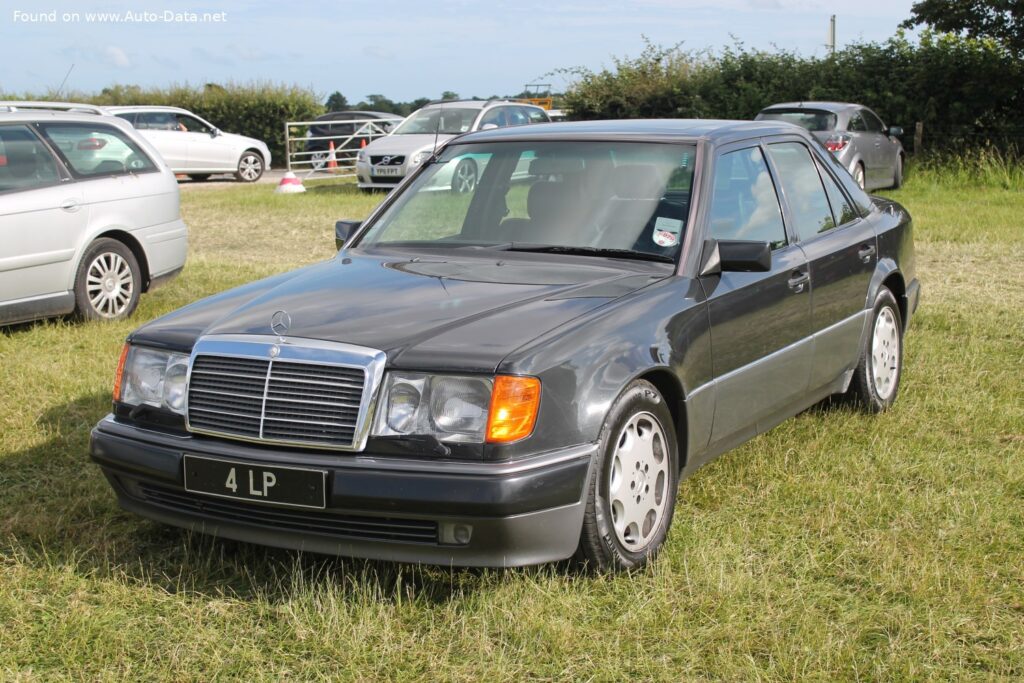
The Mercedes-Benz W124, produced from 1985 to 1996, represented a significant leap forward in engineering and design for the German automaker. The facelifted version introduced in 1989, and specifically the 300 D CAT model with its 3.0-liter diesel engine and automatic transmission, solidified the W124’s reputation for robust build quality, comfort, and understated luxury. This model was primarily sold in Europe and other international markets, becoming a symbol of sophisticated, reliable transportation. While not initially a major presence in the US market due to emissions regulations and consumer preferences leaning towards larger vehicles, the W124 has gained a dedicated following among enthusiasts in North America for its durability and classic Mercedes-Benz character.
The Mercedes-Benz W124: A Legacy of Engineering
The W124 was designed as a successor to the W201 (190E) and W123 models, aiming to combine safety, comfort, and performance in a mid-size package. The 1989 facelift brought subtle but important improvements to the exterior styling, interior appointments, and mechanical components. The 300 D CAT, a diesel-powered variant, was particularly notable for its advanced catalytic converter technology (hence the “CAT” designation), designed to reduce harmful emissions. This was a crucial feature in increasingly environmentally conscious European markets.
Engine & Performance
The heart of the 300 D CAT is its OM 603 D 30 inline-six cylinder diesel engine, displacing 2,996 cubic centimeters (182.83 cubic inches). This engine produced 110 horsepower at 4,600 rpm and 191 Newton-meters (140.87 lb.-ft.) of torque between 2,800 and 3,050 rpm. While the horsepower figure might seem modest by modern standards, the engine’s strength lay in its robust torque delivery, providing ample power for comfortable cruising and effortless acceleration. The engine utilized precombustion chamber injection, a technology common in Mercedes-Benz diesels of the era, for efficient combustion and reduced noise. Power is delivered to the rear wheels via a four-speed automatic transmission. Acceleration from 0 to 100 km/h (0-62 mph) takes 14.1 seconds, while 0 to 60 mph is achieved in approximately 13.4 seconds. The top speed is rated at 185 km/h (114.95 mph). The weight-to-power ratio of 13.1 kg/Hp and weight-to-torque ratio of 7.5 kg/Nm demonstrate the engine’s ability to move the vehicle effectively.
Design & Features
The W124 300 D CAT is a four-door sedan with a classic, understated design. Its body is characterized by clean lines, a relatively upright stance, and a focus on aerodynamic efficiency. The 1989 facelift included revised front and rear styling, with a more integrated appearance. Inside, the cabin is spacious and well-appointed, offering comfortable seating for five passengers. The interior materials are of high quality, reflecting Mercedes-Benz’s commitment to luxury. Key features include hydraulic power steering, disc brakes on all four wheels, and an Anti-lock Braking System (ABS) for enhanced safety. The suspension utilizes a wishbone setup at the front and an independent multi-link suspension at the rear, providing a comfortable and controlled ride. The vehicle’s dimensions are 4,740 mm (186.61 inches) in length, 1,740 mm (68.5 inches) in width, and 1,428 mm (56.22 inches) in height, with a wheelbase of 2,800 mm (110.24 inches).
Technical Specifications
| Brand | Mercedes-Benz |
| Model | W124 |
| Generation | W124 (facelift 1989) |
| Type (Engine) | 300 D CAT (110 Hp) Automatic |
| Start of production | September, 1989 |
| End of production | July, 1993 |
| Powertrain Architecture | Internal Combustion engine |
| Body type | Sedan |
| Seats | 5 |
| Doors | 4 |
| Fuel consumption (urban) | 9.3 l/100 km (25.3 US mpg) |
| Fuel consumption (extra urban) | 6.2 l/100 km (37.9 US mpg) |
| Fuel Type | Diesel |
| Acceleration 0 – 100 km/h | 14.1 sec |
| Acceleration 0 – 62 mph | 14.1 sec |
| Acceleration 0 – 60 mph | 13.4 sec |
| Maximum speed | 185 km/h (114.95 mph) |
| Weight-to-power ratio | 13.1 kg/Hp |
| Weight-to-torque ratio | 7.5 kg/Nm |
| Power | 110 Hp @ 4600 rpm |
| Torque | 191 Nm @ 2800-3050 rpm (140.87 lb.-ft. @ 2800-3050 rpm) |
| Engine layout | Front, Longitudinal |
| Engine Model/Code | OM 603 D 30 / 603.912 |
| Engine displacement | 2996 cm3 (182.83 cu. in.) |
| Number of cylinders | 6 |
| Engine configuration | Inline |
| Cylinder Bore | 87 mm (3.43 in.) |
| Piston Stroke | 84 mm (3.31 in.) |
| Compression ratio | 22:1 |
| Number of valves per cylinder | 2 |
| Fuel injection system | Precombustion chamber injection |
| Engine aspiration | Naturally aspirated engine |
| Valvetrain | SOHC |
| Engine oil capacity | 7.5 l (7.93 US qt | 6.6 UK qt) |
| Coolant | 9 l (9.51 US qt | 7.92 UK qt) |
| Kerb Weight | 1440 kg (3174.66 lbs.) |
| Max. weight | 2020 kg (4453.34 lbs.) |
| Max load | 580 kg (1278.68 lbs.) |
| Fuel tank capacity | 70 l (18.49 US gal | 15.4 UK gal) |
| Length | 4740 mm (186.61 in.) |
| Width | 1740 mm (68.5 in.) |
| Height | 1428 mm (56.22 in.) |
| Wheelbase | 2800 mm (110.24 in.) |
| Front track | 1501 mm (59.09 in.) |
| Rear track | 1491 mm (58.7 in.) |
| Drivetrain Architecture | Rear wheel drive |
| Number of gears and type of gearbox | 4 gears, automatic transmission |
| Front suspension | Wishbone |
| Rear suspension | Independent multi-link suspension |
| Front brakes | Disc |
| Rear brakes | Disc |
| Assisting systems | ABS (Anti-lock braking system) |
| Steering type | Cone worm with recirculation balls |
| Power steering | Hydraulic Steering |
| Tires size | Front wheel tires: 195/65 R15Rear wheel tires: 195/65 R15 |
| Wheel rims size | Front wheel rims: 6.5J x 15Rear wheel rims: 6.5J x 15 |
The Mercedes-Benz W124 300 D CAT remains a highly regarded vehicle, appreciated for its blend of luxury, reliability, and fuel efficiency. Its robust construction and relatively simple mechanical design contribute to its longevity, making it a popular choice for classic car enthusiasts and those seeking a durable and comfortable touring sedan.