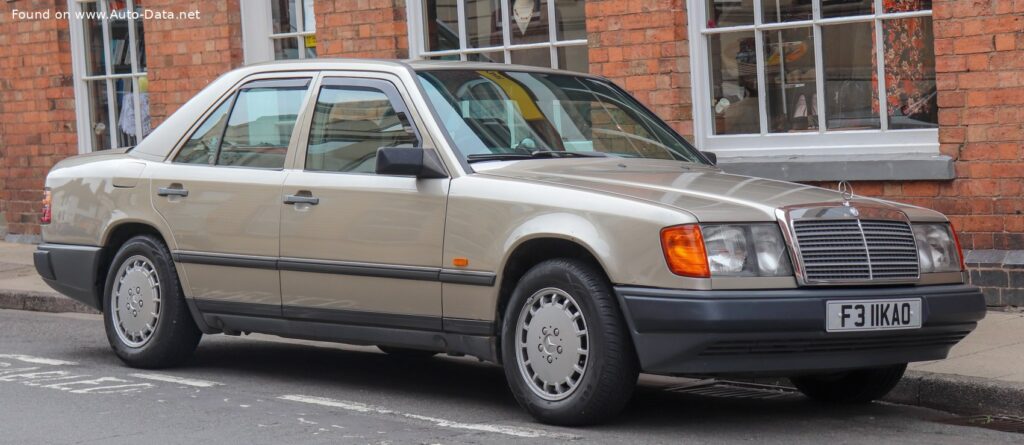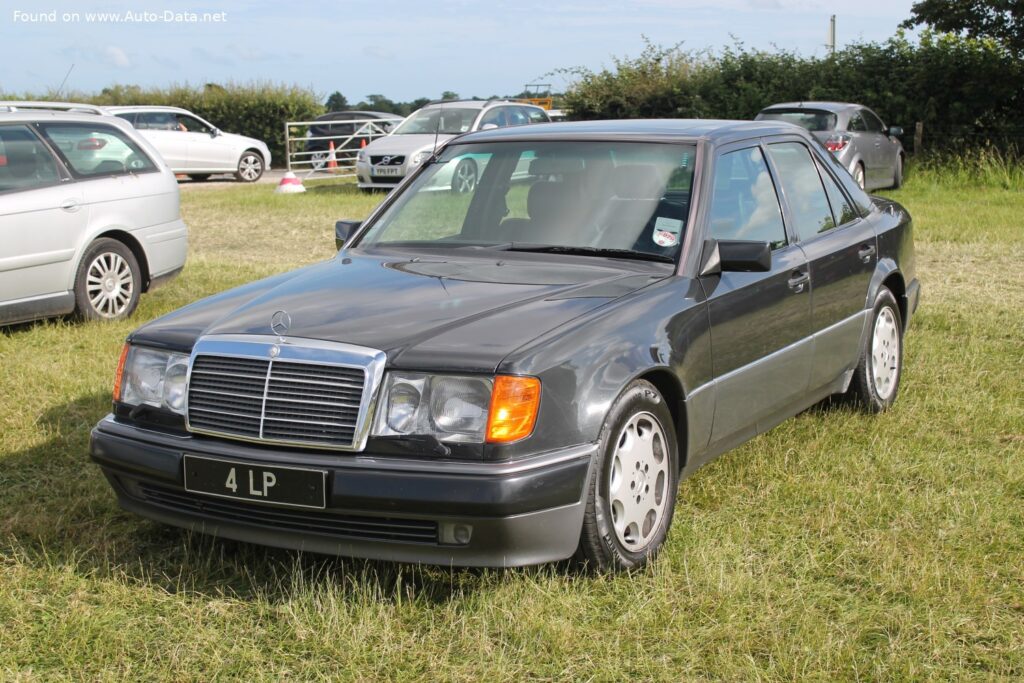
The Mercedes-Benz W124, produced from 1985 to 1996, represented a significant leap forward in engineering and design for the German automaker. The facelifted version introduced in 1989 brought subtle but important refinements to the already highly regarded platform. Among the variants offered, the 300 E 4MATIC, equipped with a 3.0-liter inline-six engine producing 180 horsepower, stood out as a capable and luxurious all-wheel-drive sedan. This model, primarily sold in Europe, offered a blend of performance, comfort, and all-weather capability that appealed to discerning buyers seeking a premium vehicle.
Mercedes-Benz W124 300 E 4MATIC: A Detailed Overview
The W124 series was intended as a replacement for the W201 (190E) and W123 models, offering a more modern and sophisticated experience. The 300 E 4MATIC, specifically, catered to those who desired the refinement of a Mercedes-Benz sedan with the added security and traction of all-wheel drive. While not widely available in the North American market, the W124 series, in its various forms, gained a reputation for exceptional build quality and longevity, becoming a favorite among enthusiasts and collectors.
Engine & Performance
At the heart of the 300 E 4MATIC lies the M103 E 30 inline-six engine, a 2,960 cc (180.63 cubic inches) naturally aspirated powerplant. This engine, producing 180 horsepower at 5,700 rpm and 255 Nm (188.08 lb-ft) of torque at 4,400 rpm, provided smooth and responsive performance. The multi-port fuel injection system and a compression ratio of 9.2:1 contributed to its efficiency and drivability. The engine’s longitudinal front-mounted layout and single overhead camshaft (SOHC) valvetrain were typical of Mercedes-Benz engineering of the era. Acceleration from 0 to 100 km/h (0-62 mph) took 8.7 seconds, while 0 to 60 mph was achieved in a calculated 8.3 seconds. The car boasted a maximum speed of 217 km/h (134.84 mph). The power-to-weight ratio of 8.6 kg/Hp and torque-to-weight ratio of 6 kg/Nm further highlight the engine’s capability within the vehicle’s overall weight.
Design & Features
The W124 300 E 4MATIC is a four-door sedan with a classic, understated Mercedes-Benz design. The facelifted model, introduced in 1989, featured subtle cosmetic updates, including revised front and rear styling, contributing to a more modern appearance. The interior was characterized by high-quality materials, comfortable seating for five passengers, and a focus on practicality. Key features included hydraulic power steering, ventilated front disc brakes, and disc brakes on the rear axle. Crucially, the 4MATIC system provided permanent all-wheel drive, utilizing an electrically or mechanically operated clutch to engage the front wheels when needed, enhancing traction in adverse conditions. The inclusion of an Anti-lock Braking System (ABS) was a significant safety feature for the time, improving braking performance and stability. The vehicle’s dimensions – a length of 4,740 mm (186.61 in), a width of 1,740 mm (68.5 in), and a height of 1,450 mm (57.09 in) – positioned it as a mid-size luxury sedan.
Technical Specifications
| Brand | Mercedes-Benz |
| Model | W124 |
| Generation | W124 (facelift 1989) |
| Type | 300 E (180 Hp) 4MATIC |
| Start of production | September, 1989 |
| End of production | July, 1993 |
| Powertrain Architecture | Internal Combustion engine |
| Body type | Sedan |
| Seats | 5 |
| Doors | 4 |
| Fuel consumption (urban) | 14.9 l/100 km (15.8 US mpg / 19 UK mpg) |
| Fuel consumption (extra urban) | 8.5 l/100 km (27.7 US mpg / 33.2 UK mpg) |
| Fuel Type | Petrol (Gasoline) |
| Acceleration 0 – 100 km/h | 8.7 sec |
| Acceleration 0 – 62 mph | 8.7 sec |
| Acceleration 0 – 60 mph | 8.3 sec |
| Maximum speed | 217 km/h (134.84 mph) |
| Weight-to-power ratio | 8.6 kg/Hp |
| Weight-to-torque ratio | 6 kg/Nm |
| Power | 180 Hp @ 5700 rpm |
| Torque | 255 Nm @ 4400 rpm (188.08 lb.-ft. @ 4400 rpm) |
| Engine layout | Front, Longitudinal |
| Engine Model/Code | M 103 E 30 / 103.983 |
| Engine displacement | 2960 cm3 (180.63 cu. in.) |
| Number of cylinders | 6 |
| Engine configuration | Inline |
| Cylinder Bore | 88.5 mm (3.48 in.) |
| Piston Stroke | 80.2 mm (3.16 in.) |
| Compression ratio | 9.2:1 |
| Number of valves per cylinder | 2 |
| Fuel injection system | Multi-port manifold injection |
| Engine aspiration | Naturally aspirated engine |
| Valvetrain | SOHC |
| Engine oil capacity | 6.5 l (6.87 US qt | 5.72 UK qt) |
| Coolant | 9 l (9.51 US qt | 7.92 UK qt) |
| Kerb Weight | 1540 kg (3395.12 lbs.) |
| Max. weight | 2135 kg (4706.87 lbs.) |
| Max load | 595 kg (1311.75 lbs.) |
| Fuel tank capacity | 70 l (18.49 US gal | 15.4 UK gal) |
| Length | 4740 mm (186.61 in.) |
| Width | 1740 mm (68.5 in.) |
| Height | 1450 mm (57.09 in.) |
| Wheelbase | 2800 mm (110.24 in.) |
| Front track | 1497 mm (58.94 in.) |
| Rear track | 1485 mm (58.46 in.) |
| Drivetrain Architecture | All wheel drive (4×4) |
| Number of gears | 5 gears, manual transmission |
| Front suspension | Wishbone |
| Rear suspension | Independent multi-link suspension |
| Front brakes | Ventilated discs |
| Rear brakes | Disc |
| Assisting systems | ABS (Anti-lock braking system) |
| Steering type | Cone worm with recirculation balls |
| Power steering | Hydraulic Steering |
| Tires size | 195/65 R15 |
| Wheel rims size | 6.5J x 15 |
The Mercedes-Benz W124 300 E 4MATIC represents a high point in traditional Mercedes-Benz engineering. Its robust construction, refined engine, and all-wheel-drive capability made it a desirable vehicle in its time, and its enduring reputation for reliability continues to attract enthusiasts today. While not a common sight in the United States, the W124 series, and the 300 E 4MATIC in particular, remains a testament to Mercedes-Benz’s commitment to quality and innovation.