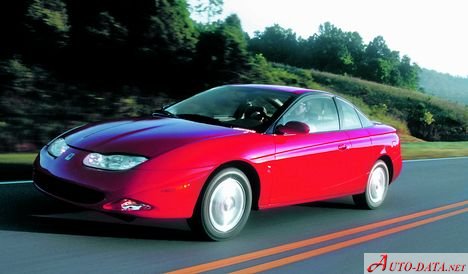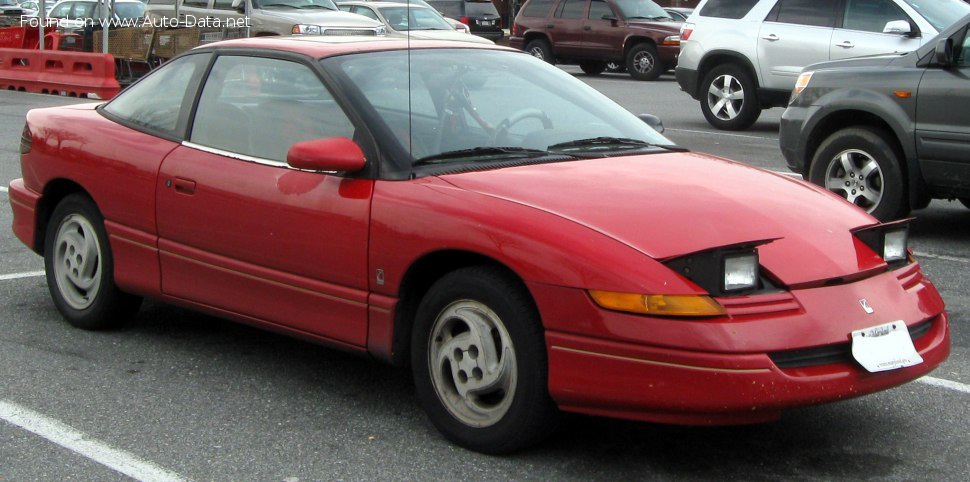
The Saturn SC (G127) 1.9i, produced from 1990 to 1999, represents a unique chapter in American automotive history. As the first model offered by Saturn, a General Motors division created with a radically different approach to car sales and manufacturing, the SC was a compact coupe designed to compete with imports like the Honda Civic and Toyota Corolla. The SC distinguished itself with its polymer (plastic) body panels bonded to a steel space frame – a construction method intended to reduce corrosion and simplify repairs. This first-generation SC, powered by a 1.9-liter inline-four engine producing 100 horsepower, aimed to deliver fuel efficiency and affordability to the American consumer, while also offering a distinct ownership experience through Saturn’s no-haggle pricing and customer-focused dealerships.
Saturn SC (G127) 1.9i: A Pioneering Compact Coupe
The Saturn SC occupied a niche in the American market as a sporty, yet practical, coupe. It wasn’t intended to be a performance leader, but rather a well-rounded vehicle emphasizing value and a different kind of car-buying experience. The “SC” designation stood for “Sport Coupe,” reflecting its two-door body style and relatively youthful appeal. Saturn’s initial success was largely built on the SC’s reputation for reliability and the innovative sales process, which aimed to eliminate the adversarial relationship often found in traditional car dealerships. The G127 platform, specifically, was the foundation for the first generation of Saturn vehicles, and the 1.9i variant was a mainstay of the lineup throughout its production run.
Engine & Performance
The heart of the Saturn SC 1.9i is a 1.9-liter (1901 cm3 or 116.01 cu. in.) inline-four cylinder engine. This naturally aspirated engine, designated the L24, produces 100 horsepower at 5000 rpm and 155 Nm (114.32 lb.-ft.) of torque at 2400 rpm. The engine features a single overhead camshaft (OHC) valvetrain with two valves per cylinder and utilizes multi-port fuel injection. Power is delivered to the front wheels via a five-speed manual transmission. The engine’s power-to-weight ratio is 95.7 horsepower per tonne, and its torque-to-weight ratio is 148.3 Nm per tonne. Fuel economy is rated at 7.5 liters per 100 kilometers (31.4 US mpg, 37.7 UK mpg, or 13.3 km/l), making it a relatively efficient vehicle for its time. The engine’s transverse mounting within the front-wheel-drive configuration contributes to efficient packaging and improved handling.
Design & Features
The Saturn SC is a two-door coupe with seating for five passengers. Its most distinctive feature is its body construction: polymer (plastic) panels bonded to a steel space frame. This design offered several advantages, including resistance to rust and dents, as well as ease of repair – damaged panels could be readily replaced without the need for extensive bodywork. The SC’s styling was contemporary for the early 1990s, with a rounded profile and relatively clean lines. Safety features, while limited by the standards of today, included an Anti-lock Braking System (ABS). Interior features focused on practicality and comfort, with a focus on user-friendly controls and a relatively spacious cabin for a compact coupe. The trunk offers a minimum capacity of 320 liters (11.3 cu. ft.). The steering system is a rack and pinion setup with hydraulic power assistance, providing responsive and precise handling. The vehicle rides on 175/70 R14 S tires.
Technical Specifications
| Brand | Saturn |
| Model | SC |
| Generation | SC (G127) |
| Type (Engine) | 1.9i (100 Hp) |
| Start of production | 1990 |
| End of production | 1999 |
| Powertrain Architecture | Internal Combustion engine |
| Body type | Coupe |
| Seats | 5 |
| Doors | 2 |
| Fuel consumption (combined) | 7.5 l/100 km |
| Fuel consumption (US mpg) | 31.4 US mpg |
| Fuel consumption (UK mpg) | 37.7 UK mpg |
| Fuel consumption (km/l) | 13.3 km/l |
| Fuel Type | Petrol (Gasoline) |
| Weight-to-power ratio | 10.5 kg/Hp |
| Hp/tonne | 95.7 Hp/tonne |
| Weight-to-torque ratio | 6.7 kg/Nm |
| Nm/tonne | 148.3 Nm/tonne |
| Power | 100 Hp @ 5000 rpm |
| Power per litre | 52.6 Hp/l |
| Torque | 155 Nm @ 2400 rpm |
| Torque (lb.-ft.) | 114.32 lb.-ft. @ 2400 rpm |
| Engine layout | Front, Transverse |
| Engine Model/Code | L24 |
| Engine displacement | 1901 cm3 |
| Engine displacement (cu. in.) | 116.01 cu. in. |
| Number of cylinders | 4 |
| Engine configuration | Inline |
| Cylinder Bore | 82 mm |
| Cylinder Bore (in.) | 3.23 in. |
| Piston Stroke | 90 mm |
| Piston Stroke (in.) | 3.54 in. |
| Compression ratio | 9.3:1 |
| Number of valves per cylinder | 2 |
| Fuel injection system | Multi-port manifold injection |
| Engine aspiration | Naturally aspirated engine |
| Valvetrain | OHC |
| Engine oil capacity | 3.8 l |
| Engine oil capacity (US qt) | 4.02 US qt |
| Engine oil capacity (UK qt) | 3.34 UK qt |
| Coolant | 6.5 l |
| Coolant (US qt) | 6.87 US qt |
| Coolant (UK qt) | 5.72 UK qt |
| Kerb Weight | 1045 kg |
| Kerb Weight (lbs.) | 2303.83 lbs. |
| Trunk (boot) space (minimum) | 320 l |
| Trunk (boot) space (cu. ft.) | 11.3 cu. ft. |
| Fuel tank capacity | 49 l |
| Fuel tank capacity (US gal) | 12.94 US gal |
| Fuel tank capacity (UK gal) | 10.78 UK gal |
| Length | 4400 mm |
| Length (in.) | 173.23 in. |
| Width | 1716 mm |
| Width (in.) | 67.56 in. |
| Height | 1286 mm |
| Height (in.) | 50.63 in. |
| Wheelbase | 2520 mm |
| Wheelbase (in.) | 99.21 in. |
| Front track | 1443 mm |
| Front track (in.) | 56.81 in. |
| Rear (Back) track | 1422 mm |
| Rear (Back) track (in.) | 55.98 in. |
| Drivetrain Architecture | Front wheel drive |
| Number of gears and type of gearbox | 5 gears, manual transmission |
| Front suspension | Spring Strut |
| Rear suspension | Double wishbone |
| Front brakes | Ventilated discs |
| Rear brakes | Drum |
| Assisting systems | ABS (Anti-lock braking system) |
| Steering type | Steering rack and pinion |
| Power steering | Hydraulic Steering |
| Tires size | 175/70 R14 S |