
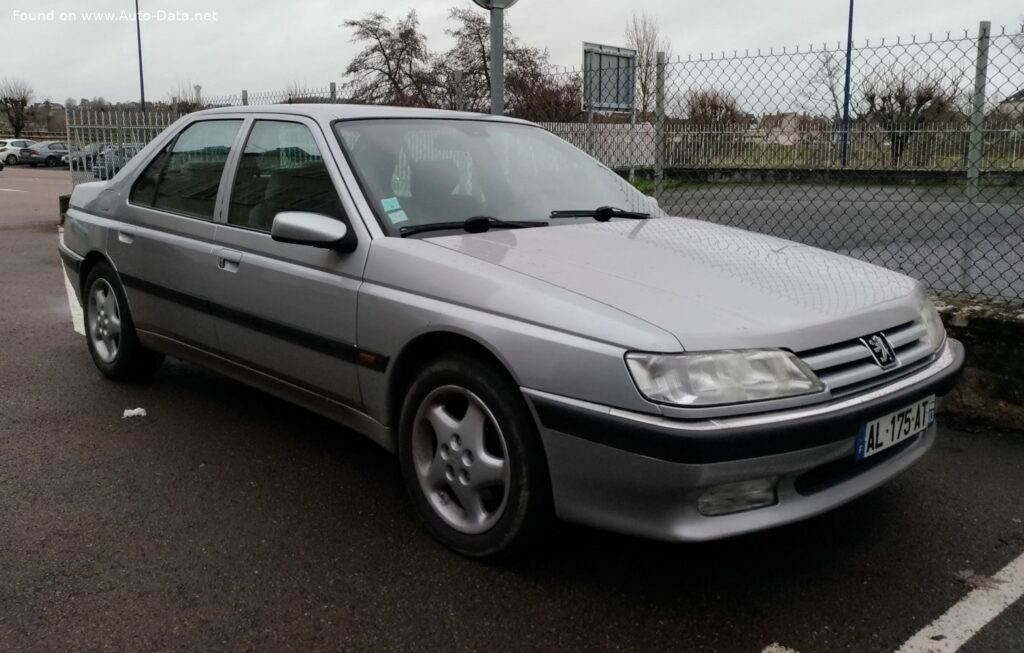
The Peugeot 605 (6B), produced between 1989 and 1995, represents a significant step forward for the French automaker, positioned as a large, executive sedan. Intended to replace the aging Peugeot 505, the 605 aimed to compete with established German rivals like the BMW 5 Series and Mercedes-Benz E-Class. While not a massive sales success, particularly outside of Europe, the 605 was lauded for its comfortable ride, sophisticated engineering, and distinctive styling. The 2.1 D variant, equipped with a diesel engine producing 82 horsepower, was a popular choice in European markets where diesel fuel was more affordable and offered better fuel economy.
Peugeot 605 (6B) 2.1 D: An Overview
The 605 was Peugeot’s flagship sedan during its production run, embodying a commitment to innovation and refinement. It was the first Peugeot to feature a multi-link rear suspension, enhancing ride quality and handling. The 2.1 D model, specifically, catered to drivers prioritizing fuel efficiency and long-distance comfort. It was a common sight in countries with high road taxes based on engine displacement, as the smaller diesel engine offered a cost advantage. The 605, while not officially sold in the United States, showcases Peugeot’s engineering capabilities and design philosophy of the late 1980s and early 1990s.
Engine & Performance
The heart of the 605 2.1 D is a 2.1-liter inline-four cylinder diesel engine, designated P9A XUD11A. This naturally aspirated engine produces 82 horsepower at 4600 rpm and 145 Nm (106.95 lb.-ft.) of torque at 2000 rpm. While not a performance-oriented engine, it provides adequate power for comfortable cruising and everyday driving. The engine’s precombustion chamber injection system, common for diesel engines of the era, contributes to relatively clean combustion and good fuel economy. Acceleration from 0 to 100 km/h (0-62 mph) takes 17.6 seconds, and 0 to 60 mph is achieved in approximately 16.7 seconds. The top speed is rated at 176 km/h (109.36 mph). The engine’s power-to-weight ratio is 17.4 kg/Hp, and the torque-to-weight ratio is 9.9 kg/Nm. The engine displaces 2138 cm3 (130.47 cu. in.) and features a compression ratio of 22.5:1.
Design & Features
The Peugeot 605 boasts a sleek, aerodynamic sedan body style designed by Pininfarina. Its clean lines and understated elegance set it apart from some of its more flamboyant competitors. The car offers seating for five passengers and features four doors for convenient access. Key features of the 605 2.1 D include a hydraulic power steering system, ventilated front disc brakes, and disc brakes on the rear axle. An Anti-lock Braking System (ABS) was also included as a safety feature. The interior is designed with comfort in mind, offering a spacious cabin and supportive seats. Trunk space is a respectable 497 liters (17.55 cu. ft.). The 605’s multi-link rear suspension significantly contributes to a smooth and controlled ride, absorbing road imperfections effectively. The car’s dimensions are 4765 mm (187.6 in.) in length, 1799 mm (70.83 in.) in width, and 1417 mm (55.79 in.) in height, with a wheelbase of 2800 mm (110.24 in.).
Technical Specifications
| Brand | Peugeot |
| Model | 605 |
| Generation | 605 (6B) |
| Type (Engine) | 2.1 D (82 Hp) |
| Start of production | 1989 |
| End of production | 1995 |
| Powertrain Architecture | Internal Combustion engine |
| Body type | Sedan |
| Seats | 5 |
| Doors | 4 |
| Fuel consumption (urban) | 8 l/100 km (29.4 US mpg, 35.3 UK mpg, 12.5 km/l) |
| Fuel consumption (extra urban) | 5.1 l/100 km (46.1 US mpg, 55.4 UK mpg, 19.6 km/l) |
| Fuel consumption (combined) | 6.7 l/100 km (35.1 US mpg, 42.2 UK mpg, 14.9 km/l) |
| Fuel Type | Diesel |
| Acceleration 0 – 100 km/h | 17.6 sec |
| Acceleration 0 – 62 mph | 17.6 sec |
| Acceleration 0 – 60 mph | 16.7 sec |
| Maximum speed | 176 km/h (109.36 mph) |
| Weight-to-power ratio | 17.4 kg/Hp |
| Weight-to-torque ratio | 9.9 kg/Nm |
| Power | 82 Hp @ 4600 rpm |
| Torque | 145 Nm @ 2000 rpm (106.95 lb.-ft. @ 2000 rpm) |
| Engine layout | Front, Transverse |
| Engine Model/Code | P9A XUD11A |
| Engine displacement | 2138 cm3 (130.47 cu. in.) |
| Number of cylinders | 4 |
| Engine configuration | Inline |
| Cylinder Bore | 86 mm (3.39 in.) |
| Piston Stroke | 92 mm (3.62 in.) |
| Compression ratio | 22.5:1 |
| Number of valves per cylinder | 2 |
| Fuel injection system | Precombustion chamber injection |
| Engine aspiration | Naturally aspirated |
| Valvetrain | OHC |
| Engine oil capacity | 5.25 l (5.55 US qt | 4.62 UK qt) |
| Coolant capacity | 10 l (10.57 US qt | 8.8 UK qt) |
| Kerb Weight | 1430 kg (3152.61 lbs.) |
| Max. weight | 1900 kg (4188.78 lbs.) |
| Max load | 470 kg (1036.17 lbs.) |
| Trunk (boot) space (minimum) | 497 l (17.55 cu. ft.) |
| Fuel tank capacity | 80 l (21.13 US gal | 17.6 UK gal) |
| Length | 4765 mm (187.6 in.) |
| Width | 1799 mm (70.83 in.) |
| Height | 1417 mm (55.79 in.) |
| Wheelbase | 2800 mm (110.24 in.) |
| Front track | 1527 mm (60.12 in.) |
| Rear track | 1528 mm (60.16 in.) |
| Drivetrain Architecture | Front wheel drive |
| Number of gears | 5 |
| Gearbox type | Manual transmission |
| Front suspension | Wishbone |
| Rear suspension | Double wishbone |
| Front brakes | Ventilated discs |
| Rear brakes | Disc |
| Assisting systems | ABS (Anti-lock braking system) |
| Steering type | Steering rack and pinion |
| Power steering | Hydraulic |
| Tires size | 195/65 R15 |
The Peugeot 605 2.1 D, while not a high-performance vehicle, offered a compelling combination of comfort, fuel efficiency, and sophisticated engineering. It remains a respected example of French automotive design and a testament to Peugeot’s commitment to innovation during the late 20th century.
