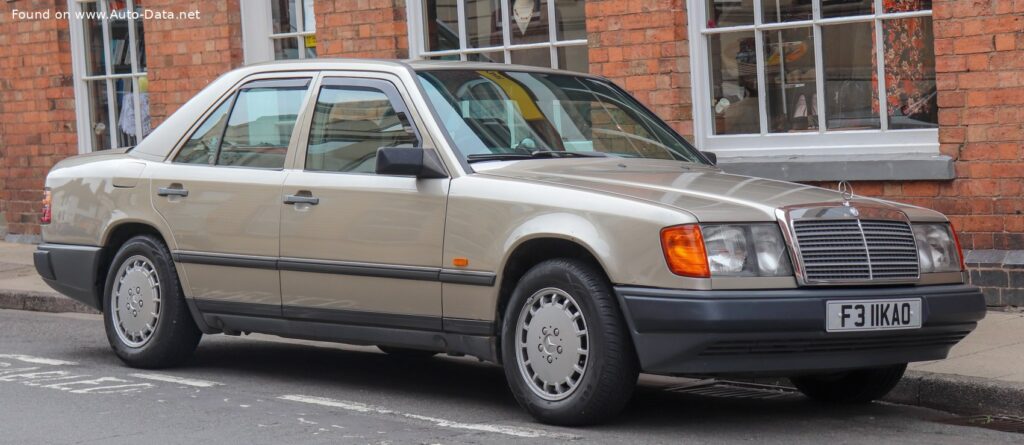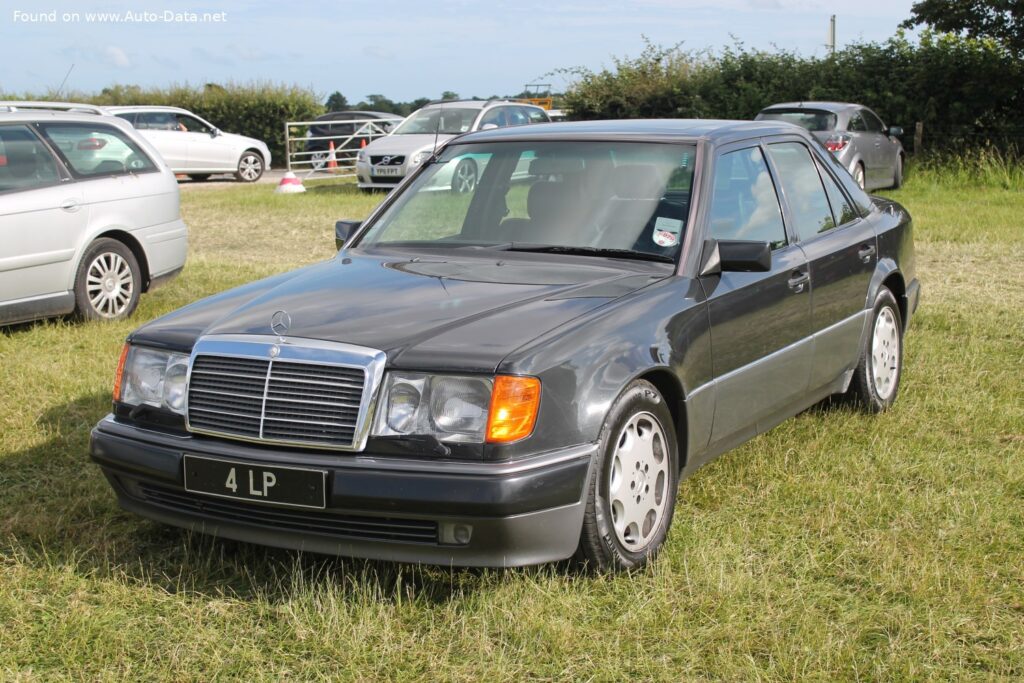
The Mercedes-Benz W124, particularly the 300 E-24 variant produced from 1988 to 1992, represents a pivotal point in the manufacturer’s mid-size sedan lineage. Positioned above the W201 (190E) and below the flagship S-Class (W126), the W124 was designed to offer a blend of luxury, performance, and engineering robustness. The 300 E-24, with its 220 horsepower engine, was a significant upgrade within the W124 range, appealing to buyers seeking a more spirited driving experience. This model was primarily sold in Europe and other international markets, establishing a reputation for build quality and longevity that continues to resonate with enthusiasts today.
Mercedes-Benz W124 300 E-24: A Detailed Overview
The W124 series, introduced in 1985, was a comprehensive redesign of the preceding W123. It prioritized safety, incorporating features like anti-lock braking (ABS) and crumple zones, setting new standards for passenger protection. The 1989 facelift refined the design, improving aerodynamics and updating interior appointments. The 300 E-24, introduced in 1988, distinguished itself with a larger, more powerful engine, offering a noticeable performance increase over the standard 300E. It was a popular choice for those who desired the comfort and prestige of a Mercedes-Benz sedan with enhanced driving dynamics.
Engine & Performance
The heart of the 300 E-24 is its 2,960 cc (180.63 cu. in.) inline-six cylinder engine, designated M 104 E 30 / 104.980. This naturally aspirated engine produces 220 horsepower at 5,500 rpm and 265 Nm (195.45 lb.-ft.) of torque at 4,600 rpm. The engine features multi-port fuel injection and a double overhead camshaft (DOHC) valvetrain, contributing to its smooth power delivery and relatively high specific output of 74.3 hp per liter. The 300 E-24 could accelerate from 0 to 100 km/h (0-62 mph) in 8 seconds, and 0 to 60 mph in 7.6 seconds, reaching a top speed of 237 km/h (147.26 mph). The engine’s longitudinal front-engine layout and rear-wheel drive configuration provide a balanced driving experience. A five-speed manual transmission was standard, offering precise control and engaging gear changes.
Design & Features
The W124 300 E-24 is a four-door sedan with a classic, understated Mercedes-Benz design. The body’s clean lines and robust construction reflect the engineering philosophy of the era. The interior is characterized by high-quality materials, comfortable seating for five occupants, and a focus on practicality. Features such as power steering, ventilated front disc brakes, and ABS were standard, enhancing both driver comfort and safety. The trunk offers a generous 520 liters (18.36 cu. ft.) of space, providing ample room for luggage. The W124’s design prioritized durability and longevity, with a focus on minimizing wind noise and providing a refined ride quality. The independent multi-link rear suspension contributed to excellent handling and ride comfort. The vehicle’s 70-liter (18.49 US gal) fuel tank provides a reasonable driving range.
Technical Specifications
| Brand | Mercedes-Benz |
| Model | W124 |
| Generation | W124 (facelift 1989) |
| Type (Engine) | 300 E-24 (220 Hp) |
| Start of production | March, 1988 |
| End of production | October, 1992 |
| Powertrain Architecture | Internal Combustion engine |
| Body type | Sedan |
| Seats | 5 |
| Doors | 4 |
| Fuel consumption (urban) | 14.8 l/100 km (15.9 US mpg / 19.1 UK mpg / 6.8 km/l) |
| Fuel consumption (extra urban) | 8.1 l/100 km (29 US mpg / 34.9 UK mpg / 12.3 km/l) |
| Fuel Type | Petrol (Gasoline) |
| Acceleration 0 – 100 km/h | 8 sec |
| Acceleration 0 – 62 mph | 8 sec |
| Acceleration 0 – 60 mph | 7.6 sec |
| Maximum speed | 237 km/h (147.26 mph) |
| Weight-to-power ratio | 6.7 kg/Hp |
| Weight-to-torque ratio | 5.6 kg/Nm |
| Power | 220 Hp @ 5500 rpm |
| Power per litre | 74.3 Hp/l |
| Torque | 265 Nm @ 4600 rpm (195.45 lb.-ft. @ 4600 rpm) |
| Engine layout | Front, Longitudinal |
| Engine Model/Code | M 104 E 30 / 104.980 |
| Engine displacement | 2960 cm3 (180.63 cu. in.) |
| Number of cylinders | 6 |
| Engine configuration | Inline |
| Cylinder Bore | 88.49 mm (3.48 in.) |
| Piston Stroke | 80.2 mm (3.16 in.) |
| Compression ratio | 10:1 |
| Number of valves per cylinder | 4 |
| Fuel injection system | Multi-port manifold injection |
| Engine aspiration | Naturally aspirated engine |
| Valvetrain | DOHC |
| Engine oil capacity | 6.5 l (6.87 US qt | 5.72 UK qt) |
| Coolant | 9 l (9.51 US qt | 7.92 UK qt) |
| Kerb Weight | 1480 kg (3262.84 lbs.) |
| Max. weight | 2050 kg (4519.48 lbs.) |
| Max load | 570 kg (1256.63 lbs.) |
| Trunk (boot) space – minimum | 520 l (18.36 cu. ft.) |
| Fuel tank capacity | 70 l (18.49 US gal | 15.4 UK gal) |
| Length | 4740 mm (186.61 in.) |
| Width | 1740 mm (68.5 in.) |
| Height | 1428 mm (56.22 in.) |
| Wheelbase | 2800 mm (110.24 in.) |
| Front track | 1501 mm (59.09 in.) |
| Rear (Back) track | 1491 mm (58.7 in.) |
| Drivetrain Architecture | Rear wheel drive |
| Number of gears and type of gearbox | 5 gears, manual transmission |
| Front suspension | Wishbone |
| Rear suspension | Independent multi-link suspension |
| Front brakes | Ventilated discs |
| Rear brakes | Disc |
| Assisting systems | ABS (Anti-lock braking system) |
| Steering type | Cone worm with recirculation balls |
| Power steering | Hydraulic Steering |
| Tires size | Front wheel tires: 195/65 R15Rear wheel tires: 195/65 R15 |
| Wheel rims size | Front wheel rims: 6.5J x 15Rear wheel rims: 6.5J x 15 |
The Mercedes-Benz W124 300 E-24 remains a highly regarded vehicle, celebrated for its engineering excellence, build quality, and timeless design. Its combination of luxury, performance, and durability has ensured its continued desirability among collectors and enthusiasts alike.