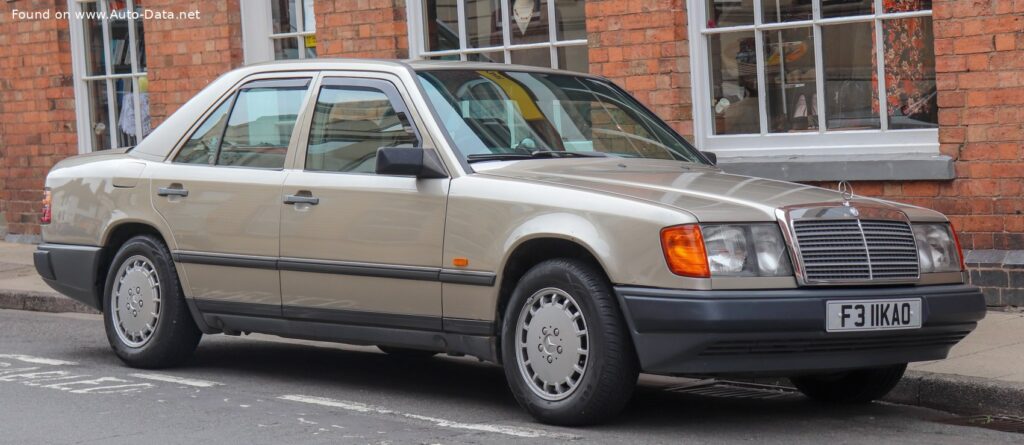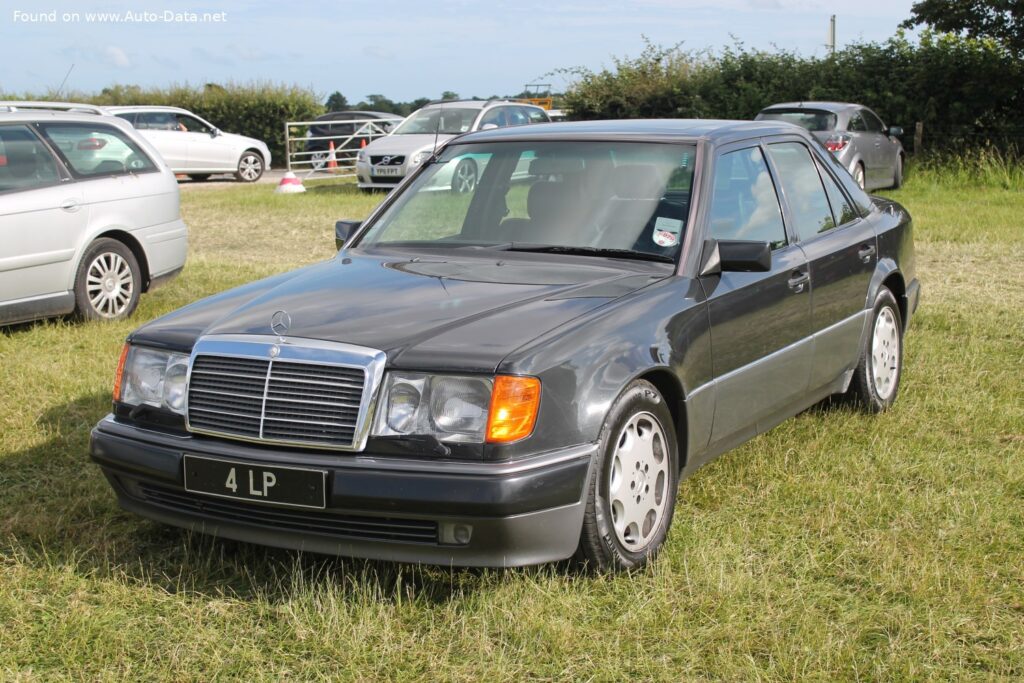
The Mercedes-Benz W124, particularly the 300 E-24 variant produced from 1988 to 1992, represents a pivotal moment in the manufacturer’s mid-size executive car lineage. Positioned above the W201 (190E) and below the flagship S-Class (W126), the W124 was designed to offer a blend of luxury, performance, and renowned Mercedes-Benz build quality. The “facelift” of 1989 brought subtle but significant improvements to the design and mechanicals, solidifying the W124’s reputation as a durable and sophisticated automobile. The 300 E-24, with its 3.0-liter inline-six engine, was a popular choice for those seeking a balance of power and refinement.
Mercedes-Benz W124 300 E-24: A Legacy of Engineering
The W124 series was a significant departure from its predecessor, the W123, offering increased interior space, improved safety features, and a more modern aesthetic. It was a car engineered for longevity, and many examples remain on the road today, a testament to its robust construction. The 300 E-24 specifically, distinguished itself with a higher-output version of the M104 inline-six engine, delivering 220 horsepower. This model aimed to provide a more engaging driving experience without sacrificing the comfort expected of a Mercedes-Benz.
Engine & Performance
At the heart of the 300 E-24 lies the M104 E 30 engine, a 2,960 cc (180.63 cu. in.) inline-six cylinder powerplant. This naturally aspirated engine produces 220 horsepower at 5,500 rpm and 265 Nm (195.45 lb.-ft.) of torque at 4,600 rpm. The engine features multi-port fuel injection and a double overhead camshaft (DOHC) valvetrain, contributing to its smooth operation and responsive performance. Power is delivered to the rear wheels via a four-speed automatic transmission. This combination allows for a 0-60 mph (0-96 km/h) acceleration time of approximately 7.4 seconds and a top speed of 232 km/h (144.16 mph). The engine’s power-to-weight ratio of 6.7 kg/Hp and torque-to-weight ratio of 5.6 kg/Nm contribute to a spirited driving experience. The engine requires 6.5 liters (6.87 US qt) of oil and 9 liters (9.51 US qt) of coolant for optimal operation.
Design & Features
The W124 300 E-24 is a four-door sedan with a classic, understated design. The body style emphasizes clean lines and a balanced profile. The 1989 facelift brought subtle revisions to the exterior, including a redesigned grille and updated taillights. Inside, the cabin is characterized by its high-quality materials and comfortable seating for five passengers. Key features included power windows, central locking, and an anti-lock braking system (ABS), which were considered advanced for the time. The trunk offers a generous 520 liters (18.36 cu. ft.) of storage space. The W124 prioritized passenger safety with a robust chassis and crumple zones, representing a significant advancement in automotive safety standards for the late 1980s and early 1990s. The vehicle’s dimensions are 4740 mm (186.61 in.) in length, 1740 mm (68.5 in.) in width, and 1428 mm (56.22 in.) in height, with a wheelbase of 2800 mm (110.24 in.).
Technical Specifications
| Brand | Mercedes-Benz |
| Model | W124 |
| Generation | W124 (facelift 1989) |
| Type | 300 E-24 (220 Hp) Automatic |
| Start of production | March, 1988 |
| End of production | October, 1992 |
| Powertrain Architecture | Internal Combustion engine |
| Body type | Sedan |
| Seats | 5 |
| Doors | 4 |
| Fuel consumption (urban) | 14.7 l/100 km (16 US mpg, 19.2 UK mpg) |
| Fuel consumption (extra urban) | 8.2 l/100 km (28.7 US mpg, 34.4 UK mpg) |
| Fuel Type | Petrol (Gasoline) |
| Acceleration 0 – 100 km/h | 7.8 sec |
| Acceleration 0 – 62 mph | 7.8 sec |
| Acceleration 0 – 60 mph | 7.4 sec |
| Maximum speed | 232 km/h (144.16 mph) |
| Weight-to-power ratio | 6.7 kg/Hp |
| Weight-to-torque ratio | 5.6 kg/Nm |
| Power | 220 Hp @ 5500 rpm |
| Power per litre | 74.3 Hp/l |
| Torque | 265 Nm @ 4600 rpm (195.45 lb.-ft. @ 4600 rpm) |
| Engine layout | Front, Longitudinal |
| Engine Model/Code | M 104 E 30 / 104.980 |
| Engine displacement | 2960 cm3 (180.63 cu. in.) |
| Number of cylinders | 6 |
| Engine configuration | Inline |
| Cylinder Bore | 88.49 mm (3.48 in.) |
| Piston Stroke | 80.2 mm (3.16 in.) |
| Compression ratio | 10:1 |
| Number of valves per cylinder | 4 |
| Fuel injection system | Multi-port manifold injection |
| Engine aspiration | Naturally aspirated engine |
| Valvetrain | DOHC |
| Engine oil capacity | 6.5 l (6.87 US qt | 5.72 UK qt) |
| Coolant | 9 l (9.51 US qt | 7.92 UK qt) |
| Kerb Weight | 1480 kg (3262.84 lbs.) |
| Max. weight | 2050 kg (4519.48 lbs.) |
| Max load | 570 kg (1256.63 lbs.) |
| Trunk (boot) space – minimum | 520 l (18.36 cu. ft.) |
| Fuel tank capacity | 70 l (18.49 US gal | 15.4 UK gal) |
| Length | 4740 mm (186.61 in.) |
| Width | 1740 mm (68.5 in.) |
| Height | 1428 mm (56.22 in.) |
| Wheelbase | 2800 mm (110.24 in.) |
| Front track | 1501 mm (59.09 in.) |
| Rear (Back) track | 1491 mm (58.7 in.) |
| Drivetrain Architecture | Rear wheel drive |
| Number of gears and type of gearbox | 4 gears, automatic transmission |
| Front suspension | Wishbone |
| Rear suspension | Independent multi-link suspension |
| Front brakes | Ventilated discs |
| Rear brakes | Disc |
| Assisting systems | ABS (Anti-lock braking system) |
| Steering type | Cone worm with recirculation balls |
| Power steering | Hydraulic Steering |
| Tires size | Front wheel tires: 195/65 R15Rear wheel tires: 195/65 R15 |
| Wheel rims size | Front wheel rims: 6.5J x 15Rear wheel rims: 6.5J x 15 |
The Mercedes-Benz W124 300 E-24 remains a highly regarded vehicle, appreciated for its engineering excellence, comfortable ride, and enduring quality. It represents a high point in Mercedes-Benz’s commitment to building automobiles that are both luxurious and reliable.