
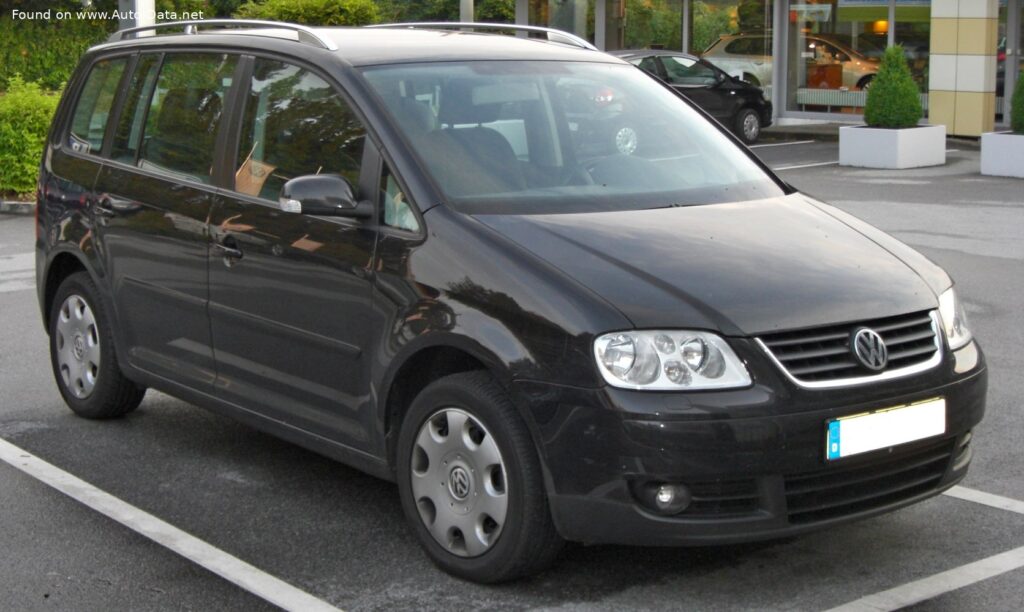
The Volkswagen Touran I 2.0 FSI (150 Hp), produced between 2003 and 2006, represents Volkswagen’s entry into the increasingly popular compact minivan segment. Designed as a more affordable and practical alternative to larger MPVs like the Sharan, the Touran aimed to provide family-friendly versatility with a focus on fuel efficiency and driving dynamics. While not initially sold in the United States, the Touran became a significant model in Europe, competing with vehicles like the Renault Scenic and Opel Zafira. The first generation Touran established a formula that would continue in subsequent iterations, emphasizing a flexible interior and a comfortable ride.
Volkswagen Touran I 2.0 FSI: A Detailed Overview
The Touran I was conceived as a “New Compact Class” vehicle by Volkswagen, bridging the gap between smaller hatchbacks and larger, more expensive multi-purpose vehicles. It offered a five or seven-seat configuration, depending on the trim level and options selected, making it a practical choice for families. The 2.0 FSI engine variant, discussed here, was a key part of the Touran’s appeal, offering a balance of performance and economy.
Engine & Performance
The heart of the Touran I 2.0 FSI is a 1.984-liter (121.07 cubic inches) inline-four cylinder gasoline engine. This engine utilizes direct fuel injection (FSI – Fuel Stratified Injection), a technology that improves combustion efficiency and power output. Producing 150 horsepower at 6000 rpm and 200 Nm (147.51 lb.-ft.) of torque at 3500 rpm, the 2.0 FSI provided adequate performance for everyday driving and longer journeys. Acceleration from 0 to 100 km/h (0-62 mph) takes 10.4 seconds, while 0 to 60 mph is achieved in approximately 9.9 seconds. The Touran I 2.0 FSI boasts a maximum speed of 203 km/h (126.14 mph). The engine’s power-to-weight ratio is 9.7 kg/Hp, and the torque-to-weight ratio is 7.3 kg/Nm, contributing to a reasonably responsive driving experience. Fuel consumption is rated at 9.8 l/100 km (24 US mpg) in urban conditions and 6.4 l/100 km (36.8 US mpg) on the extra-urban cycle.
Design & Features
The Volkswagen Touran I is a five-door minivan characterized by its practical and functional design. Its exterior styling is typical of early 2000s Volkswagen, featuring clean lines and a relatively understated appearance. The interior is where the Touran truly shines, offering a flexible seating arrangement and a generous amount of space. The rear seats can be folded flat or even removed entirely, creating a large cargo area. With all seats in place, the trunk offers 667 liters (23.55 cu. ft.) of space, expanding to a substantial 1989 liters (70.24 cu. ft.) with the rear seats folded.
Safety features for the time included ABS (Anti-lock Braking System) as standard equipment. The Touran’s focus was on providing a safe and comfortable environment for families. Other notable features included a steering rack and pinion system for precise handling, and a six-speed manual transmission. The vehicle rides on coil springs in the front and a spring strut suspension in the rear, providing a comfortable ride quality. Standard tire size is 205/55 R16 on 16-inch wheel rims.
Technical Specifications
| Brand | Volkswagen |
| Model | Touran |
| Generation | Touran I |
| Type (Engine) | 2.0 FSI (150 Hp) |
| Start of production | 2003 |
| End of production | 2006 |
| Powertrain Architecture | Internal Combustion engine |
| Body type | Minivan |
| Seats | 5 |
| Doors | 5 |
| Fuel consumption (urban) | 9.8 l/100 km (24 US mpg) |
| Fuel consumption (extra urban) | 6.4 l/100 km (36.8 US mpg) |
| Fuel Type | Petrol (Gasoline) |
| Acceleration 0 – 100 km/h | 10.4 sec |
| Acceleration 0 – 62 mph | 10.4 sec |
| Acceleration 0 – 60 mph | 9.9 sec |
| Maximum speed | 203 km/h (126.14 mph) |
| Weight-to-power ratio | 9.7 kg/Hp |
| Weight-to-torque ratio | 7.3 kg/Nm |
| Power | 150 Hp @ 6000 rpm |
| Torque | 200 Nm @ 3500 rpm (147.51 lb.-ft. @ 3500 rpm) |
| Engine layout | Front, Transverse |
| Engine Model/Code | AXW, BLR, BLX, BLY, BLR, BMB, BVX, BVY, BVZ |
| Engine displacement | 1984 cm3 (121.07 cu. in.) |
| Number of cylinders | 4 |
| Engine configuration | Inline |
| Cylinder Bore | 82.5 mm (3.25 in.) |
| Piston Stroke | 92.8 mm (3.65 in.) |
| Compression ratio | 10.5:1 |
| Number of valves per cylinder | 4 |
| Fuel injection system | Direct injection |
| Engine aspiration | Naturally aspirated |
| Valvetrain | DOHC |
| Engine oil capacity | 4.6 l (4.86 US qt | 4.05 UK qt) |
| Coolant | 8 l (8.45 US qt | 7.04 UK qt) |
| Kerb Weight | 1450 kg (3196.7 lbs.) |
| Max. weight | 2130 kg (4695.85 lbs.) |
| Max load | 680 kg (1499.14 lbs.) |
| Trunk (boot) space – minimum | 667 l (23.55 cu. ft.) |
| Trunk (boot) space – maximum | 1989 l (70.24 cu. ft.) |
| Fuel tank capacity | 60 l (15.85 US gal | 13.2 UK gal) |
| Length | 4391 mm (172.87 in.) |
| Width | 1794 mm (70.63 in.) |
| Height | 1652 mm (65.04 in.) |
| Wheelbase | 2678 mm (105.43 in.) |
| Front track | 1539 mm (60.59 in.) |
| Rear (Back) track | 1521 mm (59.88 in.) |
| Drivetrain Architecture | Front wheel drive |
| Number of gears | 6 gears, manual transmission |
| Front suspension | Coil spring |
| Rear suspension | Spring Strut |
| Front brakes | Ventilated discs |
| Rear brakes | Disc |
| Assisting systems | ABS (Anti-lock braking system) |
| Steering type | Steering rack and pinion |
| Tires size | 205/55 R16 |
| Wheel rims size | 16 |
The Volkswagen Touran I 2.0 FSI, while not a performance vehicle, offered a compelling package of practicality, efficiency, and comfort. Its flexible interior and reliable engine made it a popular choice for families in Europe, and it laid the foundation for the continued success of the Touran model line.
