
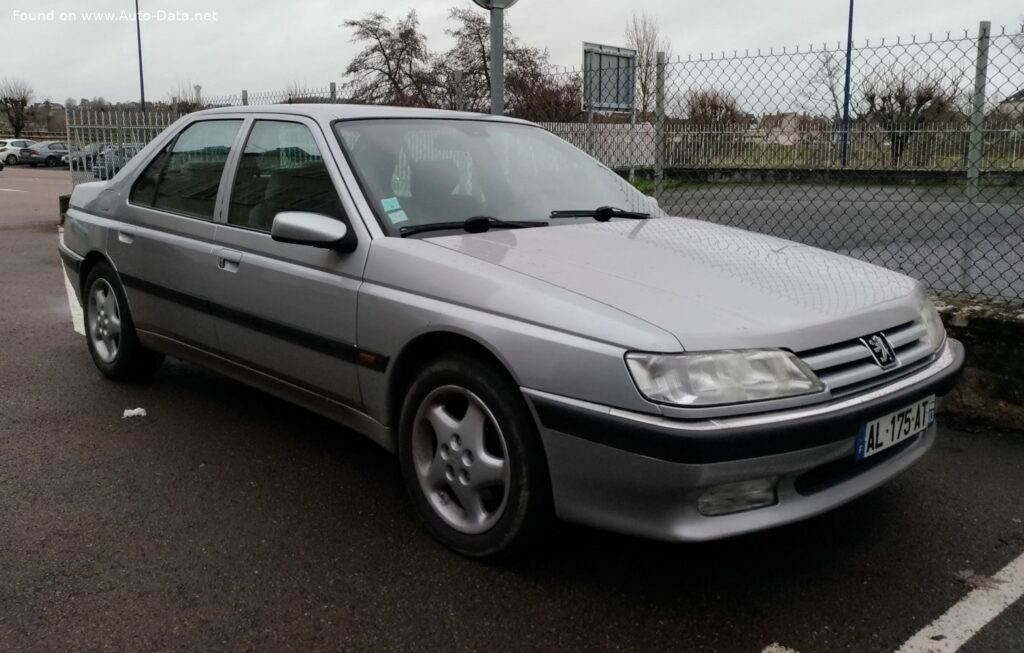
The Peugeot 605 (6B) 3.0, a large, front-wheel drive sedan produced between 1989 and 2000, represented Peugeot’s flagship model during its production run. Intended to compete with executive cars like the BMW 5 Series, Mercedes-Benz E-Class, and Audi 100, the 605 aimed to offer a blend of French comfort, sophisticated technology, and robust performance. While never officially sold in the United States, the 605 was a significant vehicle in the European market, known for its advanced features and refined driving experience for its time. The 3.0-liter variant, equipped with an automatic transmission, was a popular choice, offering a balance between power and convenience.
Peugeot 605 (6B) 3.0: An Overview
The 605 was the successor to the Peugeot 505 and marked a significant step forward in terms of design, technology, and overall refinement. It was available with a range of engines, including petrol (gasoline) and diesel options, catering to diverse customer preferences. The 6B designation refers to the second generation of the 605, which received styling updates and further refinements compared to the initial launch models. The 3.0-liter engine, producing 167 horsepower, was positioned as a mid-range offering, providing ample power for comfortable cruising and confident overtaking.
Engine & Performance
The heart of the Peugeot 605 3.0 is a 2.963-liter (180.81 cubic inches) naturally aspirated V6 engine, designated UFZ S6A. This engine produces 167 horsepower at 5,600 rpm and 235 Newton-meters (173.33 lb-ft) of torque at 4,600 rpm. The engine features multi-port fuel injection and an overhead camshaft (OHC) valvetrain with two valves per cylinder. While not a high-revving sports engine, it delivers smooth and linear power delivery, well-suited to the car’s grand touring character. Paired with a four-speed automatic transmission, the 605 3.0 achieves a 0-60 mph (0-96 km/h) time of approximately 10.4 seconds and a top speed of 217 km/h (134.84 mph). The weight-to-power ratio of 9.2 kg/Hp and a weight-to-torque ratio of 6.5 kg/Nm contribute to a respectable, if not overtly sporty, driving experience. Fuel economy is rated at 10.1 liters per 100 kilometers combined (23.3 US mpg, 28 UK mpg, 9.9 km/l).
Design & Features
The Peugeot 605 boasts a sleek and aerodynamic sedan body style, penned by Pininfarina, reflecting the design trends of the late 1980s and early 1990s. Its low-slung profile, sharp lines, and relatively understated elegance set it apart from some of its more flamboyant competitors. The interior is spacious and comfortable, offering seating for five passengers. The 605 was well-equipped for its time, featuring amenities such as power windows, central locking, and an available leather interior. Safety features included ABS (Anti-lock Braking System), a significant advancement for the era. The trunk offers a generous 497 liters (17.55 cubic feet) of cargo space. The car’s suspension, utilizing wishbone setups both front and rear, prioritizes ride comfort, absorbing bumps and providing a stable driving experience. The hydraulic power steering contributes to ease of maneuverability.
Technical Specifications
| Brand | Peugeot |
| Model | 605 |
| Generation | 605 (6B) |
| Type (Engine) | 3.0 (167 Hp) Automatic |
| Start of production | 1989 |
| End of production | 2000 |
| Powertrain Architecture | Internal Combustion engine |
| Body type | Sedan |
| Seats | 5 |
| Doors | 4 |
| Fuel consumption (urban) | 16.9 l/100 km (13.9 US mpg, 16.7 UK mpg, 5.9 km/l) |
| Fuel consumption (extra urban) | 8 l/100 km (29.4 US mpg, 35.3 UK mpg, 12.5 km/l) |
| Fuel consumption (combined) | 10.1 l/100 km (23.3 US mpg, 28 UK mpg, 9.9 km/l) |
| Fuel Type | Petrol (Gasoline) |
| Acceleration 0 – 100 km/h | 10.9 sec |
| Acceleration 0 – 62 mph | 10.9 sec |
| Acceleration 0 – 60 mph | 10.4 sec |
| Maximum speed | 217 km/h (134.84 mph) |
| Weight-to-power ratio | 9.2 kg/Hp |
| Weight-to-torque ratio | 6.5 kg/Nm |
| Power | 167 Hp @ 5600 rpm |
| Torque | 235 Nm @ 4600 rpm (173.33 lb.-ft. @ 4600 rpm) |
| Engine layout | Front, Transverse |
| Engine Model/Code | UFZ S6A |
| Engine displacement | 2963 cm3 (180.81 cu. in.) |
| Number of cylinders | 6 |
| Engine configuration | V-engine |
| Cylinder Bore | 93 mm (3.66 in.) |
| Piston Stroke | 72.7 mm (2.86 in.) |
| Compression ratio | 9.5:1 |
| Number of valves per cylinder | 2 |
| Fuel injection system | Multi-port manifold injection |
| Engine aspiration | Naturally aspirated engine |
| Valvetrain | OHC |
| Engine oil capacity | 6.5 l (6.87 US qt | 5.72 UK qt) |
| Coolant | 10 l (10.57 US qt | 8.8 UK qt) |
| Kerb Weight | 1530 kg (3373.07 lbs.) |
| Max. weight | 2030 kg (4475.38 lbs.) |
| Max load | 500 kg (1102.31 lbs.) |
| Trunk (boot) space – minimum | 497 l (17.55 cu. ft.) |
| Fuel tank capacity | 80 l (21.13 US gal | 17.6 UK gal) |
| Length | 4765 mm (187.6 in.) |
| Width | 1799 mm (70.83 in.) |
| Height | 1415 mm (55.71 in.) |
| Wheelbase | 2800 mm (110.24 in.) |
| Front track | 1527 mm (60.12 in.) |
| Rear (Back) track | 1528 mm (60.16 in.) |
| Drivetrain Architecture | Front wheel drive |
| Number of gears and type of gearbox | 4 gears, automatic transmission |
| Front suspension | Wishbone |
| Rear suspension | Double wishbone |
| Front brakes | Ventilated discs |
| Rear brakes | Disc |
| Assisting systems | ABS (Anti-lock braking system) |
| Steering type | Steering rack and pinion |
| Power steering | Hydraulic Steering |
| Tires size | 205/65 R15 |
| Wheel rims size | 15 |
The Peugeot 605 3.0, while not a common sight in the United States, remains a respected and admired vehicle among enthusiasts. Its combination of comfort, technology, and understated elegance made it a compelling choice in the executive car segment during its time, and it continues to be appreciated for its unique character and French flair.
