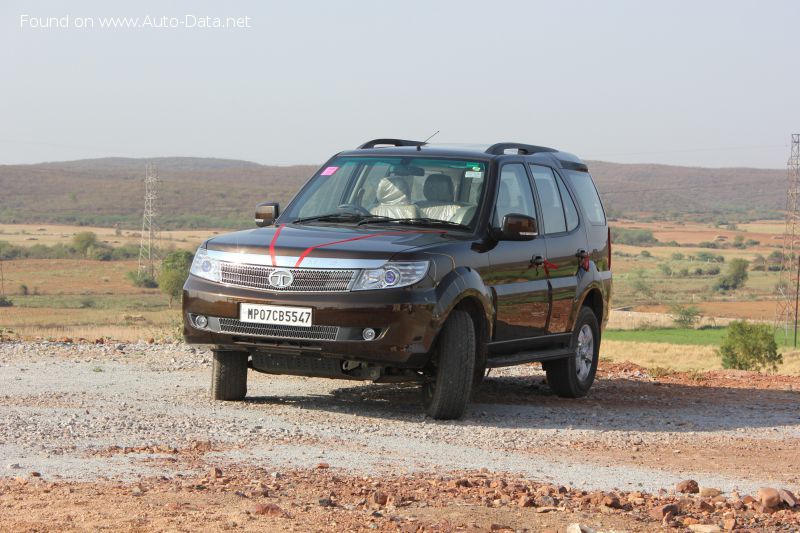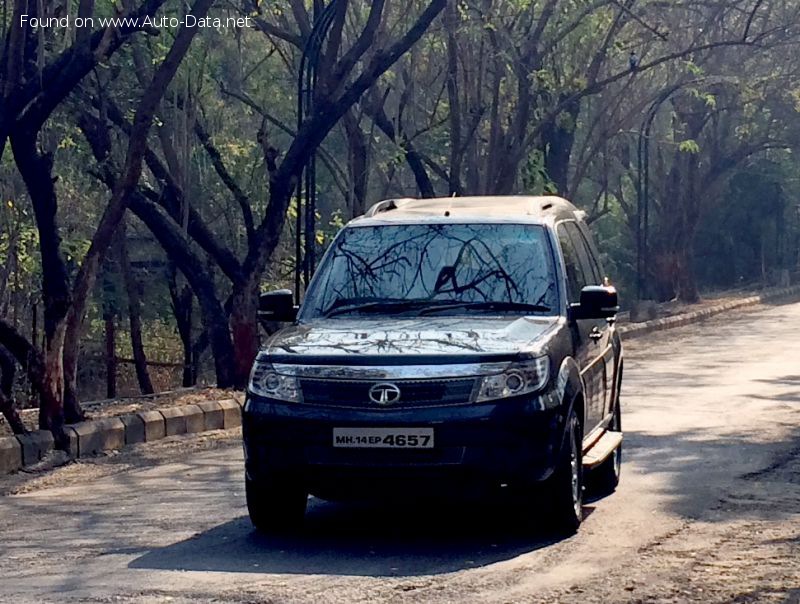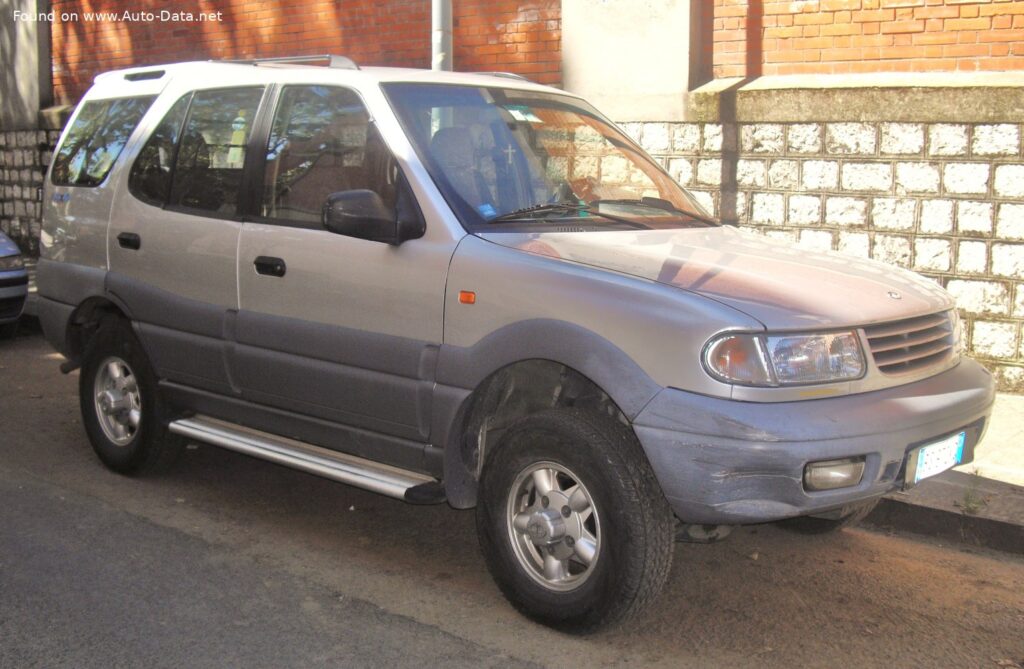
The Tata Safari I 1.9 i 16V (137 Hp), produced between 1998 and 2005, represents a significant milestone in the Indian automotive industry. While not initially sold in North America, the Safari holds a crucial position as one of the first domestically designed and manufactured SUVs in India. It catered to a growing demand for a robust, spacious vehicle capable of handling the diverse terrains of the Indian subcontinent. The Safari I established Tata Motors as a serious player in the SUV segment and laid the foundation for subsequent generations of the vehicle. This article details the technical specifications and characteristics of this pioneering SUV.
Tata Safari I 1.9 i 16V: A Detailed Overview
The Safari I was conceived as a vehicle that could offer both comfort and capability, appealing to families and adventurers alike. It was based on the TataTelcoline platform, originally developed in collaboration with Mercedes-Benz, and offered a unique blend of ruggedness and refinement for its time. The 1.9 i 16V variant, powered by a 1.9-liter inline-four engine, was a popular choice, balancing performance with fuel efficiency. The Safari I’s design and features were geared towards practicality and durability, reflecting the needs of the Indian market.
Engine & Performance
The heart of the Tata Safari I 1.9 i 16V is a 1.9-liter (1948 cm3 or 118.87 cu. in.) inline-four cylinder, naturally aspirated gasoline engine. This engine produces a maximum power output of 137 horsepower (Hp) at 5550 rpm, and a torque of 181 Newton-meters (133.5 lb.-ft.) at 4500 rpm. The engine features a multi-port fuel injection system and a double overhead camshaft (DOHC) valvetrain with four valves per cylinder, contributing to its relatively high power output for its displacement – 70.3 Hp per liter. The engine is longitudinally mounted in the front of the vehicle.
Power is delivered to all four wheels via a 5-speed manual transmission and an all-wheel drive (4×4) system. This drivetrain configuration provides enhanced traction and stability, particularly on challenging surfaces. The vehicle’s weight-to-power ratio is 14.7 kg/Hp (68.2 Hp/tonne), and the weight-to-torque ratio is 11.1 kg/Nm (90 Nm/tonne). The Safari I achieves a maximum speed of 145 km/h (90.1 mph). While not a performance-oriented vehicle, the 1.9 i 16V offers adequate power and torque for everyday driving and occasional off-road excursions.
Design & Features
The Tata Safari I is a five-door SUV with a seating capacity of five passengers. Its body-on-frame construction provides a robust and durable platform. The exterior design is characterized by its boxy shape, reflecting the styling trends of the late 1990s and early 2000s. The vehicle’s dimensions are as follows: length 4650 mm (183.07 in), width 1810 mm (71.26 in), and height 1920 mm (75.59 in). The wheelbase measures 2650 mm (104.33 in), providing a reasonably spacious interior.
In terms of features, the Safari I was equipped with hydraulic power steering and an Anti-lock Braking System (ABS), which were relatively advanced for an Indian-made SUV of that era. The suspension system consists of coil springs on both the front and rear axles. The vehicle rides on 235/75 R15 tires. The Safari I’s interior was designed with practicality in mind, offering comfortable seating and ample cargo space. While not luxurious, the interior was functional and durable. The kerb weight of the vehicle is 2010 kg (4431.29 lbs), with a maximum permissible weight of 2670 kg (5886.34 lbs) and a maximum load capacity of 660 kg (1455.05 lbs). The fuel tank capacity is 65 liters (17.17 US gal | 14.3 UK gal).
Technical Specifications
| Brand | Tata |
| Model | Safari |
| Generation | Safari I |
| Type (Engine) | 1.9 i 16V (137 Hp) |
| Start of production | 1998 year |
| End of production | 2005 year |
| Powertrain Architecture | Internal Combustion engine |
| Body type | SUV |
| Seats | 5 |
| Doors | 5 |
| Fuel Type | Petrol (Gasoline) |
| Maximum speed | 145 km/h / 90.1 mph |
| Weight-to-power ratio | 14.7 kg/Hp, 68.2 Hp/tonne |
| Weight-to-torque ratio | 11.1 kg/Nm, 90 Nm/tonne |
| Power | 137 Hp @ 5550 rpm |
| Power per litre | 70.3 Hp/l |
| Torque | 181 Nm @ 4500 rpm / 133.5 lb.-ft. @ 4500 rpm |
| Engine layout | Front, Longitudinal |
| Engine displacement | 1948 cm3 / 118.87 cu. in. |
| Number of cylinders | 4 |
| Engine configuration | Inline |
| Cylinder Bore | 83 mm / 3.27 in. |
| Piston Stroke | 90 mm / 3.54 in. |
| Compression ratio | 9.6:1 |
| Number of valves per cylinder | 4 |
| Fuel injection system | Multi-port manifold injection |
| Engine aspiration | Naturally aspirated engine |
| Valvetrain | DOHC |
| Kerb Weight | 2010 kg / 4431.29 lbs |
| Max. weight | 2670 kg / 5886.34 lbs |
| Max load | 660 kg / 1455.05 lbs |
| Fuel tank capacity | 65 l / 17.17 US gal | 14.3 UK gal |
| Length | 4650 mm / 183.07 in |
| Width | 1810 mm / 71.26 in |
| Height | 1920 mm / 75.59 in |
| Wheelbase | 2650 mm / 104.33 in |
| Front track | 1500 mm / 59.06 in |
| Rear (Back) track | 1470 mm / 57.87 in |
| Drive wheel | All wheel drive (4×4) |
| Number of gears and type of gearbox | 5 gears, manual transmission |
| Front suspension | Coil spring |
| Rear suspension | Coil spring |
| Front brakes | Disc |
| Rear brakes | Drum |
| Assisting systems | ABS (Anti-lock braking system) |
| Power steering | Hydraulic Steering |
| Tires size | 235/75 R15 |
The Tata Safari I 1.9 i 16V, while a product of its time, remains a significant vehicle in the history of the Indian automotive industry. It demonstrated Tata Motors’ capability to design and manufacture a competitive SUV and paved the way for future generations of the Safari, continuing to be a popular choice for Indian families seeking a versatile and reliable vehicle.