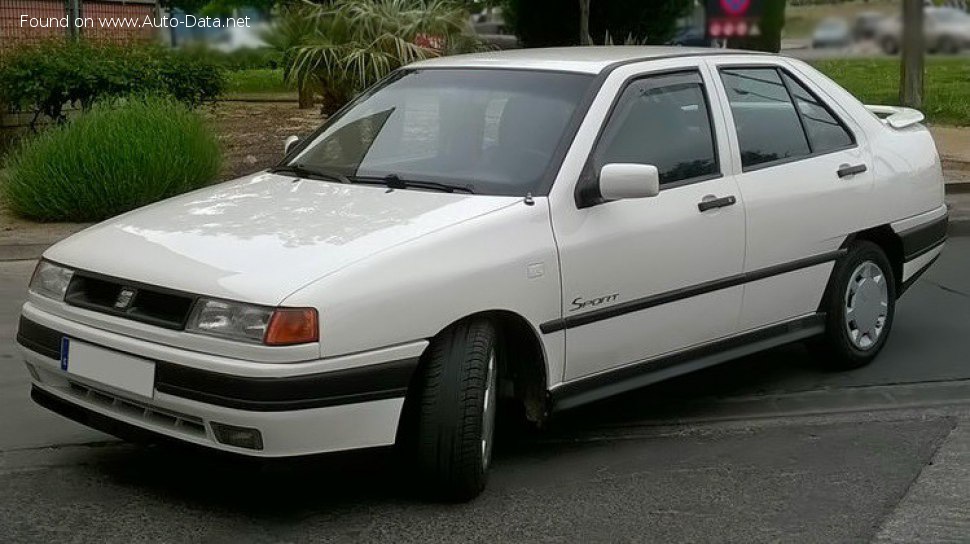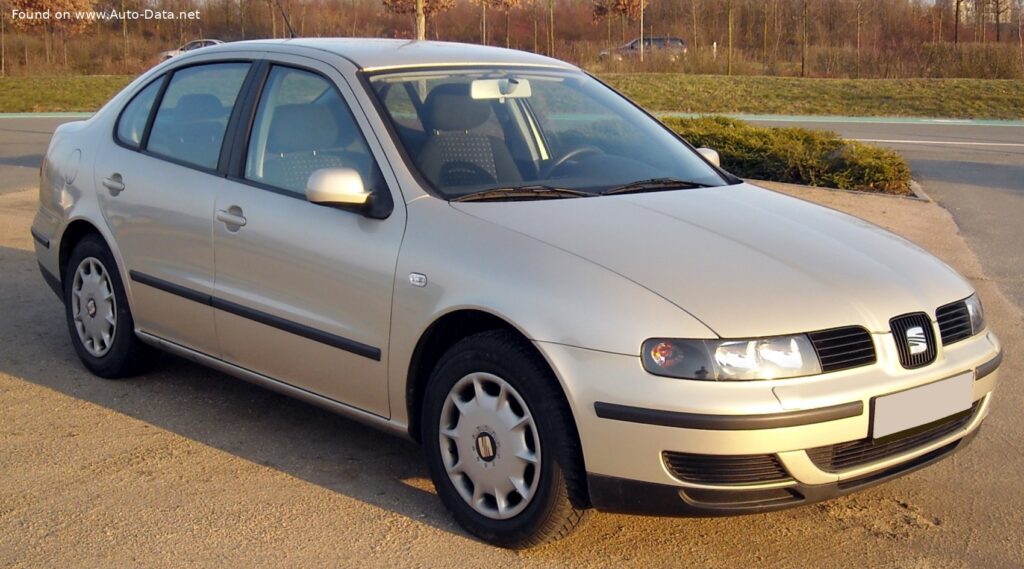
The SEAT Toledo II (1M2), specifically the 1.9 TDI variant producing 110 horsepower, represents a significant model in SEAT’s lineup during the late 1990s and early 2000s. While not officially sold in the United States, the Toledo was a popular compact sedan primarily marketed in Europe. It served as a more affordable and practical alternative to the larger SEAT Cordoba and Ibiza models, offering a spacious interior and efficient diesel powertrain. The Toledo II, built from 1999 to 2004, was a key part of SEAT’s strategy to establish itself as a mainstream automotive brand, leveraging technology shared with the Volkswagen Group.
SEAT Toledo II (1M2) 1.9 TDI: A European Compact Sedan
The Toledo II marked a departure from its predecessor, adopting a more conventional sedan body style. This shift aimed to broaden its appeal to families and drivers seeking a practical and comfortable vehicle. The 1.9 TDI engine was a cornerstone of the Toledo II’s success, offering a balance of fuel efficiency and respectable performance. This model competed with other European compact sedans like the Ford Focus, Opel Astra, and Peugeot 307, offering a distinct Spanish design flair and a value-oriented price point.
Engine & Performance
The heart of the Toledo II 1.9 TDI is its 1.9-liter, inline-four cylinder diesel engine, designated the ASV engine code. This engine produces 110 horsepower at 4,150 rpm and a substantial 235 Nm (173.33 lb.-ft.) of torque at 1,900 rpm. The engine utilizes direct fuel injection and a turbocharger with an intercooler, contributing to its efficiency and responsiveness. The power-to-weight ratio is 11.6 kg/Hp, and the torque-to-weight ratio is 5.4 kg/Nm. This translates to a 0-60 mph (0-96 km/h) acceleration time of approximately 10.6 seconds, and a 0-62 mph (0-100 km/h) time of 11.2 seconds. The top speed is rated at 193 km/h (119.92 mph). The engine’s 19.5:1 compression ratio is typical for a diesel engine, maximizing combustion efficiency. The engine’s 1896 cm3 displacement (115.7 cu. in.) provides a good balance between power and fuel economy.
Design & Features
The SEAT Toledo II is a four-door, five-seat sedan. Its design, penned under the direction of Walter de Silva, was considered modern and understated for its time. The exterior features clean lines and a relatively conservative aesthetic, prioritizing practicality over flamboyant styling. Inside, the Toledo II offers a spacious cabin with comfortable seating and a functional dashboard layout. Key features included power steering, ABS (Anti-lock Braking System), and a five-speed manual transmission. The trunk space is a generous 500 liters (17.66 cu. ft.), making it suitable for family use. Safety features, while not as comprehensive as modern vehicles, included driver and passenger airbags and seatbelt pretensioners. The Toledo II’s focus was on providing a comfortable and reliable driving experience, with an emphasis on fuel efficiency and practicality.
Technical Specifications
| General Information | |
| Brand | SEAT |
| Model | Toledo |
| Generation | Toledo II (1M2) |
| Type (Engine) | 1.9 TDI (110 Hp) |
| Start of production | October, 1999 |
| End of production | July, 2004 |
| Powertrain Architecture | Internal Combustion engine |
| Body type | Sedan |
| Seats | 5 |
| Doors | 4 |
| Performance Specs | |
| Fuel consumption (urban) | 6.6 l/100 km (35.6 US mpg, 42.8 UK mpg, 15.2 km/l) |
| Fuel consumption (extra urban) | 4.1 l/100 km (57.4 US mpg, 68.9 UK mpg, 24.4 km/l) |
| Fuel Type | Diesel |
| Acceleration 0 – 100 km/h | 11.2 sec |
| Acceleration 0 – 62 mph | 11.2 sec |
| Acceleration 0 – 60 mph | 10.6 sec |
| Maximum speed | 193 km/h (119.92 mph) |
| Weight-to-power ratio | 11.6 kg/Hp |
| Weight-to-torque ratio | 5.4 kg/Nm |
| Engine Specs | |
| Power | 110 Hp @ 4150 rpm |
| Power per litre | 58 Hp/l |
| Torque | 235 Nm @ 1900 rpm (173.33 lb.-ft. @ 1900 rpm) |
| Engine layout | Front, Transverse |
| Engine Model/Code | ASV |
| Engine displacement | 1896 cm3 (115.7 cu. in.) |
| Number of cylinders | 4 |
| Engine configuration | Inline |
| Cylinder Bore | 79.5 mm (3.13 in.) |
| Piston Stroke | 95.5 mm (3.76 in.) |
| Compression ratio | 19.5:1 |
| Number of valves per cylinder | 2 |
| Fuel injection system | Direct injection |
| Engine aspiration | Turbocharger, Intercooler |
| Valvetrain | OHC |
| Engine oil capacity | 4.3 l (4.54 US qt | 3.78 UK qt) |
| Coolant | 6.8 l (7.19 US qt | 5.98 UK qt) |
| Space, Volume and Weights | |
| Kerb Weight | 1272 kg (2804.28 lbs.) |
| Max. weight | 1785 kg (3935.25 lbs.) |
| Max load | 513 kg (1130.97 lbs.) |
| Trunk (boot) space – minimum | 500 l (17.66 cu. ft.) |
| Fuel tank capacity | 55 l (14.53 US gal | 12.1 UK gal) |
| Dimensions | |
| Length | 4439 mm (174.76 in.) |
| Width | 1742 mm (68.58 in.) |
| Height | 1436 mm (56.54 in.) |
| Wheelbase | 2513 mm (98.94 in.) |
| Front track | 1513 mm (59.57 in.) |
| Rear (Back) track | 1492 mm (58.74 in.) |
| Drivetrain, Brakes and Suspension | |
| Drivetrain Architecture | ICE drives front wheels |
| Drive wheel | Front wheel drive |
| Number of gears and type of gearbox | 5 gears, manual transmission |
| Front suspension | Spring Strut |
| Rear suspension | Coil spring |
| Front brakes | Disc |
| Rear brakes | Disc |
| Assisting systems | ABS (Anti-lock braking system) |
| Steering type | Steering rack and pinion |
| Power steering | Hydraulic Steering |
| Tires size | 195/65 R15 |