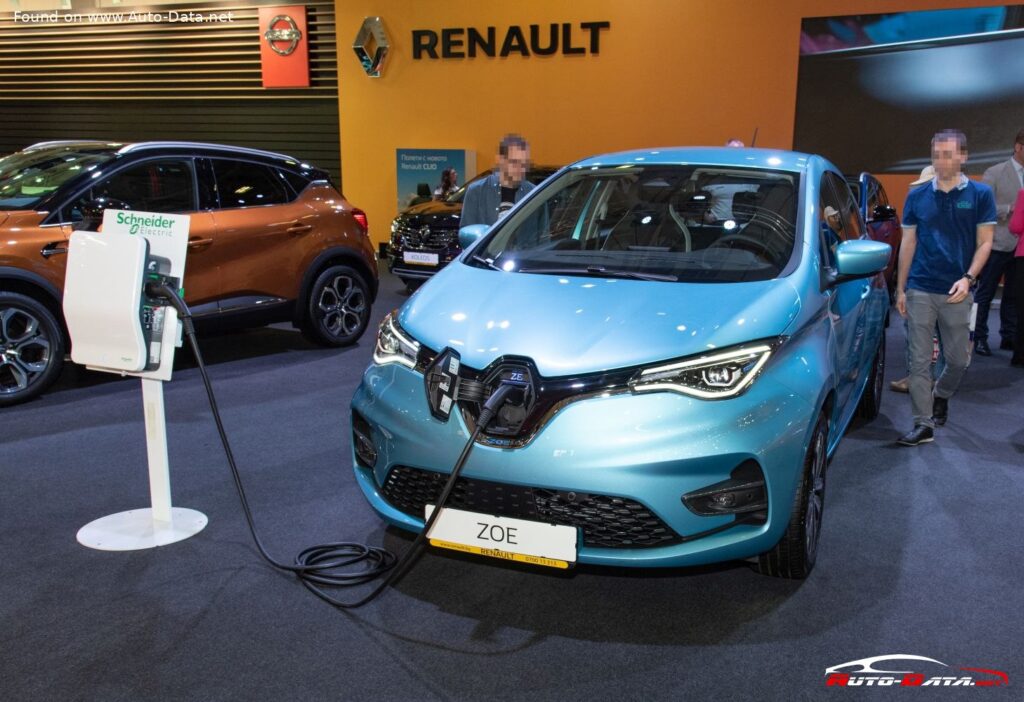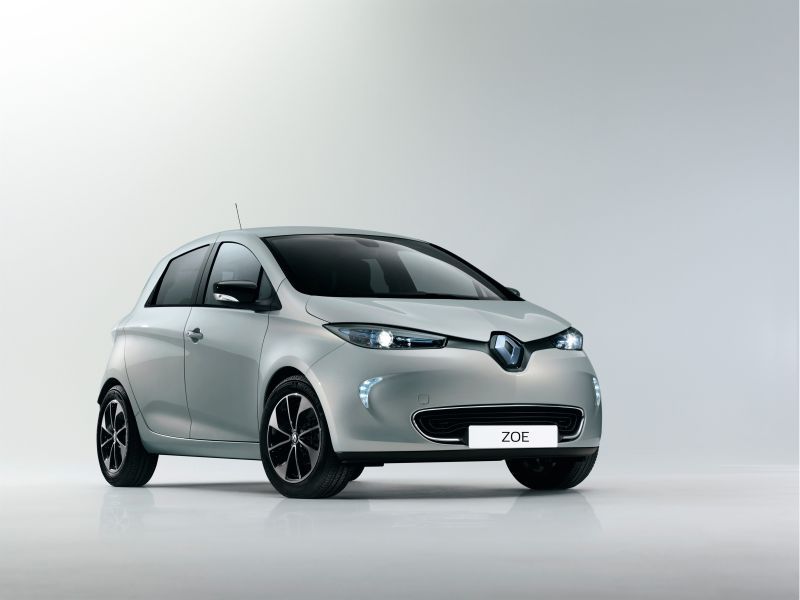
The Renault Zoe I R110 44.1 kWh is a front-wheel-drive, all-electric hatchback produced by the French manufacturer Renault between 2018 and 2019. Positioned as a subcompact car, the Zoe was Renault’s initial dedicated electric vehicle offering, designed to address the growing demand for zero-emission transportation, particularly within the European market. While not officially sold in the United States, the Zoe represents a significant step in the development and popularization of affordable electric vehicles. It competed with other early EVs like the Nissan Leaf and BMW i3, focusing on practicality and range for urban commuters.
Renault Zoe I: An Overview
The Zoe I represents the first generation of Renault’s all-electric supermini. Introduced to address the increasing environmental concerns and tightening emissions regulations in Europe, the Zoe aimed to provide a practical and affordable electric vehicle option. It was designed from the ground up as an EV, unlike some early electric cars that were conversions of existing internal combustion engine (ICE) vehicles. The R110 designation refers to the 108 horsepower (Hp) electric motor, and the 44.1 kWh indicates the gross battery capacity. The Zoe’s success helped establish Renault as a key player in the burgeoning EV market.
Engine & Performance
The Renault Zoe I R110 is powered by a single electric motor producing 108 Hp (80 kW) at between 3395 and 10980 rpm, and 225 Nm (165.95 lb.-ft.) of torque available from 500 to 3395 rpm. This electric motor drives the front wheels through a single-speed automatic transmission. Acceleration from 0 to 100 km/h (0-62 mph) takes 11.4 seconds, while 0 to 60 mph is achieved in approximately 10.8 seconds. The top speed is electronically limited to 135 km/h (83.89 mph). The weight-to-power ratio is 13.9 kg/Hp, or 72 Hp/tonne, and the weight-to-torque ratio is 6.7 kg/Nm, or 150 Nm/tonne. Performance is geared towards efficient urban driving rather than outright speed, prioritizing range and responsiveness in city conditions.
Design & Features
The Zoe I is a five-door hatchback with a practical and functional design. Its body measures 4084 mm (160.79 in) in length, 1730 mm (68.11 in) in width, and 1562 mm (61.5 in) in height. The wheelbase is 2588 mm (101.89 in). The interior offers seating for five passengers and features a relatively spacious cabin for its size. A key design element is the placement of the 44.1 kWh (41 kWh net/usable) lithium-ion battery pack under the floor, maximizing interior space. The trunk offers 338 liters (11.94 cu. ft.) of space with the rear seats up, expanding to 1225 liters (43.26 cu. ft.) when the rear seats are folded down. Standard safety features included ABS (Anti-lock Braking System), while higher trim levels offered additional features like stability control and multiple airbags. The Zoe’s design prioritized aerodynamic efficiency to maximize range, with a drag coefficient optimized for minimal energy consumption.
Technical Specifications
| Brand | Renault |
| Model | Zoe |
| Generation | Zoe I |
| Type (Engine) | R110 44.1 kWh (108 Hp) |
| Start of production | 2018 |
| End of production | 2019 |
| Powertrain Architecture | BEV (Electric Vehicle) |
| Body type | Hatchback |
| Seats | 5 |
| Doors | 5 |
| Fuel Type | Electricity |
| Acceleration 0 – 100 km/h | 11.4 sec |
| Acceleration 0 – 62 mph | 11.4 sec |
| Acceleration 0 – 60 mph | 10.8 sec |
| Maximum speed | 135 km/h (83.89 mph) |
| Weight-to-power ratio | 13.9 kg/Hp |
| Weight-to-torque ratio | 6.7 kg/Nm |
| Gross battery capacity | 44.1 kWh |
| Net (usable) battery capacity | 41 kWh |
| Battery voltage | 400 V |
| Battery technology | Lithium-ion (Li-Ion) |
| Battery weight | 305 kg (672.41 lbs.) |
| Battery location | Below the floor |
| All-electric range (WLTP) | 300 km (186.41 mi) |
| Average Energy consumption (WLTP) | 16.3 kWh/100 km (26.23 kWh/100 mi) |
| Kerb Weight | 1500 kg (3306.93 lbs.) |
| Max. weight | 1954 kg (4307.83 lbs.) |
| Max load | 454 kg (1000.9 lbs.) |
| Trunk (boot) space – minimum | 338 l (11.94 cu. ft.) |
| Trunk (boot) space – maximum | 1225 l (43.26 cu. ft.) |
| Length | 4084 mm (160.79 in.) |
| Width | 1730 mm (68.11 in.) |
| Width including mirrors | 1945 mm (76.57 in.) |
| Height | 1562 mm (61.5 in.) |
| Wheelbase | 2588 mm (101.89 in.) |
| Front track | 1511 mm (59.49 in.) |
| Rear (Back) track | 1587 mm (62.48 in.) |
| Front suspension | Independent type McPherson, Transverse stabilizer |
| Rear suspension | Transverse stabilizer, Torsion |
| Front brakes | Ventilated discs, 259 mm |
| Rear brakes | Drum, 228.6 mm |
| Steering type | Steering rack and pinion |
| Power steering | Electric Steering |
| Tires size | 185/65 R15; 195/55 R16; 205/45 R17 |
| Wheel rims size | 6J x 15; 6.5J x 16; 7J x 17 |
| Drivetrain | Front wheel drive. BEV (Electric Vehicle). One electric motor drives the front wheels. |
| Number of gears and type of gearbox | 1 gears, automatic transmission |
The Renault Zoe I R110 44.1 kWh played a crucial role in demonstrating the viability of electric vehicles for mainstream consumers. Its relatively affordable price, combined with a usable range and practical design, helped to overcome some of the initial barriers to EV adoption. While superseded by later generations of the Zoe with improved battery technology and performance, the Zoe I remains a significant milestone in the history of electric mobility.