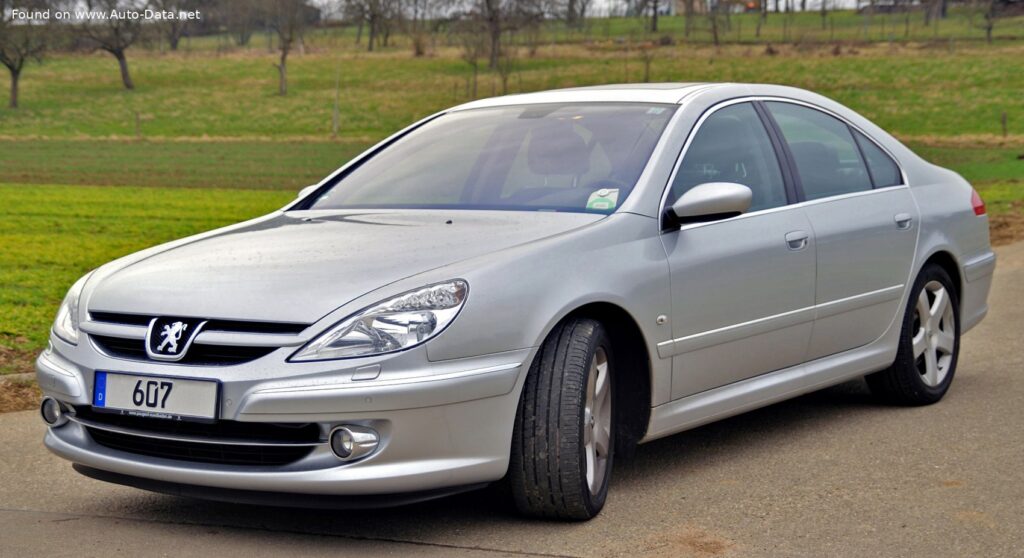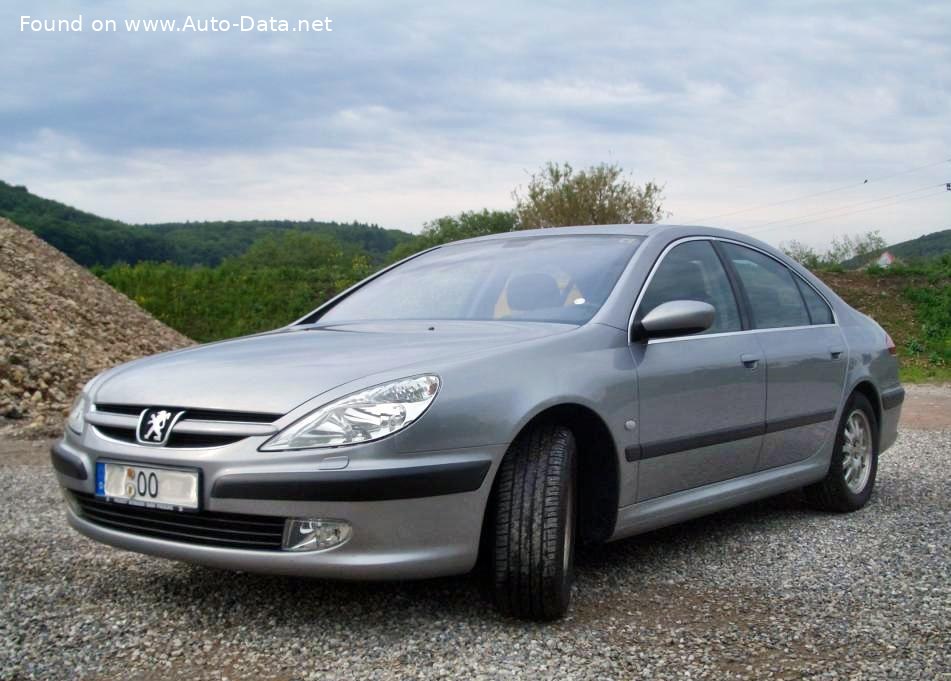
The Peugeot 607 2.2 HDI, produced between 1999 and 2004, represents Peugeot’s ambitious entry into the executive car segment. Designed to compete with established German rivals like the BMW 5 Series and Mercedes-Benz E-Class, the 607 aimed to offer a blend of French style, comfort, and advanced technology. While not a major sales success in all markets, particularly outside of Europe, it showcased Peugeot’s engineering capabilities and commitment to providing a sophisticated alternative in a competitive class. The 2.2 HDI variant, powered by a turbocharged diesel engine, was a popular choice for its fuel efficiency and respectable performance.
Peugeot 607 2.2 HDI: An Overview
The Peugeot 607 was the flagship model in Peugeot’s lineup during its production run. It was positioned as a large, comfortable sedan intended for long-distance travel and executive transport. The 2.2 HDI version, equipped with a four-cylinder diesel engine, offered a balance between power and economy, making it a practical choice for drivers covering significant mileage. The 607 was notable for its spacious interior, advanced features for its time, and distinctive styling, though its design proved somewhat polarizing. It was primarily sold in Europe, where large sedans and diesel engines were more commonly favored.
Engine & Performance
The heart of the Peugeot 607 2.2 HDI is its 2.2-liter, inline-four cylinder diesel engine, designated the 4HX DW12TED4. This engine produces 133 horsepower at 4,000 rpm and a substantial 314 Nm (231.59 lb.-ft.) of torque at 2,000 rpm. The engine utilizes a turbocharger and a diesel commonrail fuel injection system to optimize performance and fuel efficiency. The engine’s displacement of 2179 cm3 (132.97 cu. in.) and a compression ratio of 18:1 contribute to its robust power delivery. Acceleration from 0 to 100 km/h (0-62 mph) takes 10.6 seconds, while 0 to 60 mph is achieved in approximately 10.1 seconds. The 607 2.2 HDI boasts a maximum speed of 205 km/h (127.38 mph). The weight-to-power ratio of 12.1 kg/Hp and weight-to-torque ratio of 5.1 kg/Nm demonstrate a reasonable balance between engine output and vehicle mass.
Design & Features
The Peugeot 607 is a four-door sedan with a classic three-box design. Its exterior styling, while modern for its time, featured a somewhat controversial front end. The interior was designed with a focus on comfort and spaciousness, offering seating for five passengers. Key features included a well-appointed cabin with quality materials, a comprehensive instrument panel, and a range of convenience features. Safety was also a priority, with the inclusion of ABS (Anti-lock Braking System) as standard equipment. The 607’s trunk offered a minimum capacity of 481 liters (16.99 cu. ft.), providing ample space for luggage. The vehicle’s dimensions – a length of 4877 mm (192.01 in.), a width of 1800 mm (70.87 in.), and a height of 1437 mm (56.57 in.) – positioned it firmly within the large sedan category. The wheelbase of 2800 mm (110.24 in.) contributed to a comfortable ride quality.
Technical Specifications
| Brand | Peugeot |
| Model | 607 |
| Generation | 607 |
| Type (Engine) | 2.2 HDI (133 Hp) |
| Start of production | 1999 |
| End of production | 2004 |
| Powertrain Architecture | Internal Combustion engine |
| Body type | Sedan |
| Seats | 5 |
| Doors | 4 |
| Fuel consumption (urban) | 9.3 l/100 km (25.3 US mpg) |
| Fuel consumption (extra urban) | 5.3 l/100 km (44.4 US mpg) |
| Fuel consumption (combined) | 6.8 l/100 km (34.6 US mpg) |
| Fuel Type | Diesel |
| Acceleration 0 – 100 km/h | 10.6 sec |
| Acceleration 0 – 62 mph | 10.6 sec |
| Acceleration 0 – 60 mph | 10.1 sec |
| Maximum speed | 205 km/h (127.38 mph) |
| Weight-to-power ratio | 12.1 kg/Hp |
| Weight-to-torque ratio | 5.1 kg/Nm |
| Power | 133 Hp @ 4000 rpm |
| Torque | 314 Nm @ 2000 rpm (231.59 lb.-ft. @ 2000 rpm) |
| Engine layout | Front, Transverse |
| Engine Model/Code | 4HX DW12TED4 |
| Engine displacement | 2179 cm3 (132.97 cu. in.) |
| Number of cylinders | 4 |
| Engine configuration | Inline |
| Cylinder Bore | 85 mm (3.35 in.) |
| Piston Stroke | 96 mm (3.78 in.) |
| Compression ratio | 18:1 |
| Number of valves per cylinder | 4 |
| Fuel injection system | Diesel Commonrail |
| Engine aspiration | Turbocharger |
| Valvetrain | DOHC |
| Engine oil capacity | 4.75 l (5.02 US qt | 4.18 UK qt) |
| Coolant | 9.8 l (10.36 US qt | 8.62 UK qt) |
| Kerb Weight | 1610 kg (3549.44 lbs.) |
| Max. weight | 2115 kg (4662.78 lbs.) |
| Max load | 505 kg (1113.33 lbs.) |
| Trunk (boot) space – minimum | 481 l (16.99 cu. ft.) |
| Fuel tank capacity | 80 l (21.13 US gal | 17.6 UK gal) |
| Length | 4877 mm (192.01 in.) |
| Width | 1800 mm (70.87 in.) |
| Height | 1437 mm (56.57 in.) |
| Wheelbase | 2800 mm (110.24 in.) |
| Front track | 1539 mm (60.59 in.) |
| Rear (Back) track | 1537 mm (60.51 in.) |
| Drivetrain Architecture | Front wheel drive |
| Number of gears and type of gearbox | 5 gears, manual transmission |
| Front suspension | Wishbone |
| Rear suspension | Double wishbone |
| Front brakes | Ventilated discs |
| Rear brakes | Disc |
| Assisting systems | ABS (Anti-lock braking system) |
| Steering type | Steering rack and pinion |
| Power steering | Hydraulic Steering |
| Tires size | 215/60 R16 |
The Peugeot 607 2.2 HDI, while not a runaway success, remains a noteworthy example of Peugeot’s ambition to compete in the executive car market. Its combination of diesel efficiency, comfortable ride, and spacious interior made it a viable option for drivers seeking a sophisticated and practical sedan.