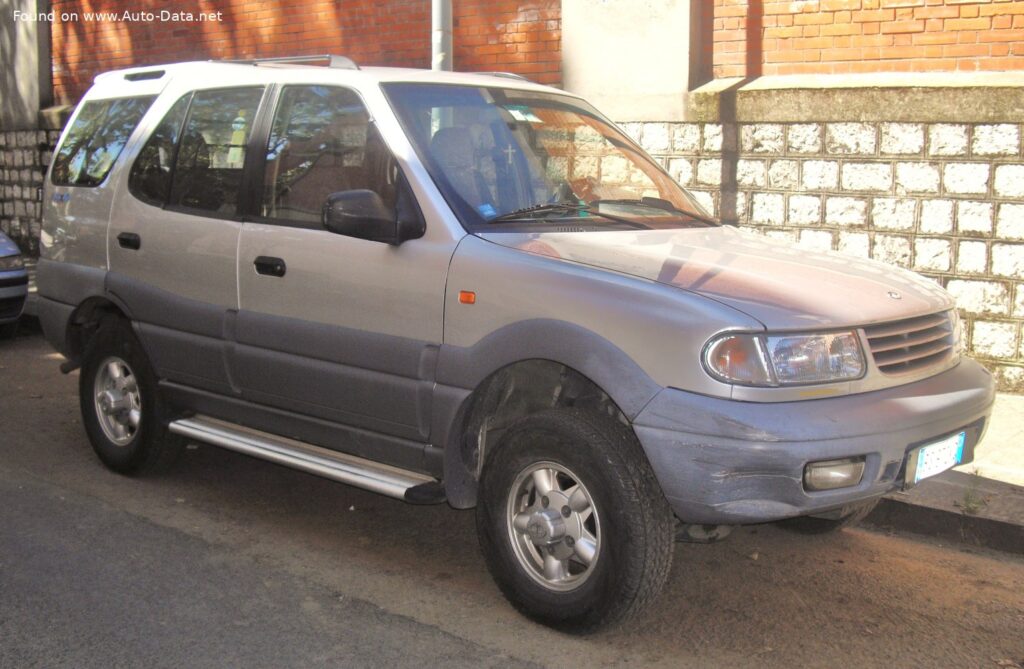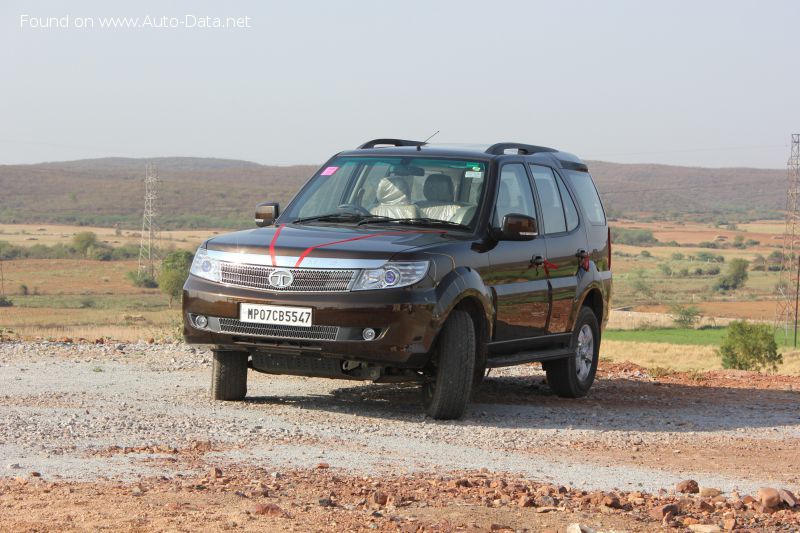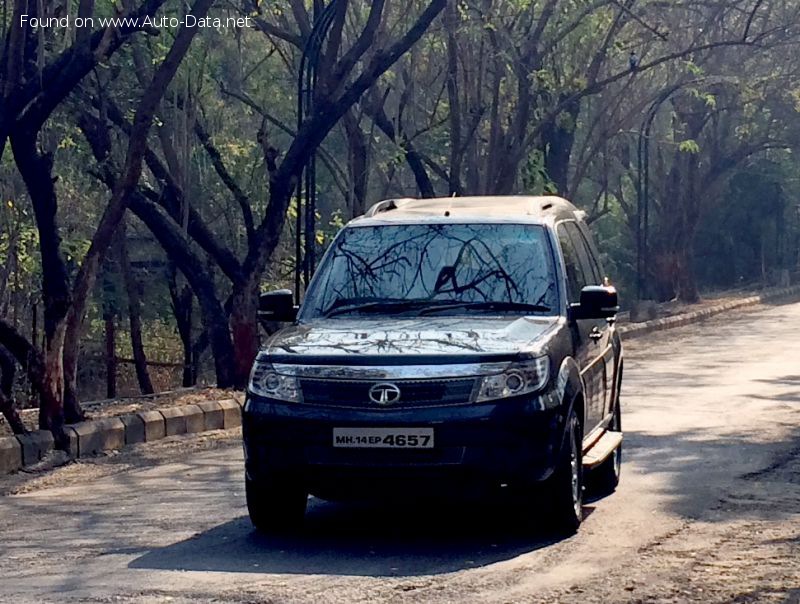
The Tata Safari Storme I (facelift 2015) 2.2 (156 Hp) 4×4 represents a significant evolution in Tata Motors’ SUV lineage, primarily designed and sold within the Indian market. While not officially sold in the United States, understanding its specifications and capabilities provides insight into the growing sophistication of the Indian automotive industry. The Storme was positioned as a robust, body-on-frame SUV aimed at buyers seeking a capable vehicle for both on-road comfort and off-road excursions. It served as a popular choice for families and adventure enthusiasts in India, offering a blend of space, practicality, and affordability. The 2015 facelift brought cosmetic and minor mechanical updates to the original Storme, enhancing its appeal and competitiveness.
Tata Safari Storme I (facelift 2015): Overview
The Safari nameplate holds a significant place in Indian automotive history, originating with the launch of the first-generation Tata Safari in 1998, which was India’s first SUV. The Storme, introduced in 2012, was a further refinement, built on a reinforced version of the Tata 200 platform. The 2015 facelift focused on improving the vehicle’s aesthetics and adding features to enhance the overall driving experience. The Storme competed with other SUVs in the Indian market, such as the Mahindra Scorpio and the Toyota Innova, offering a unique combination of ruggedness and passenger comfort. It was discontinued in 2019, paving the way for newer Tata SUV models.
Engine & Performance
The Tata Safari Storme I (facelift 2015) 2.2 4×4 is powered by a 2.2-liter, four-cylinder diesel engine. This engine produces 156 horsepower at 4000 rpm and 400 Newton-meters (295.02 lb.-ft.) of torque between 1750 and 2500 rpm. The engine features a turbocharger with an intercooler and a diesel commonrail fuel injection system, contributing to its efficiency and performance. The engine is transversely mounted in the front of the vehicle. Power is delivered to all four wheels through a five-speed manual transmission and a 4×4 drivetrain. This configuration provides good off-road capability, with a focus on torque delivery for navigating challenging terrain. The combined fuel consumption is rated at 7.1 liters per 100 kilometers (33.1 US mpg or 39.8 UK mpg), offering reasonable fuel economy for a vehicle of its size and capability. The engine’s 17.2:1 compression ratio is typical for a diesel engine, maximizing combustion efficiency.
Design & Features
The Safari Storme I (facelift 2015) is a five-door SUV with a body-on-frame construction, providing a robust and durable platform. It offers seating for up to seven passengers, making it a practical choice for families. The 2015 facelift included subtle cosmetic changes, such as a revised front grille, new headlights, and updated bumpers. The vehicle’s dimensions are 4655 mm (183.27 in) in length, 1965 mm (77.36 in) in width, and 1922 mm (75.67 in) in height. The wheelbase measures 2650 mm (104.33 in), and the ride height (ground clearance) is 200 mm (7.87 in). These dimensions contribute to the vehicle’s spacious interior and its ability to handle varied road conditions.
In terms of features, the Storme offered a range of equipment, including air conditioning, power steering (hydraulic), and an anti-lock braking system (ABS). The interior was designed with practicality in mind, featuring durable materials and a functional layout. Trunk space is a generous 981 liters (34.64 cu. ft.) with the rear seats folded down. The vehicle’s suspension system consists of a double wishbone setup at the front and an independent multi-link suspension at the rear, providing a comfortable ride quality. Ventilated disc brakes are used on all four wheels, ensuring adequate stopping power. The minimum turning circle is 10.8 meters (35.43 ft).
Technical Specifications
| Brand | Tata |
| Model | Safari |
| Generation | Safari Storme I (facelift 2015) |
| Type (Engine) | 2.2 (156 Hp) 4×4 |
| Start of production | 2015 |
| End of production | 2019 |
| Powertrain Architecture | Internal Combustion engine |
| Body type | SUV |
| Seats | 7 |
| Doors | 5 |
| Fuel consumption (economy) – combined | 7.1 l/100 km |
| Fuel consumption (economy) – combined (US mpg) | 33.1 US mpg |
| Fuel consumption (economy) – combined (UK mpg) | 39.8 UK mpg |
| Fuel consumption (economy) – combined (km/l) | 14.1 km/l |
| Fuel Type | Diesel |
| Power | 156 Hp @ 4000 rpm |
| Power per litre | 71.6 Hp/l |
| Torque | 400 Nm @ 1750-2500 rpm |
| Torque (lb.-ft.) | 295.02 lb.-ft. @ 1750-2500 rpm |
| Engine layout | Front, Transverse |
| Engine displacement | 2179 cm3 |
| Engine displacement (cu. in.) | 132.97 cu. in. |
| Number of cylinders | 4 |
| Engine configuration | Inline |
| Cylinder Bore | 85 mm |
| Cylinder Bore (in.) | 3.35 in. |
| Piston Stroke | 96 mm |
| Piston Stroke (in.) | 3.78 in. |
| Compression ratio | 17.2:1 |
| Number of valves per cylinder | 4 |
| Fuel injection system | Diesel Commonrail |
| Engine aspiration | Turbocharger, Intercooler |
| Valvetrain | DOHC |
| Max. weight | 2665 kg |
| Max. weight (lbs.) | 5875.32 lbs. |
| Trunk (boot) space – maximum | 981 l |
| Trunk (boot) space – maximum (cu. ft.) | 34.64 cu. ft. |
| Fuel tank capacity | 63 l |
| Fuel tank capacity (US gal) | 16.64 US gal |
| Fuel tank capacity (UK gal) | 13.86 UK gal |
| Length | 4655 mm |
| Length (in.) | 183.27 in. |
| Width | 1965 mm |
| Width (in.) | 77.36 in. |
| Height | 1922 mm |
| Height (in.) | 75.67 in. |
| Wheelbase | 2650 mm |
| Wheelbase (in.) | 104.33 in. |
| Ride height (ground clearance) | 200 mm |
| Ride height (ground clearance) (in.) | 7.87 in. |
| Minimum turning circle (turning diameter) | 10.8 m |
| Minimum turning circle (turning diameter) (ft.) | 35.43 ft. |
| Drive wheel | All wheel drive (4×4) |
| Number of gears and type of gearbox | 5 gears, manual transmission |
| Front suspension | Double wishbone |
| Rear suspension | Independent multi-link suspension |
| Front brakes | Ventilated discs |
| Rear brakes | Disc |
| Assisting systems | ABS (Anti-lock braking system) |
| Steering type | Steering rack and pinion |
| Power steering | Hydraulic Steering |
| Tires size | 235/70 R16 |
| Wheel rims size | 16 |