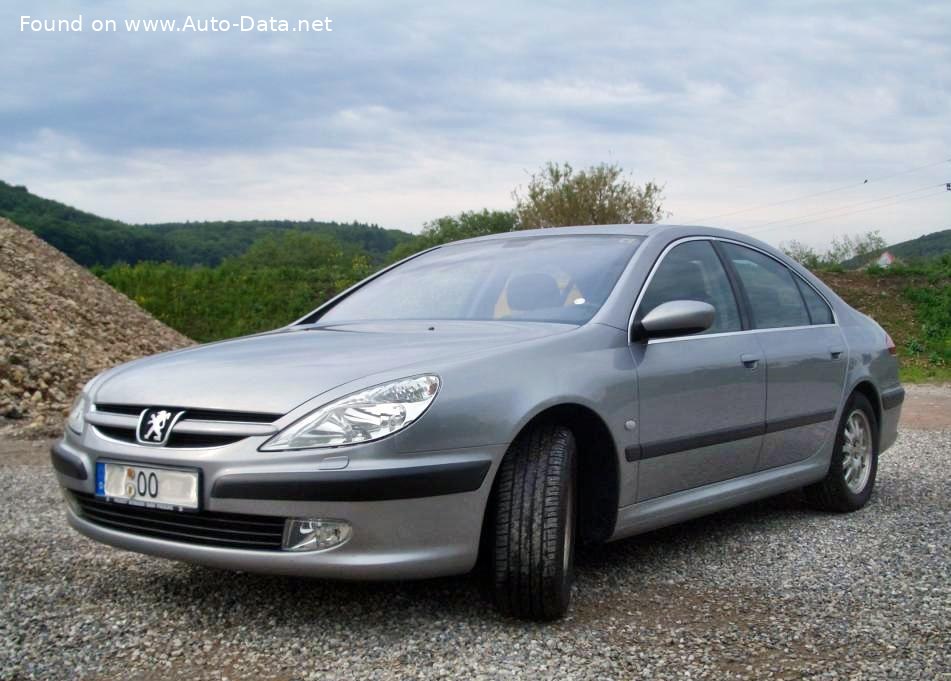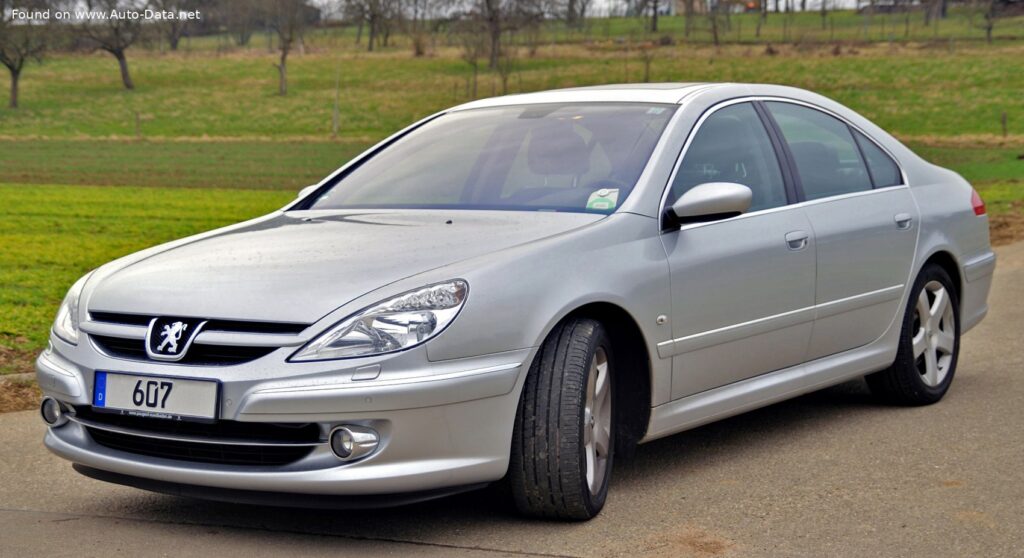
The Peugeot 607, particularly the Phase II model produced from 2004 to 2010, represents Peugeot’s ambitious foray into the executive car segment. Positioned as a competitor to vehicles like the Ford Mondeo, Vauxhall/Opel Vectra, and Renault Safrane in Europe, the 607 aimed to offer a blend of French sophistication, comfort, and technology. While never officially sold in the United States, the 607 showcases Peugeot’s engineering capabilities and design philosophy of the era. This article focuses on the 2.7 HDi V6 Tiptronic variant, a popular engine choice within the 607 range.
Peugeot 607 (Phase II): A Detailed Overview
The Phase II update, introduced in 2004, brought significant revisions to the original 607, launched in 1999. These changes included styling updates, enhanced safety features, and refinements to the interior. The 2.7 HDi V6 Tiptronic model, equipped with a modern turbodiesel engine and a six-speed automatic transmission, was a key offering, appealing to drivers seeking a balance of performance and fuel efficiency. The 607, throughout its production run, was a flagship model for Peugeot, demonstrating the brand’s commitment to building larger, more luxurious vehicles.
Engine & Performance
The heart of the 607 2.7 HDi V6 is a 2.7-liter, V6 turbodiesel engine (DT17TED4). This engine produces 204 horsepower at 4000 rpm and a substantial 440 Nm (324.53 lb.-ft.) of torque at 1900 rpm. The use of a bi-turbocharger and intercooler significantly enhances both power and responsiveness. The engine’s common rail direct fuel injection system contributes to efficient combustion and reduced emissions. Paired with a six-speed Tiptronic automatic transmission, the 607 2.7 HDi V6 achieves a 0-60 mph (0-96 km/h) acceleration time of approximately 8.3 seconds and a top speed of 230 km/h (142.92 mph). The engine’s relatively high compression ratio of 17.3:1 is typical for diesel engines, maximizing efficiency. The weight-to-power ratio of 8.4 kg/Hp and weight-to-torque ratio of 3.9 kg/Nm demonstrate a respectable power-to-weight balance for a vehicle of its size and class.
Design & Features
The Peugeot 607 Phase II is a four-door sedan with a sleek and understated design. Its exterior styling features a prominent front grille, sculpted headlights, and a flowing roofline. The interior is designed with comfort and practicality in mind, offering seating for five passengers. Key features of the 607 include a spacious cabin, a well-equipped dashboard, and a large trunk with a minimum capacity of 468 liters (16.53 cu. ft.). Safety was a priority in the Phase II update, with features like ABS (Anti-lock Braking System) and a robust body structure designed to protect occupants in the event of a collision. The 607 also included features like power steering, a McPherson independent front suspension, and a double wishbone rear suspension, contributing to a comfortable and controlled ride. The vehicle’s dimensions – a length of 4902 mm (192.99 in.) and a width of 1800 mm (70.87 in.) – position it as a sizable executive sedan.
Technical Specifications
| Brand | Peugeot |
| Model | 607 |
| Generation | 607 (Phase II, 2004) |
| Type (Engine) | 2.7 HDi V6 (204 Hp) Tiptronic |
| Start of production | 2004 |
| End of production | 2010 |
| Powertrain Architecture | Internal Combustion engine |
| Body type | Sedan |
| Seats | 5 |
| Doors | 4 |
| Fuel consumption (urban) | 11.6 l/100 km (20.3 US mpg, 24.4 UK mpg, 8.6 km/l) |
| Fuel consumption (extra urban) | 6.6 l/100 km (35.6 US mpg, 42.8 UK mpg, 15.2 km/l) |
| Fuel consumption (combined) | 8.4 l/100 km (28 US mpg, 33.6 UK mpg, 11.9 km/l) |
| CO2 emissions | 223 g/km |
| Fuel Type | Diesel |
| Acceleration 0 – 100 km/h | 8.7 sec |
| Acceleration 0 – 62 mph | 8.7 sec |
| Acceleration 0 – 60 mph | 8.3 sec |
| Maximum speed | 230 km/h (142.92 mph) |
| Emission standard | Euro 4 |
| Weight-to-power ratio | 8.4 kg/Hp |
| Weight-to-torque ratio | 3.9 kg/Nm |
| Power | 204 Hp @ 4000 rpm |
| Power per litre | 75 Hp/l |
| Torque | 440 Nm @ 1900 rpm (324.53 lb.-ft. @ 1900 rpm) |
| Engine layout | Front, Transverse |
| Engine Model/Code | DT17TED4 |
| Engine displacement | 2720 cm3 (165.98 cu. in.) |
| Number of cylinders | 6 |
| Engine configuration | V-engine |
| Cylinder Bore | 81 mm (3.19 in.) |
| Piston Stroke | 88 mm (3.46 in.) |
| Compression ratio | 17.3:1 |
| Number of valves per cylinder | 4 |
| Fuel injection system | Diesel Commonrail |
| Engine aspiration | BiTurbo, Intercooler |
| Valvetrain | DOHC |
| Engine oil capacity | 5.5 l (5.81 US qt | 4.84 UK qt) |
| Coolant capacity | 11.1 l (11.73 US qt | 9.77 UK qt) |
| Kerb Weight | 1723 kg (3798.56 lbs.) |
| Max. weight | 2203 kg (4856.78 lbs.) |
| Max load | 480 kg (1058.22 lbs.) |
| Trunk (boot) space (minimum) | 468 l (16.53 cu. ft.) |
| Fuel tank capacity | 80 l (21.13 US gal | 17.6 UK gal) |
| Permitted trailer load (braked) | 1700 kg (3747.86 lbs.) |
| Permitted trailer load (unbraked) | 750 kg (1653.47 lbs.) |
| Length | 4902 mm (192.99 in.) |
| Width | 1800 mm (70.87 in.) |
| Width with mirrors folded | 1835 mm (72.24 in.) |
| Width including mirrors | 2085 mm (82.09 in.) |
| Height | 1442 mm (56.77 in.) |
| Wheelbase | 2800 mm (110.24 in.) |
| Front track | 1528 mm (60.16 in.) |
| Rear track | 1529 mm (60.2 in.) |
| Front overhang | 1000 mm (39.37 in.) |
| Rear overhang | 1102 mm (43.39 in.) |
| Ride height (ground clearance) | 140 mm (5.51 in.) |
| Minimum turning circle | 12 m (39.37 ft.) |
| Drivetrain | Front wheel drive |
| Number of gears | 6 |
| Gearbox type | Automatic transmission Tiptronic |
| Front suspension | Independent type McPherson, Transverse stabilizer |
| Rear suspension | Double wishbone, Coil spring |
| Front brakes | Ventilated discs |
| Rear brakes | Disc |
| Steering type | Steering rack and pinion |
| Power steering | Hydraulic Steering |
| Tires size | 225/50 R17 |
| Wheel rims size | 7.5J x 17 |