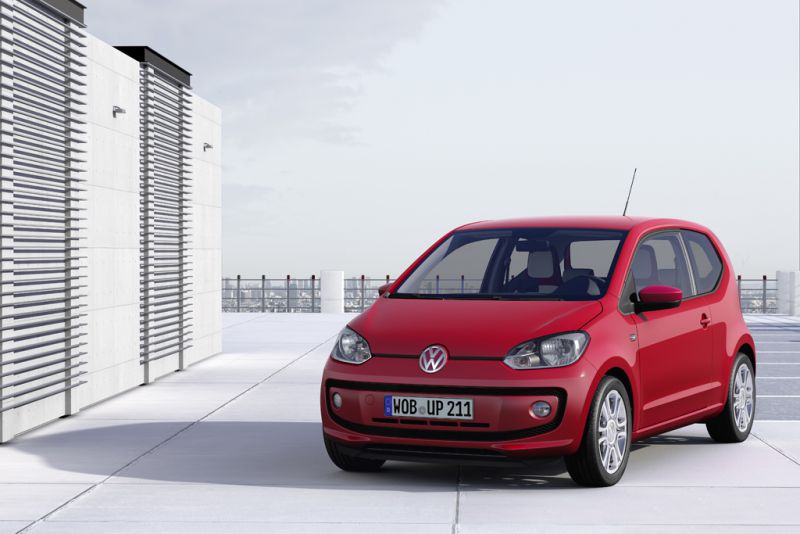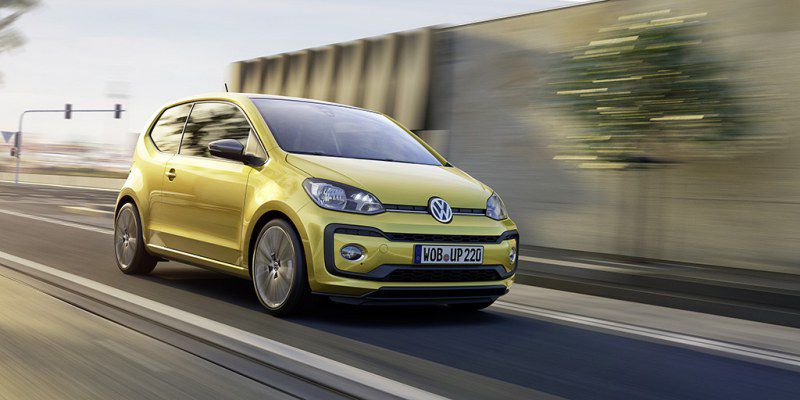
The Volkswagen Up! is a city car manufactured by the German automaker Volkswagen. Introduced in 2011, the Up! was designed as a modern, affordable, and fuel-efficient vehicle for urban environments. The model underwent a significant facelift in 2016, incorporating updated styling, improved equipment, and revised engine options. This article focuses on the Volkswagen Up! (facelift 2016) powered by the 1.0 EcoFuel engine, a variant specifically designed to run on Compressed Natural Gas (CNG), producing 68 horsepower. While not widely sold in the United States, the Up! is a popular choice in Europe as an economical and practical small car.
Volkswagen Up! (Facelift 2016) 1.0 EcoFuel: An Overview
The Up! 1.0 EcoFuel represents Volkswagen’s commitment to alternative fuel vehicles. Designed primarily for the European market, it offers a lower carbon footprint compared to its gasoline-only counterparts. The EcoFuel variant utilizes a bi-fuel system, capable of running on both CNG and gasoline, providing flexibility and extended range. The facelifted model, launched in 2016, brought cosmetic and technological updates, enhancing the Up!’s appeal in a competitive segment. Its compact size and nimble handling make it well-suited for navigating congested city streets.
Engine & Performance
The heart of the Up! 1.0 EcoFuel is a naturally aspirated, three-cylinder 1.0-liter (999 cm3 or 60.96 cu. in.) engine. This engine develops 68 horsepower (Hp) at its peak, and 90 Newton-meters (66.38 lb.-ft.) of torque at 3000 rpm. The engine is transversely mounted at the front of the vehicle and drives the front wheels. The EcoFuel system allows the vehicle to operate primarily on CNG, significantly reducing emissions. When CNG is depleted, the engine automatically switches to gasoline, ensuring uninterrupted operation. Performance figures include a 0-100 km/h (0-62 mph) acceleration time of 17.6 seconds and a maximum speed of 165 km/h (102.53 mph). The weight-to-power ratio is 14.6 kg/Hp, and the weight-to-torque ratio is 11.1 kg/Nm. The engine features multi-port manifold fuel injection and incorporates a Start & Stop system to further improve fuel efficiency. It also includes a particulate filter to reduce emissions, meeting Euro 6d-ISC-FCM standards.
Design & Features
The Volkswagen Up! (facelift 2016) is a compact hatchback available in both three-door and five-door configurations, seating up to four passengers. Its design emphasizes practicality and efficiency. The facelift brought subtle styling changes, including revised front and rear bumpers, updated headlights, and new interior trim options. The vehicle’s relatively short length (3600 mm or 141.73 in.) and narrow width (1641 mm or 64.61 in.) make it easy to maneuver and park in urban environments. Key features include a functional interior layout, with a focus on maximizing space. The trunk offers a minimum capacity of 213 liters (7.52 cu. ft.), expanding to 913 liters (32.24 cu. ft.) with the rear seats folded down. Safety features, standard for the era, include ABS (Anti-lock Braking System). The Up! also features electric power steering and a five-speed manual transmission. The vehicle’s suspension consists of coil springs with an independent setup at the front and a semi-independent setup at the rear.
Technical Specifications
| Brand | Volkswagen |
| Model | Up! |
| Generation | Up! (facelift 2016) |
| Type (Engine) | 1.0 EcoFuel (68 Hp) CNG |
| Start of production | 2020 |
| Powertrain Architecture | Internal Combustion engine |
| Body type | Hatchback |
| Seats | 4 |
| Doors | 3-5 |
| Fuel consumption at Low speed (WLTP) (CNG) | 4.4 kg/100 km |
| Fuel consumption at Medium speed (WLTP) (CNG) | 3.5 kg/100 km |
| Fuel consumption at high speed (WLTP) (CNG) | 3.3 kg/100 km |
| Fuel consumption at very high speed (WLTP) (CNG) | 4.2 kg/100 km |
| Combined fuel consumption (WLTP) (CNG) | 3.8 kg/100 km |
| CO2 emissions (CNG) (WLTP) | 104 g/km |
| Fuel consumption (economy) – urban (CNG) (NEDC) | 3.7 kg/100 km |
| Fuel consumption (economy) – extra urban (CNG) (NEDC) | 2.7 kg/100 km |
| Fuel consumption (economy) – combined (CNG) (NEDC) | 3.1 kg/100 km |
| CO2 emissions (CNG) (NEDC) | 85 g/km |
| Fuel Type | Petrol / CNG |
| Acceleration 0 – 100 km/h | 17.6 sec |
| Acceleration 0 – 62 mph | 17.6 sec |
| Acceleration 0 – 60 mph | 16.7 sec |
| Maximum speed | 165 km/h / 102.53 mph |
| Emission standard | Euro 6d-ISC-FCM |
| Weight-to-power ratio | 14.6 kg/Hp |
| Weight-to-torque ratio | 11.1 kg/Nm |
| Power | 68 Hp |
| Power per litre | 68.1 Hp/l |
| Torque | 90 Nm @ 3000 rpm / 66.38 lb.-ft. @ 3000 rpm |
| Engine layout | Front, Transverse |
| Engine Model/Code | CPGA |
| Engine displacement | 999 cm3 / 60.96 cu. in. |
| Number of cylinders | 3 |
| Engine configuration | Inline |
| Number of valves per cylinder | 4 |
| Fuel injection system | Multi-port manifold injection |
| Engine aspiration | Naturally aspirated engine |
| Engine oil capacity | 3.4 l / 3.59 US qt | 2.99 UK qt |
| Kerb Weight | 996 kg / 2195.8 lbs. |
| Max. weight | 1380 kg / 3042.38 lbs. |
| Max load | 384 kg / 846.58 lbs. |
| Trunk (boot) space – minimum | 213 l / 7.52 cu. ft. |
| Trunk (boot) space – maximum | 913 l / 32.24 cu. ft. |
| Fuel tank capacity | 10.9 l / 2.88 US gal | 2.4 UK gal |
| CNG cylinder capacity | 10 kg |
| Max. roof load | 50 kg / 110.23 lbs. |
| Length | 3600 mm / 141.73 in. |
| Width | 1641 mm / 64.61 in. |
| Width with mirrors folded | 1645 mm / 64.76 in. |
| Width including mirrors | 1910 mm / 75.2 in. |
| Height | 1504 mm / 59.21 in. |
| Wheelbase | 2407 mm / 94.76 in. |
| Front track | 1412-1433 mm / 55.59 – 56.42 in. |
| Rear (Back) track | 1408-1428 mm / 55.43 – 56.22 in. |
| Ride height (ground clearance) | 144 mm / 5.67 in. |
| Minimum turning circle (turning diameter) | 9.8 m / 32.15 ft. |
| Drivetrain Architecture | The Internal combustion engine (ICE) drives the front wheels of the vehicle. |
| Drive wheel | Front wheel drive |
| Number of gears and type of gearbox | 5 gears, manual transmission |
| Front suspension | Coil spring, Independent coil spring, Wishbone |
| Rear suspension | Semi-independent, coil spring |
| Front brakes | Ventilated discs |
| Rear brakes | Drum |
| Assisting systems | ABS (Anti-lock braking system) |
| Steering type | Steering rack and pinion |
| Power steering | Electric Steering |
| Tires size | 165/70 R14; 185/55 R15; 185/50 R16; 195/40 R17 |
| Wheel rims size | 5J x 14; 5.5J x 15; 6J x 16; 6.5J x 17 |