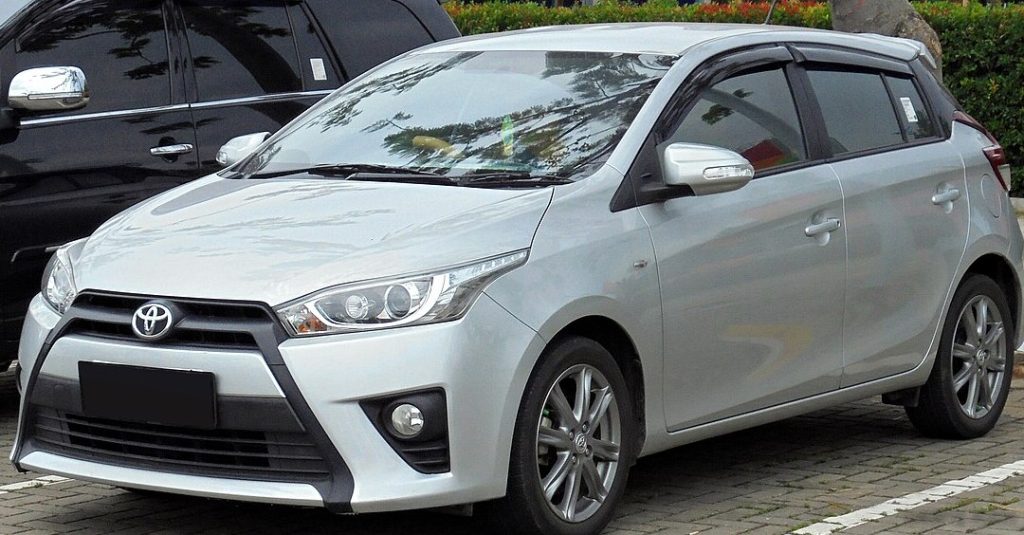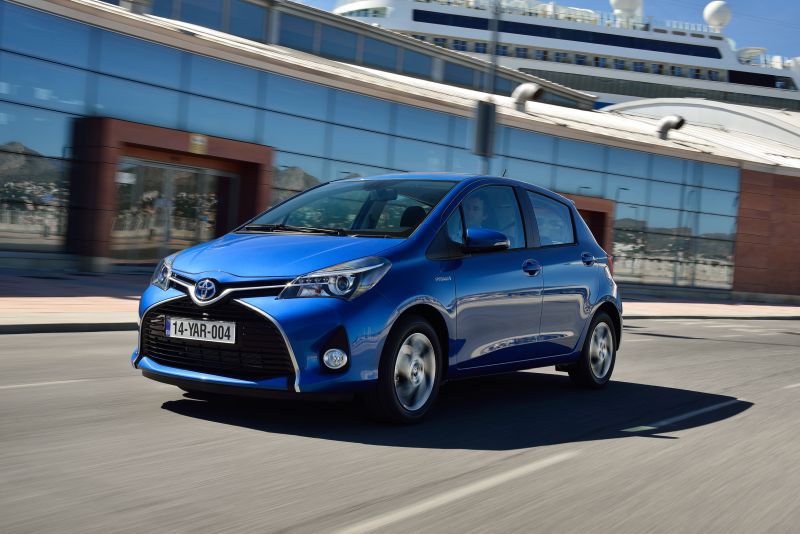
The Toyota Yaris III, particularly the facelifted version introduced in 2014, represents Toyota’s continued commitment to the supermini segment. This generation of the Yaris, while not initially a major seller in the United States (where Toyota primarily focuses on larger vehicles), was a significant model in Europe, Asia, and other global markets. The 2014 facelift brought styling revisions and improvements to the vehicle’s already efficient powertrain options. The 1.4 D-4D variant, producing 90 horsepower, was a popular choice for buyers prioritizing fuel economy and practicality.
Toyota Yaris III (Facelift 2014) 1.4 D-4D: An Overview
The Yaris III, launched in 2011 and refreshed in 2014, aimed to provide a more sophisticated and refined experience compared to its predecessors. The facelift focused on enhancing the vehicle’s aesthetics and improving its overall appeal. The 1.4 D-4D model specifically targeted drivers seeking a diesel-powered supermini with low running costs. This model offered a balance between performance and efficiency, making it well-suited for urban commuting and longer journeys alike. It was available in both 3-door and 5-door configurations, catering to different lifestyle needs.
Engine & Performance
The heart of the Yaris III 1.4 D-4D is a 1.4-liter inline-4 cylinder diesel engine, designated the 1ND-TV. This engine produces 90 horsepower at 3800 rpm and 205 Nm (151.2 lb.-ft.) of torque between 1400 and 2800 rpm. The engine features a turbocharger with an intercooler, enhancing both power and efficiency. A diesel commonrail fuel injection system ensures precise fuel delivery, contributing to optimized combustion and reduced emissions. Paired with a 6-speed manual transmission, the Yaris 1.4 D-4D achieves a 0-100 km/h (0-62 mph) acceleration time of 10.8 seconds and a top speed of 175 km/h (108.74 mph). The engine’s relatively high compression ratio of 16.5:1 is typical for diesel engines, maximizing efficiency. The weight-to-power ratio of 12 kg/Hp and weight-to-torque ratio of 5.3 kg/Nm demonstrate a reasonable balance between engine output and vehicle mass.
Design & Features
The Yaris III is a front-engine, front-wheel-drive hatchback available in both 3-door and 5-door body styles. The 2014 facelift brought a revised front fascia with a more prominent grille and updated headlights, giving the car a more modern appearance. Inside, the Yaris offered a functional and practical interior with seating for five passengers. While not overtly luxurious, the interior was designed with usability in mind. Safety features included ABS (Anti-lock Braking System) as standard. The Yaris’s compact dimensions – measuring 3950 mm (155.51 in) in length, 1695 mm (66.73 in) in width, and 1510 mm (59.45 in) in height – made it easy to maneuver in urban environments. Trunk space ranged from 286 liters (10.1 cu. ft.) with the rear seats up to 768 liters (27.12 cu. ft.) with the seats folded down, providing ample cargo capacity for its class. The drag coefficient of 0.287 contributed to its fuel efficiency.
Technical Specifications
| Brand | Toyota |
| Model | Yaris |
| Generation | Yaris III (facelift 2014) |
| Type (Engine) | 1.4 D-4D (90 Hp) |
| Start of production | 2014 |
| End of production | 2017 |
| Powertrain Architecture | Internal Combustion engine |
| Body type | Hatchback |
| Seats | 5 |
| Doors | 3/5 |
| Fuel consumption (urban) | 4.6-5.1 l/100 km (51.1 – 46.1 US mpg) |
| Fuel consumption (extra urban) | 3.3-3.7 l/100 km (71.3 – 63.6 US mpg) |
| Fuel consumption (combined) | 3.8-4.2 l/100 km (61.9 – 56 US mpg) |
| CO2 emissions | 99-111 g/km |
| Fuel Type | Diesel |
| Acceleration 0 – 100 km/h | 10.8 sec |
| Acceleration 0 – 62 mph | 10.8 sec |
| Acceleration 0 – 60 mph | 10.3 sec |
| Maximum speed | 175 km/h (108.74 mph) |
| Emission standard | Euro 6 w |
| Weight-to-power ratio | 12 kg/Hp |
| Weight-to-torque ratio | 5.3 kg/Nm |
| Power | 90 Hp @ 3800 rpm |
| Torque | 205 Nm @ 1400-2800 rpm (151.2 lb.-ft. @ 1400-2800 rpm) |
| Engine layout | Front, Transverse |
| Engine Model/Code | 1ND-TV |
| Engine displacement | 1364 cm3 (83.24 cu. in.) |
| Number of cylinders | 4 |
| Engine configuration | Inline |
| Cylinder Bore | 73 mm (2.87 in.) |
| Piston Stroke | 81.5 mm (3.21 in.) |
| Compression ratio | 16.5:1 |
| Number of valves per cylinder | 2 |
| Fuel injection system | Diesel Commonrail |
| Engine aspiration | Turbocharger, Intercooler |
| Valvetrain | SOHC |
| Engine oil capacity | 3.7 l (3.91 US qt | 3.26 UK qt) |
| Coolant | 4.5 l (4.76 US qt | 3.96 UK qt) |
| Kerb Weight | 1080-1135 kg (2380.99 – 2502.25 lbs.) |
| Max. weight | 1545 kg (3406.14 lbs.) |
| Max load | 410-465 kg (903.9 – 1025.15 lbs.) |
| Trunk (boot) space – minimum | 286 l (10.1 cu. ft.) |
| Trunk (boot) space – maximum | 768 l (27.12 cu. ft.) |
| Fuel tank capacity | 42 l (11.1 US gal | 9.24 UK gal) |
| Max. roof load | 50 kg (110.23 lbs.) |
| Permitted trailer load with brakes (12%) | 780 kg (1719.61 lbs.) |
| Permitted trailer load without brakes | 550 kg (1212.54 lbs.) |
| Permitted towbar download | 50 kg (110.23 lbs.) |
| Length | 3950 mm (155.51 in.) |
| Width | 1695 mm (66.73 in.) |
| Height | 1510 mm (59.45 in.) |
| Wheelbase | 2510 mm (98.82 in.) |
| Front track | 1460-1485 mm (57.48 – 58.46 in.) |
| Rear (Back) track | 1445-1470 mm (56.89 – 57.87 in.) |
| Front overhang | 810 mm (31.89 in.) |
| Rear overhang | 630 mm (24.8 in.) |
| Drag coefficient (Cd) | 0.287 |
| Minimum turning circle (turning diameter) | 9.6 m (31.5 ft.) |
| Drivetrain Architecture | Front wheel drive |
| Number of gears and type of gearbox | 6 gears, manual transmission |
| Front suspension | Independent, type McPherson with coil spring and anti-roll bar |
| Rear suspension | Torsion |
| Front brakes | Ventilated discs |
| Rear brakes | Drum |
| Tires size | 175/65 R15; 195/50 R16 |
| Wheel rims size | 5J x 15; 6J x 16 |
The Toyota Yaris III 1.4 D-4D (facelift 2014) remains a relevant option in the used car market, particularly for those seeking an economical and reliable supermini. Its combination of fuel efficiency, practicality, and compact size makes it a suitable choice for urban driving and everyday transportation.