
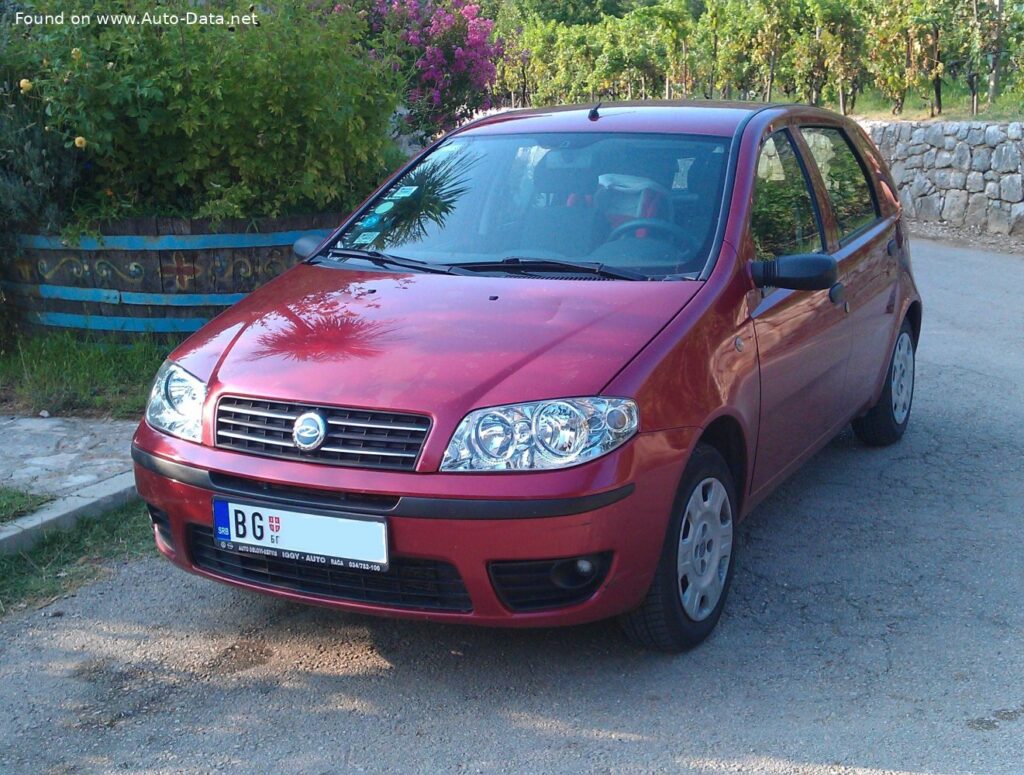
The Zastava 10 is a subcompact hatchback produced by the Serbian manufacturer Zastava Automobiles (formerly Zavodi Crvene Zastave) between 2005 and 2008. It represented a significant, albeit late, attempt by Zastava to modernize its product line and compete in the increasingly competitive European small car market. The 10 was essentially a heavily revised version of the Yugo Skala, itself a license-built Fiat 127, incorporating updated styling, a more modern engine, and improved safety features. While primarily sold in Serbia and surrounding Balkan countries, the Zastava 10 aimed to offer an affordable and practical transportation solution, particularly in markets where budget-conscious consumers were prevalent. It never received official distribution in North America.
Zastava 10: A Modernization of a Classic
The Zastava 10 emerged as a response to changing market demands and stricter European Union regulations. Zastava, historically reliant on aging Fiat designs, recognized the need for a more contemporary vehicle. The 10 retained the fundamental platform of the Yugo Skala, but underwent substantial modifications to its exterior, interior, and mechanical components. These changes were intended to enhance its appeal and bring it closer to the standards set by its Western European rivals. The car’s production run was relatively short, reflecting the economic and political challenges faced by Zastava during that period.
Engine & Performance
The Zastava 10 was powered by a 1.2-liter inline-four cylinder gasoline engine, equipped with an 8-valve configuration. This engine produced 60 horsepower at 5000 rpm and 102 Nm (75.23 lb.-ft.) of torque at 2500 rpm. While not a powerhouse, the engine provided adequate performance for urban driving and moderate highway cruising. The engine featured multi-port fuel injection and a compression ratio of 9.8:1. The engine’s displacement was 1242 cm³ (75.79 cu. in.). Acceleration from 0 to 100 km/h (0-62 mph) took approximately 14.3 seconds, while 0 to 60 mph was achieved in around 13.6 seconds. The top speed was rated at 155 km/h (96.31 mph). The powertrain utilized a front-engine, front-wheel-drive layout, coupled with a five-speed manual transmission. The weight-to-power ratio was 14.6 kg/Hp, and the weight-to-torque ratio was 8.6 kg/Nm.
Design & Features
The Zastava 10 adopted a modern hatchback body style, offering five seats and five doors. Its exterior design featured rounded edges and a more streamlined appearance compared to the boxier Yugo Skala. The interior was updated with a redesigned dashboard and improved seating materials, although it remained relatively basic in terms of features. Safety features, while limited by the car’s price point, included a degree of structural reinforcement and, depending on the trim level, potentially basic anti-lock braking systems (ABS). The car’s dimensions were 3865 mm (152.17 in.) in length, 1660 mm (65.35 in.) in width, and 1480 mm (58.27 in.) in height, with a wheelbase of 2460 mm (96.85 in.). The kerb weight was 875 kg (1929.04 lbs.). The fuel tank capacity was 47 liters (12.42 US gal | 10.34 UK gal).
Technical Specifications
| Brand | Zastava |
| Model | 10 |
| Generation | 10 |
| Type (Engine) | 1.2 8V (60 Hp) |
| Start of production | October, 2005 |
| End of production | 2008 |
| Powertrain Architecture | Internal Combustion engine |
| Body type | Hatchback |
| Seats | 5 |
| Doors | 5 |
| Fuel consumption (urban) | 7.3 l/100 km (32.2 US mpg, 38.7 UK mpg, 13.7 km/l) |
| Fuel consumption (extra urban) | 4.8 l/100 km (49 US mpg, 58.9 UK mpg, 20.8 km/l) |
| Fuel consumption (combined) | 5.7 l/100 km (41.3 US mpg, 49.6 UK mpg, 17.5 km/l) |
| Fuel Type | Petrol (Gasoline) |
| Acceleration 0 – 100 km/h | 14.3 sec |
| Acceleration 0 – 62 mph | 14.3 sec |
| Acceleration 0 – 60 mph | 13.6 sec |
| Maximum speed | 155 km/h (96.31 mph) |
| Emission standard | Euro 4 |
| Weight-to-power ratio | 14.6 kg/Hp |
| Weight-to-torque ratio | 8.6 kg/Nm |
| Power | 60 Hp @ 5000 rpm |
| Power per litre | 48.3 Hp/l |
| Torque | 102 Nm @ 2500 rpm (75.23 lb.-ft. @ 2500 rpm) |
| Engine layout | Front, Transverse |
| Engine displacement | 1242 cm3 (75.79 cu. in.) |
| Number of cylinders | 4 |
| Engine configuration | Inline |
| Cylinder Bore | 70.8 mm (2.79 in.) |
| Piston Stroke | 78.9 mm (3.11 in.) |
| Compression ratio | 9.8:1 |
| Number of valves per cylinder | 2 |
| Fuel injection system | Multi-port manifold injection |
| Engine aspiration | Naturally aspirated engine |
| Engine oil capacity | 2.8 l (2.96 US qt | 2.46 UK qt) |
| Kerb Weight | 875 kg (1929.04 lbs.) |
| Fuel tank capacity | 47 l (12.42 US gal | 10.34 UK gal) |
| Length | 3865 mm (152.17 in.) |
| Width | 1660 mm (65.35 in.) |
| Height | 1480 mm (58.27 in.) |
| Wheelbase | 2460 mm (96.85 in.) |
| Drivetrain Architecture | Internal Combustion engine (ICE) drives the front wheels |
| Drive wheel | Front wheel drive |
| Number of gears and type of gearbox | 5 gears, manual transmission |
| Front suspension | Independent, type McPherson with coil spring and anti-roll bar |
| Rear suspension | Torsion |
| Front brakes | Disc |
| Rear brakes | Drum |
| Power steering | Electric Steering |
| Tires size | 165/70 K14 |
The Zastava 10, while not a groundbreaking vehicle, represented a final effort by Zastava to remain competitive in the European automotive market. Its affordability and practicality made it a popular choice in its domestic market, but ultimately, it couldn’t overcome the challenges facing the company, and production ceased in 2008. The car remains a relatively rare sight outside of the Balkan region, serving as a reminder of a bygone era of Yugoslavian automotive manufacturing.
