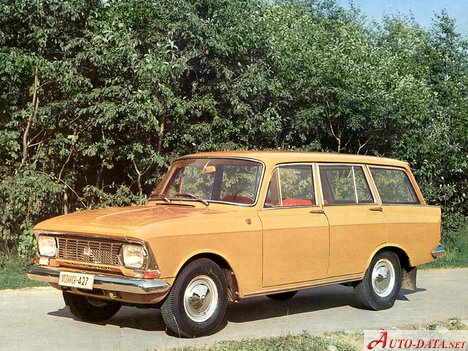
The Moskvich 427 Combi 1.5 (75 Hp) was a station wagon produced by the Soviet automotive manufacturer AZLK (Avtozavod imeni Lenina, or Lenin Automotive Plant) between 1975 and 1976. Representing a practical and affordable transportation option, the 427 Combi served as a mainstay for families in the Soviet Union and its satellite states. While not exported in significant numbers to the United States, the Moskvich brand held a considerable presence in Eastern Europe and played a vital role in the region’s automotive landscape. The Combi variant, specifically, offered increased cargo capacity, making it a popular choice for those needing a versatile vehicle.
Moskvich 427 Combi: A Soviet Workhorse
The Moskvich 427 was part of a lineage of vehicles designed to motorize the Soviet populace. It built upon earlier Moskvich models, incorporating improvements in design and engineering. The “Combi” designation indicates the station wagon body style, offering a larger cargo area than the standard sedan. The 427 series aimed to provide reliable, if somewhat spartan, transportation for everyday use. Its design reflected the prevailing aesthetic of the era, prioritizing functionality over flamboyant styling. The car’s enduring appeal lay in its robustness and ease of maintenance, qualities highly valued in the Soviet context.
Engine & Performance
The Moskvich 427 Combi 1.5 was powered by the UZA M-412 engine, a 1.5-liter (1479 cm3 or 90.25 cu. in.) inline-four cylinder gasoline engine. This engine produced 75 horsepower at 5800 rpm and 108 Nm (79.66 lb.-ft.) of torque at 3800 rpm. While not a performance powerhouse, the engine provided adequate power for the vehicle’s intended purpose. The engine’s power-to-weight ratio was 14.2 kg/Hp (70.4 Hp/tonne), and the torque-to-weight ratio was 9.9 kg/Nm (101.4 Nm/tonne). The engine featured a compression ratio of 8.8:1 and utilized a carburetor fuel injection system. Power per liter was rated at 50.7 Hp/l. The engine was longitudinally mounted at the front of the vehicle, driving the rear wheels through a four-speed manual transmission. The car could achieve a maximum speed of 140 km/h (86.99 mph). Fuel consumption was rated at 8.8 l/100 km (26.7 US mpg, 32.1 UK mpg, 11.4 km/l).
Design & Features
The Moskvich 427 Combi was a five-door station wagon (estate) with seating for five passengers. Its body style was characterized by a relatively boxy shape, maximizing interior space. The design prioritized practicality and durability. The car featured a relatively simple interior, reflecting the economic realities of its production. Safety features were limited by the standards of the time, but included disc brakes on the front wheels and drum brakes on the rear. Suspension consisted of coil springs in the front and leaf springs in the rear, providing a comfortable, if somewhat basic, ride. The steering system employed a worm-reduction unit. The vehicle’s dimensions were 4040 mm (159.06 in.) in length, 1550 mm (61.02 in.) in width, and 1485 mm (58.46 in.) in height, with a wheelbase of 2400 mm (94.49 in.). The front and rear track widths were 1237 mm (48.7 in.) and 1227 mm (48.31 in.), respectively. The car rode on 165/80 R13 tires.
Technical Specifications
| Brand | Moskvich |
| Model | 427 |
| Generation | 427 Combi |
| Type (Engine) | 1.5 (75 Hp) |
| Start of production | 1975 |
| End of production | 1976 |
| Powertrain Architecture | Internal Combustion engine |
| Body type | Station wagon (estate) |
| Seats | 5 |
| Doors | 5 |
| Fuel consumption (urban) | 8.8 l/100 km (26.7 US mpg, 32.1 UK mpg, 11.4 km/l) |
| Fuel Type | Petrol (Gasoline) |
| Maximum speed | 140 km/h (86.99 mph) |
| Weight-to-power ratio | 14.2 kg/Hp |
| Weight-to-torque ratio | 9.9 kg/Nm |
| Power | 75 Hp @ 5800 rpm |
| Power per litre | 50.7 Hp/l |
| Torque | 108 Nm @ 3800 rpm (79.66 lb.-ft. @ 3800 rpm) |
| Engine layout | Front, Longitudinal |
| Engine Model/Code | UZA M-412 |
| Engine displacement | 1479 cm3 (90.25 cu. in.) |
| Number of cylinders | 4 |
| Engine configuration | Inline |
| Cylinder Bore | 82 mm (3.23 in.) |
| Piston Stroke | 70 mm (2.76 in.) |
| Compression ratio | 8.8:1 |
| Number of valves per cylinder | 2 |
| Fuel injection system | Carburettor |
| Engine aspiration | Naturally aspirated engine |
| Kerb Weight | 1065 kg (2347.92 lbs.) |
| Fuel tank capacity | 46 l (12.15 US gal | 10.12 UK gal) |
| Length | 4040 mm (159.06 in.) |
| Width | 1550 mm (61.02 in.) |
| Height | 1485 mm (58.46 in.) |
| Wheelbase | 2400 mm (94.49 in.) |
| Front track | 1237 mm (48.7 in.) |
| Rear track | 1227 mm (48.31 in.) |
| Drivetrain Architecture | Rear wheel drive, Internal Combustion engine |
| Drive wheel | Rear wheel drive |
| Number of gears and type of gearbox | 4 gears, manual transmission |
| Front suspension | Coil spring |
| Rear suspension | Leaf spring |
| Front brakes | Disc |
| Rear brakes | Drum |
| Steering type | Worm-reduction unit |
| Tires size | 165/80 R13 |
The Moskvich 427 Combi, while not a technologically advanced vehicle by Western standards, represented a significant contribution to personal transportation in the Soviet Union. Its durability, practicality, and affordability made it a popular choice for families and individuals alike. The car’s legacy lies in its role as a symbol of Soviet engineering and its contribution to the motorization of a vast nation.