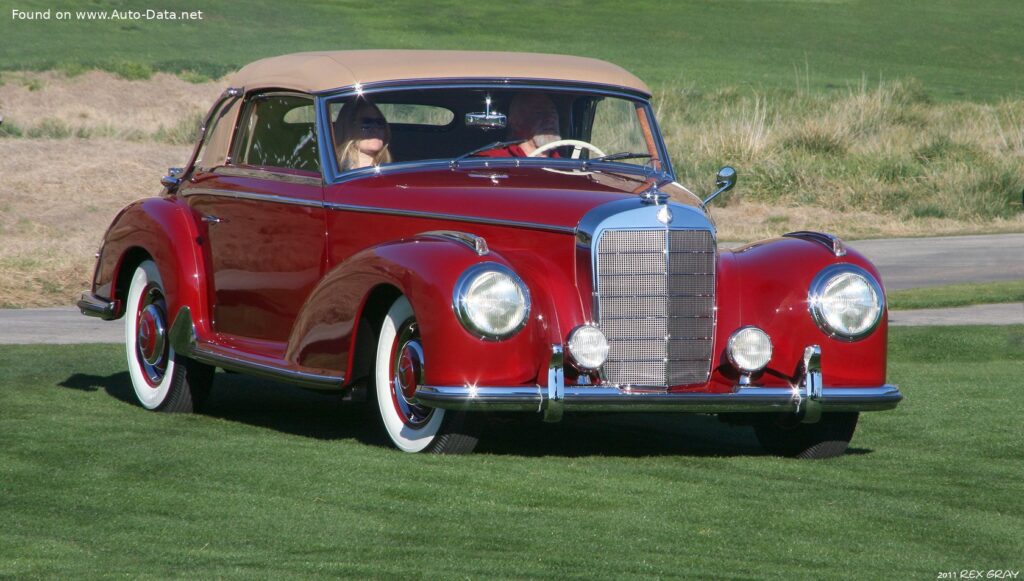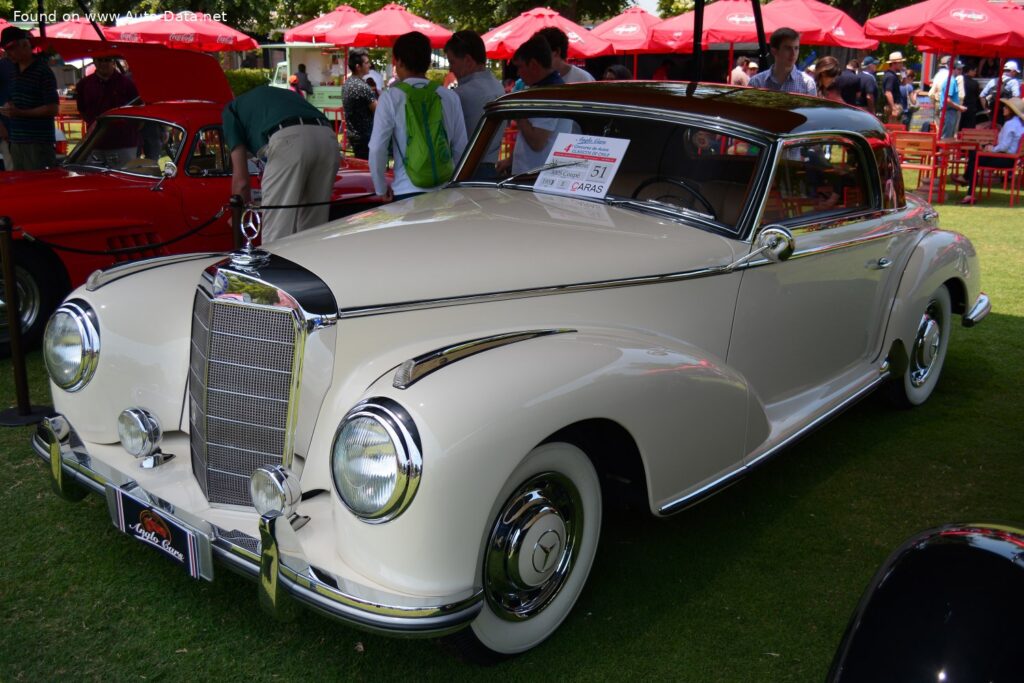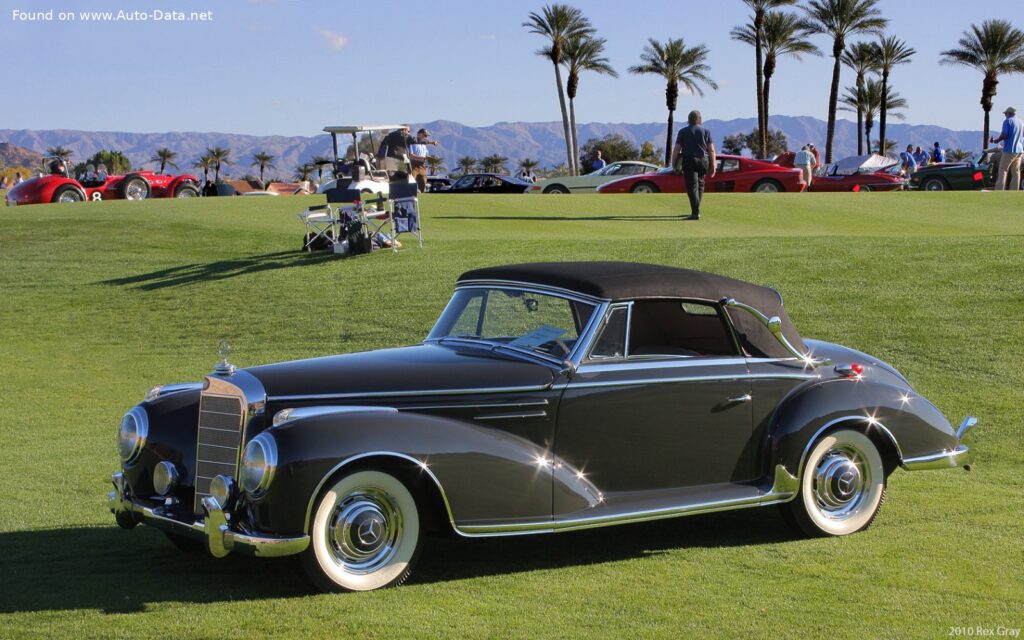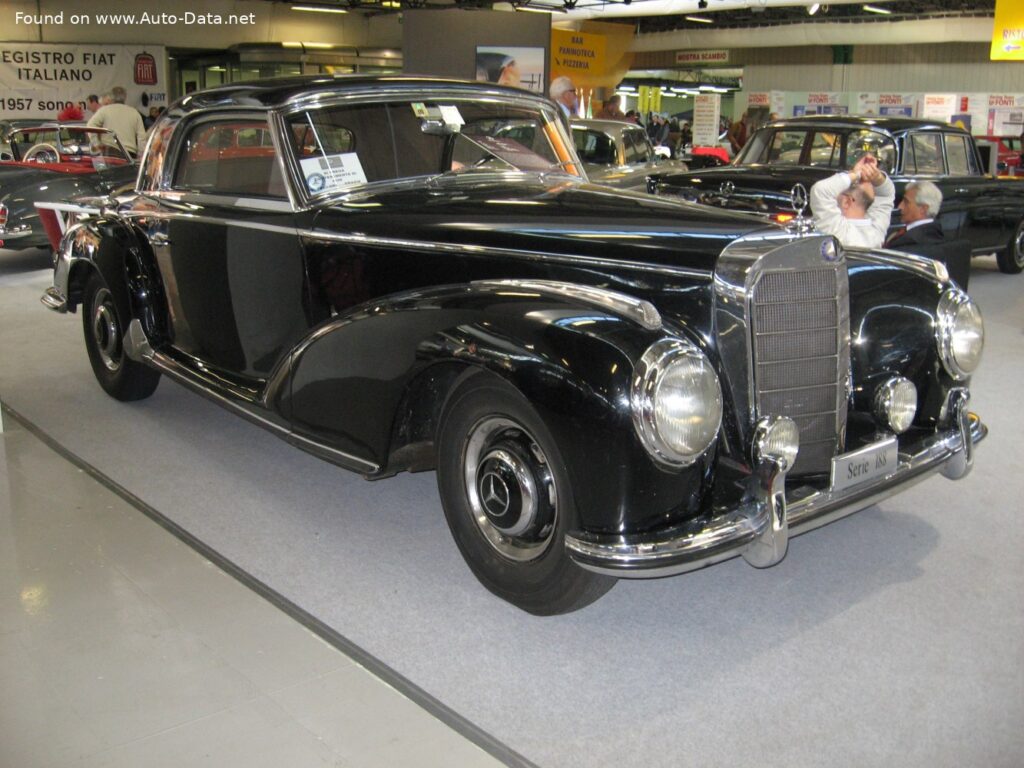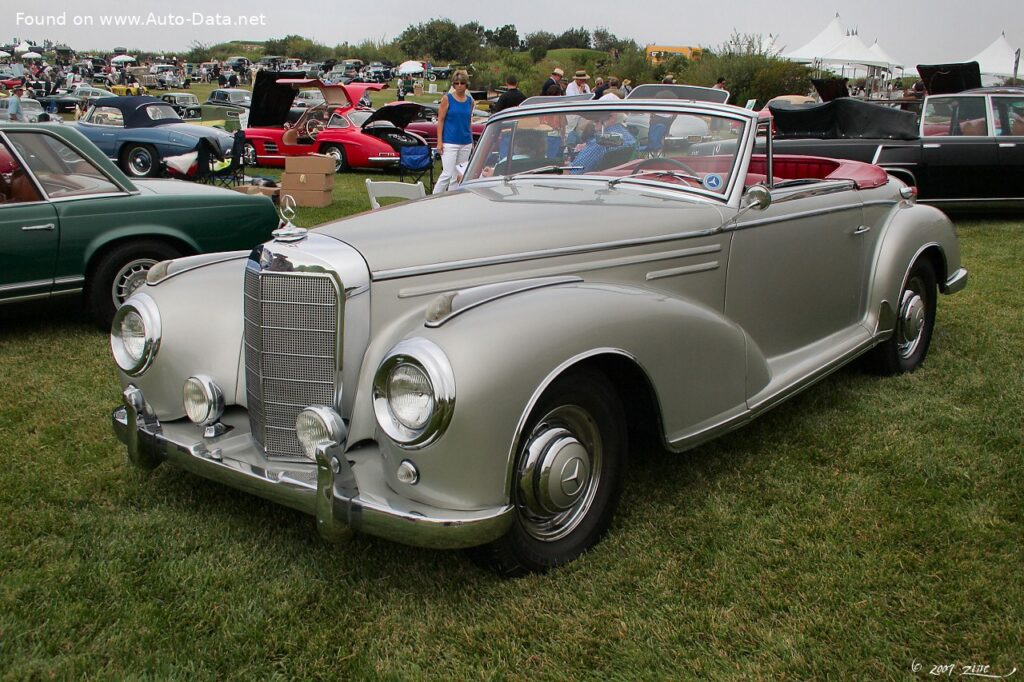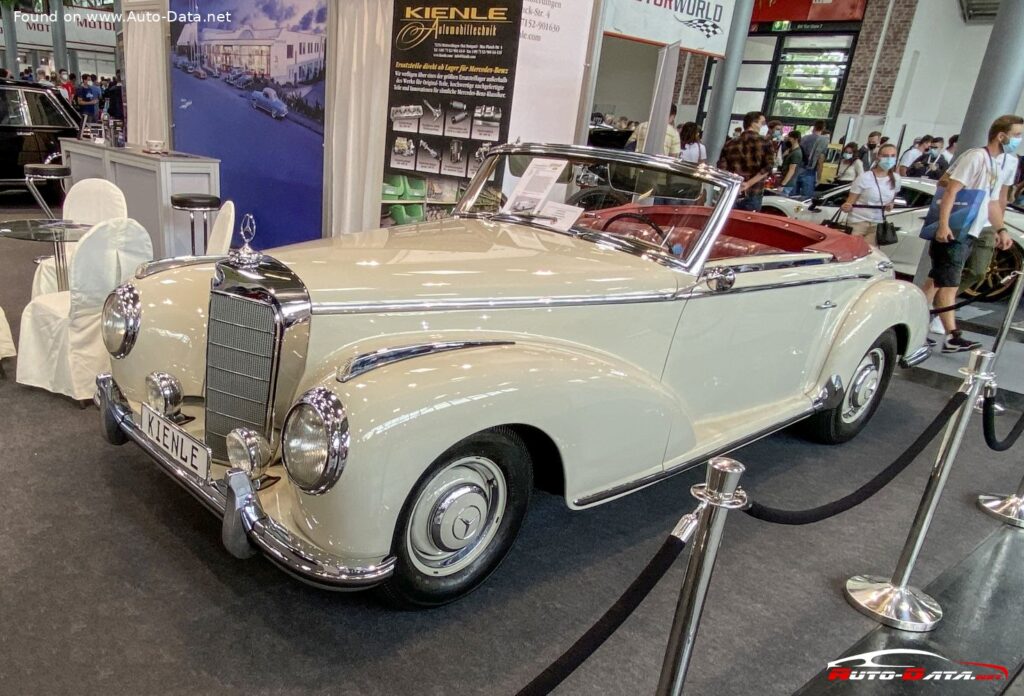
The Mercedes-Benz W188 I Roadster 300 S, produced between 1952 and 1955, represents a pivotal moment in post-war German automotive engineering. This luxurious roadster was not merely a car; it was a statement of recovery and a symbol of the burgeoning West German economy. Positioned in the high-end, grand touring segment, the 300 S aimed to recapture the prestige Mercedes-Benz had enjoyed before the war, offering a blend of performance, comfort, and sophisticated styling. It served as a halo vehicle, showcasing the manufacturer’s technical prowess and setting the stage for future models. While never a high-volume seller, its impact on the brand’s image and engineering philosophy was significant.
Mercedes-Benz W188 I Roadster 300 S: A Legacy of Engineering
The W188 series, encompassing both the Coupe and Roadster variants, was a direct response to the demand for a sophisticated, high-performance luxury car. Mercedes-Benz had largely ceased production of passenger cars during World War II, and the 300 S was their first all-new post-war design. It was intended to compete with offerings from other European manufacturers like Jaguar and Aston Martin, and to re-establish Mercedes-Benz as a leader in the luxury automobile market. The Roadster, in particular, was designed for discerning customers who appreciated open-air motoring and a refined driving experience. It was a relatively exclusive vehicle, with only 216 examples of the Roadster produced during its three-year run.
Engine & Performance
At the heart of the 300 S Roadster lies the M188.920, a 3.0-liter (2996 cm³) inline-six engine. This engine, producing 150 horsepower at 5000 rpm and 230 Nm (169.64 lb.-ft.) of torque at 3800 rpm, was a technological marvel for its time. It featured a single overhead camshaft (SOHC) valvetrain and a relatively high 7.8:1 compression ratio. Fuel was delivered via a carburetor, a common practice for the era. The engine’s longitudinal front-engine layout contributed to a balanced weight distribution. Performance figures, while not blistering by modern standards, were respectable for the early 1950s. Acceleration from 0 to 60 mph took approximately 14.3 seconds, and the car could achieve a top speed of 175 km/h (108.74 mph). The power-to-weight ratio of 10.3 kg/Hp and a torque-to-weight ratio of 6.7 kg/Nm provided a reasonably spirited driving experience. Fuel economy was, unsurprisingly, not a priority, with extra-urban consumption rated at 13.8 l/100 km (17 US mpg).
Design & Features
The 300 S Roadster boasted elegant and flowing lines, characteristic of post-war European design. Its body was crafted from steel, with aluminum used for certain panels to reduce weight. The two-door, four-seat configuration offered a comfortable and spacious interior for its time. The car’s long hood, graceful curves, and prominent grille contributed to its distinctive appearance. The interior was lavishly appointed with leather upholstery and wood trim, reflecting the car’s luxury positioning. Mechanically, the 300 S featured independent suspension with coil springs and double wishbones at the front, and coil springs at the rear, providing a comfortable ride. Braking was handled by drum brakes on all four wheels. Steering employed a cone worm and recirculation balls system. Safety features were rudimentary by today’s standards, reflecting the prevailing norms of the 1950s. The focus was primarily on providing a luxurious and enjoyable driving experience, rather than advanced safety technologies.
Technical Specifications
| Brand | Mercedes-Benz |
| Model | W188 |
| Generation | W188 I Roadster |
| Type (Engine) | 300 S (150 Hp) |
| Start of production | September, 1952 |
| End of production | June, 1955 |
| Powertrain Architecture | Internal Combustion engine |
| Body type | Roadster |
| Seats | 4 |
| Doors | 2 |
| Fuel consumption (extra urban) | 13.8 l/100 km (17 US mpg, 20.5 UK mpg, 7.2 km/l) |
| Fuel Type | Petrol (Gasoline) |
| Acceleration 0 – 100 km/h | 15 sec |
| Acceleration 0 – 62 mph | 15 sec |
| Acceleration 0 – 60 mph | 14.3 sec |
| Maximum speed | 175 km/h (108.74 mph) |
| Weight-to-power ratio | 10.3 kg/Hp |
| Weight-to-torque ratio | 6.7 kg/Nm |
| Power | 150 Hp @ 5000 rpm |
| Power per litre | 50.1 Hp/l |
| Torque | 230 Nm @ 3800 rpm (169.64 lb.-ft. @ 3800 rpm) |
| Engine layout | Front, Longitudinal |
| Engine Model/Code | M 188.920 |
| Engine displacement | 2996 cm³ (182.83 cu. in.) |
| Number of cylinders | 6 |
| Engine configuration | Inline |
| Cylinder Bore | 85 mm (3.35 in.) |
| Piston Stroke | 88 mm (3.46 in.) |
| Compression ratio | 7.8:1 |
| Number of valves per cylinder | 2 |
| Fuel injection system | Carburettor |
| Engine aspiration | Naturally aspirated engine |
| Valvetrain | SOHC |
| Engine oil capacity | 7.5 l (7.93 US qt | 6.6 UK qt) |
| Coolant | 19.5 l (20.61 US qt | 17.16 UK qt) |
| Kerb Weight | 1540 kg (3395.12 lbs.) |
| Max. weight | 2000 kg (4409.25 lbs.) |
| Max load | 460 kg (1014.13 lbs.) |
| Fuel tank capacity | 85 l (22.45 US gal | 18.7 UK gal) |
| Length | 4730 mm (186.22 in.) |
| Width | 1910 mm (75.2 in.) |
| Height | 1510 mm (59.45 in.) |
| Wheelbase | 2900 mm (114.17 in.) |
| Front track | 1480 mm (58.27 in.) |
| Rear track | 1525 mm (60.04 in.) |
| Ride height (ground clearance) | 180 mm (7.09 in.) |
| Minimum turning circle | 12.5 m (41.01 ft.) |
| Drivetrain Architecture | Rear wheel drive |
| Number of gears and type of gearbox | 4 gears, manual transmission |
| Front suspension | Coil spring, Double wishbone, Transverse stabilizer |
| Rear suspension | Coil spring |
| Front brakes | Drum |
| Rear brakes | Drum |
| Steering type | Cone worm with recirculation balls |
| Wheel rims size | 15 |
The Mercedes-Benz W188 I Roadster 300 S remains a highly sought-after collector’s item, representing a significant chapter in the company’s history. Its combination of elegant design, robust engineering, and luxurious appointments cemented its place as a classic of the post-war era, and a testament to the resilience and ingenuity of German automotive manufacturing.