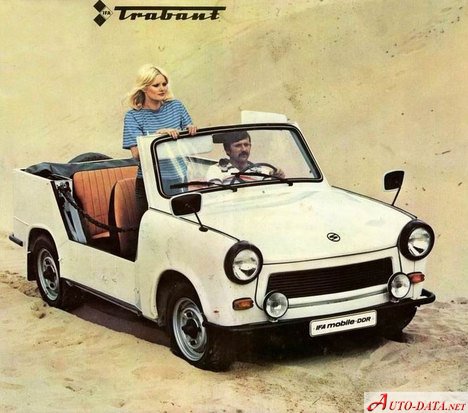
The Trabant P 601 Tramp 0.6, producing 26 horsepower, was a variant of the iconic East German automobile manufactured from 1963 to 1985. It represented the entry-level offering within the P 601 range, distinguished primarily by its simplified trim and lower-powered engine. The P 601 itself was a significant evolution of the earlier P 600, addressing many of its shortcomings and becoming a symbol of automotive accessibility – and, for many in the West, a symbol of the Eastern Bloc. The Tramp 0.6 was unique within the P 601 lineup for being offered exclusively as a cabriolet, making it a relatively rare and sought-after model today.
The Trabant P 601 Tramp 0.6: A Detailed Overview
The P 601 Tramp 0.6 occupied a unique niche in the Trabant range. While the standard P 601 was available in both saloon (sedan) and kombi (estate) body styles, the Tramp 0.6 was exclusively a cabriolet. This made it the most affordable and accessible open-top car available in Eastern Europe during its production run. It was aimed at buyers who desired the novelty of a convertible without the higher price tag associated with more luxurious vehicles. The “Tramp” designation itself suggests a focus on leisure and recreational use, aligning with the open-air nature of the vehicle.
Powertrain & Engine Architecture
The heart of the Trabant P 601 Tramp 0.6 was its 594 cc two-stroke, inline two-cylinder engine. This engine, designated as a variation of the early Trabant powerplants, produced a modest 26 horsepower at 3800 rpm and 53 Nm (39.09 lb-ft) of torque. Unlike most contemporary automobiles, the Trabant did not utilize a conventional four-stroke engine. Instead, it employed a two-stroke cycle, requiring a mixture of gasoline and oil to be added to the fuel tank for lubrication. This mixture was crucial for the engine’s longevity, and incorrect ratios could lead to significant wear and tear.
The engine featured a carburetor fuel injection system, a relatively simple design common for its time. The valvetrain consisted of port timing, relying on the piston’s movement to control intake and exhaust. The engine was transversely mounted at the front of the vehicle, driving the front wheels. The Tramp 0.6 was equipped with a four-speed manual transmission. This transmission was known for its relatively long throws and somewhat imprecise shifting, characteristics typical of Eastern European automotive engineering of the period. The gearbox was not synchronized on first gear.
Driving Characteristics
The driving experience in a Trabant P 601 Tramp 0.6 was…unique. With only 26 horsepower propelling a vehicle weighing around 645 kg (1421.98 lbs), acceleration was leisurely, to say the least. Reaching 100 km/h (62.14 mph) took a considerable amount of time and effort. The two-stroke engine delivered its power in a narrow band, requiring frequent gear changes to maintain momentum. The lack of power steering and relatively basic suspension meant that steering and handling were not particularly precise, especially at higher speeds.
Compared to later P 601 models with larger engines (like the 600cc versions), the Tramp 0.6 felt significantly underpowered. The manual transmission, while simple, demanded a skilled driver to extract the most performance from the engine. The weight-to-power ratio of 24.8 kg/hp highlighted the vehicle’s limitations in terms of outright speed. However, the light weight and simple construction did contribute to a certain degree of agility in urban environments.
Equipment & Trim Levels
The Trabant P 601 Tramp 0.6 was deliberately spartan in its equipment levels. As the entry-level model, it prioritized affordability over luxury. Standard features included basic cloth upholstery, a simple dashboard with minimal instrumentation (speedometer, fuel gauge), and manually operated windows. The convertible top was manually operated and relatively basic in its construction.
Optional extras were limited but could include upgraded upholstery, a radio, and occasionally, hubcaps. The interior trim was typically finished in muted colors, reflecting the utilitarian design philosophy of the vehicle. The Tramp 0.6 lacked many of the comfort features that were becoming increasingly common in Western automobiles during the same period, such as power steering, air conditioning, or even a proper heater.
Chassis & Braking
The Trabant P 601 Tramp 0.6 utilized a relatively simple chassis construction. It featured a monocoque body made from Duroplast, a type of plastic reinforced with cotton fibers. This material was chosen for its lightweight properties and resistance to corrosion, but it was also known for its fragility. The suspension consisted of independent front suspension with trailing arms and a rigid rear axle with leaf springs. This setup provided a basic level of ride comfort, but it was not particularly sophisticated.
The braking system was equally basic, featuring drum brakes on all four wheels. The brakes were known for their limited stopping power, especially in wet conditions. The tires were typically 145/80 SR13, reflecting the vehicle’s modest performance capabilities. The Tramp 0.6 did not feature any advanced braking technologies, such as anti-lock brakes or power-assisted brakes.
Market Reception & Comparison
The Trabant P 601 Tramp 0.6 was not subject to extensive critical review in Western automotive publications, largely due to its limited availability outside of the Eastern Bloc. However, within its target market, it was generally viewed as a practical and affordable means of transportation. Its unique status as a convertible made it particularly appealing to those seeking a recreational vehicle.
Compared to other Trabant models, the Tramp 0.6 offered a different appeal. While the standard P 601 provided more practicality, the Tramp 0.6 prioritized open-air enjoyment. Fuel economy was reasonable for its time, but the need to mix oil with gasoline added a degree of complexity to refueling. Reliability was generally acceptable, but the two-stroke engine required regular maintenance and was prone to wear and tear if not properly cared for.
Technical Specifications
| Brand | Trabant |
| Model | P 601 Tramp |
| Engine Displacement | 594 cm3 (36.25 cu. in.) |
| Engine Configuration | Inline 2-cylinder, Two-Stroke |
| Power Output | 26 hp @ 3800 rpm |
| Torque | 53 Nm (39.09 lb-ft) |
| Fuel System | Carburetor |
| Transmission | 4-speed Manual |
| Drive Type | Front-Wheel Drive |
| Kerb Weight | 645 kg (1421.98 lbs) |
| Maximum Weight | 1020 kg (2248.72 lbs) |
| Fuel Tank Capacity | 24 l (6.34 US gal) |
| Maximum Speed | 100 km/h (62.14 mph) |
| Length | 3480 mm (137.01 in) |
| Width | 1506 mm (59.29 in) |
| Height | 1465 mm (57.68 in) |
Legacy
The Trabant P 601 Tramp 0.6, while a relatively simple and underpowered vehicle, holds a significant place in automotive history. It represents a unique chapter in automotive engineering and a symbol of a bygone era. Today, the Tramp 0.6 is a sought-after collectible, particularly among enthusiasts of classic Eastern European automobiles.
The two-stroke engine requires diligent maintenance, and finding replacement parts can be challenging. However, the vehicle’s simple construction and relatively low cost of ownership make it an appealing project for dedicated enthusiasts. The Duroplast body, while prone to cracking, is relatively lightweight and can be repaired. The Trabant P 601 Tramp 0.6 remains a testament to the ingenuity and resourcefulness of automotive engineers in the Eastern Bloc, and a charming reminder of a simpler time.