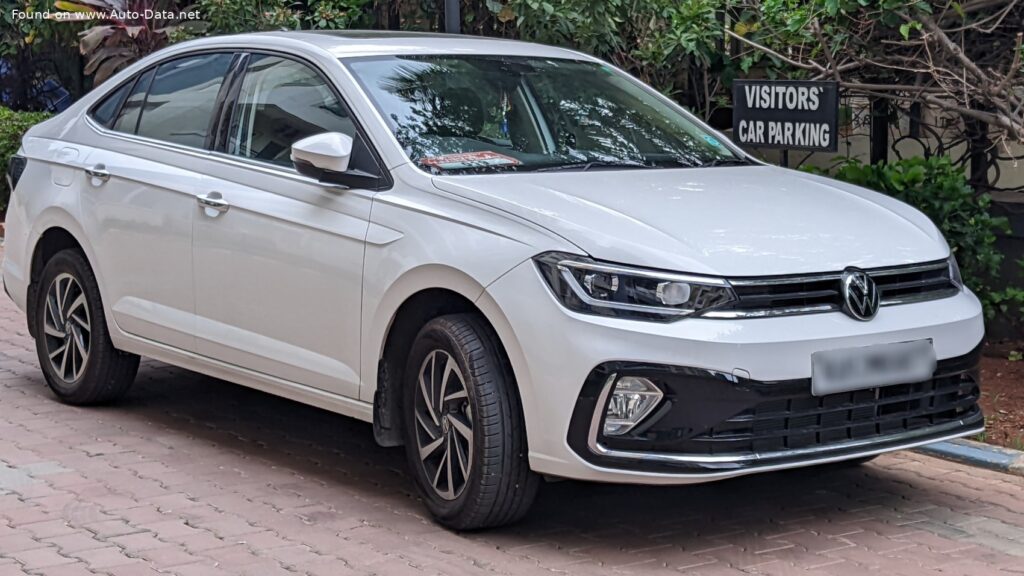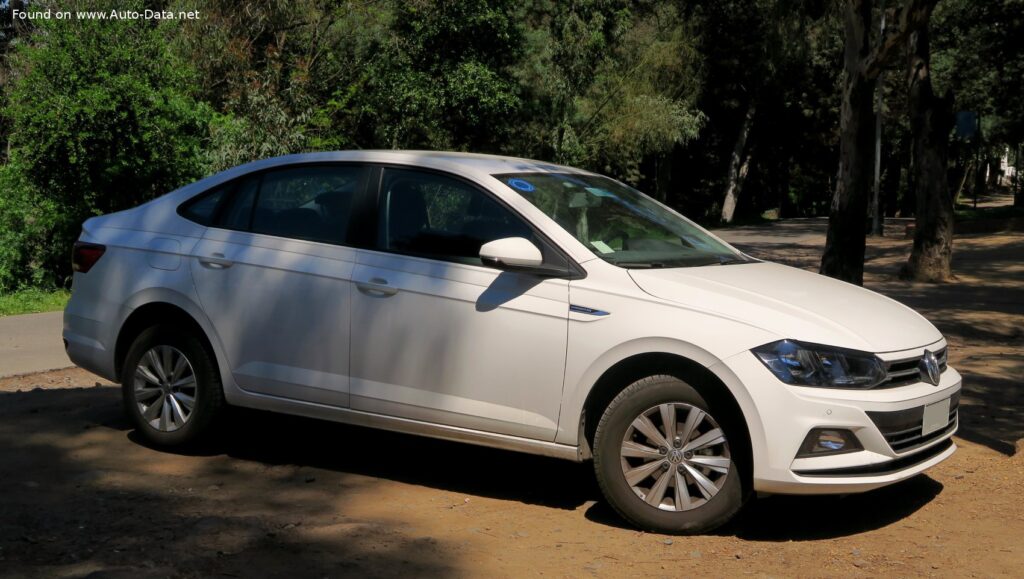
The Volkswagen Virtus 1.0 TSI (116/128 hp) Ethanol Automatic is a compact sedan produced by Volkswagen between January 2018 and February 2023. This variant occupied the entry to mid-level position within the Virtus lineup, primarily aimed at buyers seeking a fuel-efficient and technologically equipped sedan with the convenience of an automatic transmission. It was positioned below the more powerful 1.6L MPI and higher-spec TSI variants, and served as an alternative to the manual transmission versions of the 1.0 TSI engine. The Virtus itself is a sedan specifically designed for the South American market, built on the PQ24 platform – a derivative of the larger MQB platform – and shares its underpinnings with the Volkswagen Polo.
Powertrain & Engine Architecture
The heart of the Virtus 1.0 TSI is the EA211 series 1.0-liter turbocharged three-cylinder gasoline engine. This engine is notable for its compact size and advanced technology, including direct fuel injection and an intercooled turbocharger. The engine code is generally identified as EA211, though specific sub-variants may exist depending on the production year and regional calibration. The engine produces 116 horsepower at 5500 rpm when running on gasoline, and 128 horsepower at 5500 rpm when fueled by ethanol (E85). The increase in power with ethanol is due to the fuel’s higher octane rating and energy density. Torque output is rated at 200 Nm (147.51 lb-ft) at 3500 rpm on gasoline, and 200 Nm (147.51 lb-ft) at 2000 rpm on ethanol, showcasing a broader torque curve when using ethanol.
The Virtus 1.0 TSI utilizes a six-speed automatic transmission (typically an Aisin-sourced unit). This transmission is a conventional torque-converter automatic, offering smooth shifts and ease of use. The gear ratios are tuned for a balance between fuel efficiency and acceptable acceleration. First gear is relatively short for quick off-the-line response, while higher gears are geared for efficient cruising. The transmission also features a manual shift mode, allowing the driver some control over gear selection. The engine is equipped with a Start & Stop system to further improve fuel economy, and a particulate filter to reduce emissions.
Fuel Injection and Valvetrain
The EA211 engine employs direct fuel injection, where fuel is injected directly into the combustion chamber, allowing for precise fuel metering and improved combustion efficiency. This system contributes to both power output and reduced emissions. The engine also features a variable valve timing system on both the intake and exhaust valves, optimizing engine performance across a wider range of engine speeds. This system adjusts the timing of the valves to maximize volumetric efficiency and improve torque delivery.
Driving Characteristics
The Virtus 1.0 TSI Automatic delivers a comfortable and refined driving experience, particularly suited for urban and highway commuting. While not a performance-oriented vehicle, the turbocharged engine provides adequate power for everyday driving situations. Acceleration from 0 to 100 km/h (0 to 62 mph) takes approximately 10.4 seconds on gasoline, and 9.9 seconds on ethanol, demonstrating the performance benefit of using ethanol fuel. Top speed is 189 km/h (117.44 mph) on gasoline and 194 km/h (120.5 mph) on ethanol.
The automatic transmission contributes to a relaxed driving experience, eliminating the need for constant gear changes. However, compared to the manual transmission versions of the 1.0 TSI, the automatic can feel slightly less responsive, particularly during quick overtaking maneuvers. The gear ratios are well-matched to the engine’s torque curve, providing smooth and predictable acceleration. The weight-to-power ratio of 10.6 kg/Hp and weight-to-torque ratio of 6.1 kg/Nm indicate a reasonable balance between power and weight, contributing to acceptable performance.
Equipment & Trim Levels
The standard equipment level of the Virtus 1.0 TSI Automatic varied depending on the specific trim level and year of production. Generally, base models included features such as air conditioning, power windows, power door locks, a basic audio system with Bluetooth connectivity, and standard safety equipment like ABS (Anti-lock Braking System) and dual front airbags. Higher trim levels added features like alloy wheels, a touchscreen infotainment system with Apple CarPlay and Android Auto compatibility, a rearview camera, parking sensors, and additional safety features like side airbags and stability control. Interior upholstery typically consisted of cloth seats, with higher trims offering leatherette or full leather options. Dashboard configurations were generally straightforward and functional, with a focus on ease of use.
Chassis & Braking
The Virtus 1.0 TSI Automatic utilizes a MacPherson strut front suspension and a torsion beam rear suspension. This suspension setup provides a good balance between ride comfort and handling. The front suspension is designed to absorb bumps and irregularities in the road surface, while the torsion beam rear suspension offers a stable and predictable ride. The braking system consists of ventilated discs on the front wheels and drum brakes on the rear wheels. This configuration is typical for vehicles in this weight class and provides adequate stopping power for everyday driving. Electric power steering is standard, offering light and precise steering feel. The standard tire size is 195/65 R15, mounted on 15-inch steel or alloy wheels.
Market Reception & Comparison
The Volkswagen Virtus 1.0 TSI Automatic was generally well-received by automotive critics in the South American market. It was praised for its fuel efficiency, comfortable ride, and well-equipped interior. However, some critics noted that the engine could feel underpowered at times, particularly when fully loaded or driving uphill. Compared to the 1.6L MPI version, the 1.0 TSI offered better performance and fuel economy, but at a higher price point. Compared to the higher-spec TSI variants, the 1.0 TSI provided a more affordable entry point into the Virtus range, albeit with less power and performance. Fuel economy figures varied depending on driving conditions and fuel type, but typically ranged from 12-15 km/l (28-35 mpg) on gasoline and 10-13 km/l (24-31 mpg) on ethanol.
Technical Specifications
| Brand | Volkswagen |
| Model | Virtus |
| Type (Engine) | 1.0 TSI (116/128 Hp) Ethanol Automatic |
| Start of production | January, 2018 |
| End of production | February, 2023 |
| Powertrain Architecture | Internal Combustion engine |
| Body type | Sedan |
| Seats | 5 |
| Doors | 4 |
| Fuel Type | Petrol / Ethanol – E85 |
| Acceleration 0 – 100 km/h | 10.4 sec |
| Acceleration 0 – 62 mph | 10.4 sec |
| Acceleration 0 – 100 km/h (Ethanol – E85) | 9.9 sec |
| Acceleration 0 – 60 mph (Calculated by Auto-Data.net) | 9.9 sec |
| Maximum speed | 189 km/h (117.44 mph) |
| Maximum speed (Ethanol – E85) | 194 km/h |
| Weight-to-power ratio | 10.6 kg/Hp, 94.6 Hp/tonne |
| Weight-to-torque ratio | 6.1 kg/Nm, 163.1 Nm/tonne |
| Power | 116 Hp @ 5500 rpm |
| Power per litre | 116.1 Hp/l |
| Power (Ethanol – E85) | 128 Hp @ 5500 rpm |
| Power per litre (Ethanol – E85) | 128.1 Hp/l |
| Torque | 200 Nm @ 3500 rpm (147.51 lb.-ft. @ 3500 rpm) |
| Torque (Ethanol – E85) | 200 Nm @ 2000 rpm |
| Engine layout | Front, Transverse |
| Engine Model/Code | EA211 |
| Engine displacement | 999 cm3 (60.96 cu. in.) |
| Number of cylinders | 3 |
| Engine configuration | Inline |
| Fuel injection system | Direct injection |
| Engine aspiration | Turbocharger, Intercooler |
| Engine systems | Start & Stop System, Particulate filter |
| Kerb Weight | 1226 kg (2702.87 lbs) |
| Trunk (boot) space – minimum | 521 l (18.4 cu. ft) |
| Fuel tank capacity | 52 l (13.74 US gal | 11.44 UK gal) |
| Length | 4482 mm (176.46 in) |
| Width | 1751 mm (68.94 in) |
| Height | 1472 mm (57.95 in) |
| Wheelbase | 2651 mm (104.37 in) |
| Drivetrain Architecture | The Internal combustion engine (ICE) drives the front wheels of the vehicle. |
| Drive wheel | Front wheel drive |
| Number of gears and type of gearbox | 6 gears, automatic transmission |
| Front brakes | Ventilated discs |
| Rear brakes | Drum |
| Assisting systems | ABS (Anti-lock braking system) |
| Steering type | Steering rack and pinion |
| Power steering | Electric Steering |
| Tires size | 195/65 R15 |
| Wheel rims size | 15 |
Legacy
The Volkswagen Virtus 1.0 TSI Automatic has proven to be a relatively reliable powertrain combination. The EA211 engine, while not without its minor issues (such as potential carbon buildup in the intake manifold), is generally considered durable and long-lasting when properly maintained. The Aisin automatic transmission is also known for its robustness. In the used car market, the Virtus 1.0 TSI Automatic holds its value reasonably well, particularly models with lower mileage and a full service history. Its fuel efficiency and practicality make it an attractive option for buyers seeking an affordable and reliable compact sedan. As of 2024, these vehicles continue to be a common sight on roads throughout South America, demonstrating their enduring appeal and practicality.