
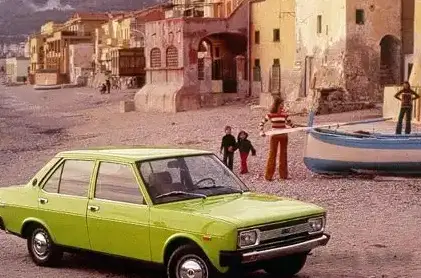
The Fiat 131 1.3 Super Mirafiori, produced between 1978 and 1980, represents a key iteration within the broader Fiat 131 series. Launched in 1974, the 131 was designed as a replacement for the Fiat 124, aiming to offer a more modern and spacious vehicle. The Super Mirafiori trim, specifically with the 1.3-liter engine producing 78 horsepower, occupied a middle ground in the 131 lineup, offering a balance between affordability and comfort. It was positioned above the base models but below the more powerful 1.6-liter and sporting variants. The 131, as a whole, was a significant model for Fiat, achieving considerable success in European markets and even finding a niche in rallying.
Technical Specifications
| Brand | Fiat |
| Model | 131 |
| Generation | 131 |
| Type (Engine) | 1.3 Super Mirafiori (78 Hp) |
| Start of production | 1978 |
| End of production | 1980 |
| Powertrain Architecture | Internal Combustion engine |
| Body type | Coupe |
| Fuel Type | Petrol (Gasoline) |
| Power | 78 Hp |
| Engine Model/Code | 131 B.000 |
| Engine aspiration | Naturally aspirated engine |
Powertrain & Engine Architecture
The heart of the 131 1.3 Super Mirafiori is the 131 B.000 engine, a 1301cc inline-four cylinder petrol engine. This engine is a naturally aspirated unit, meaning it doesn’t employ forced induction like a turbocharger or supercharger. It features a single overhead camshaft (SOHC) operating two valves per cylinder. Fuel delivery is managed by a Weber 32 DMSA carburetor, a common setup for European cars of this era. The carburetor provides a relatively simple and reliable method of mixing air and fuel, though it’s less precise than modern fuel injection systems. The engine’s bore and stroke are 76.2mm x 80mm, contributing to its relatively oversquare design. The compression ratio is typically around 8.8:1. The engine is paired with a four-speed manual transmission as standard, although an optional three-speed automatic transmission was available, though less common. The automatic transmission was a Borg Warner unit, offering a smoother but less engaging driving experience compared to the manual.
Driving Characteristics
The 1.3-liter engine in the Super Mirafiori delivers a modest 78 horsepower. This translates to a 0-60 mph time of around 13-14 seconds, and a top speed of approximately 95 mph. While not particularly quick by modern standards, the 131 1.3 offered adequate performance for everyday driving in the late 1970s. The engine’s torque output, around 88 lb-ft, is sufficient for comfortable cruising and overtaking, though it requires the driver to downshift for more spirited acceleration. The four-speed manual transmission provides a reasonable spread of gears, allowing the engine to operate efficiently at highway speeds. The optional automatic transmission, while convenient, noticeably diminishes performance due to its less efficient power transfer and wider gear spacing. Compared to the 1.6-liter versions of the 131, the 1.3 feels noticeably less powerful, particularly when fully loaded or climbing hills. However, the 1.3’s lighter weight and simpler mechanicals contribute to a more nimble and responsive feel in city driving.
Equipment & Trim Levels
The Super Mirafiori trim level offered a step up in comfort and features compared to the base 131 models. Standard equipment typically included cloth upholstery, a more comprehensive instrument panel with a speedometer, fuel gauge, and temperature gauge, and a two-spoke steering wheel. The interior trim was generally more refined than the base models, with improved materials and attention to detail. Optional extras included a vinyl roof, upgraded audio systems, and power windows. The Super Mirafiori also featured more exterior brightwork, including chrome bumpers and trim, distinguishing it from the more utilitarian base models. The dashboard layout was functional and straightforward, typical of Italian cars of the period. Air conditioning was available as an option, but was not a common feature.
Chassis & Braking
The Fiat 131 utilizes a relatively simple chassis design. It features a front independent suspension with MacPherson struts and a rear live axle with leaf springs. This suspension setup provides a comfortable ride, though it’s not particularly sporty. The steering is a recirculating ball system, offering reasonable precision but lacking the feel of more modern rack-and-pinion setups. Braking is accomplished by disc brakes on the front wheels and drum brakes on the rear wheels. The braking system is adequate for the car’s weight and performance, but lacks the stopping power of more modern vehicles. Stabilizer bars were fitted to both the front and rear axles, helping to reduce body roll during cornering. The 131’s chassis was designed to provide a good balance between comfort and handling, making it a suitable vehicle for both city driving and longer journeys.
Market Reception & Comparison
The Fiat 131 1.3 Super Mirafiori was generally well-received by automotive critics. It was praised for its spacious interior, comfortable ride, and relatively affordable price. However, some critics noted its modest performance and somewhat dated styling. Compared to other cars in its class, such as the Ford Cortina and Opel Ascona, the 131 offered a more Italianate flair and a slightly more engaging driving experience. Fuel economy was reasonable for the time, averaging around 30-35 mpg. Reliability was generally good, though the carburetor required periodic adjustment and maintenance. The 1.6-liter versions of the 131 offered significantly more performance, but at a higher price point. The 1.3-liter engine was seen as a good compromise for buyers who prioritized fuel economy and affordability over outright speed.
Legacy
The Fiat 131, and specifically the 1.3 Super Mirafiori, has developed a following among classic car enthusiasts. The 131 B.000 engine is known for its durability and relative simplicity, making it relatively easy to maintain and repair. However, finding parts can be challenging, as production ceased over four decades ago. The car’s relatively simple mechanicals and robust construction contribute to its longevity. Today, well-maintained examples of the 131 1.3 Super Mirafiori are becoming increasingly collectible, particularly those with low mileage and original features. The car represents a significant piece of Italian automotive history, embodying the design and engineering philosophies of the 1970s. While not a high-performance machine, the 131 1.3 Super Mirafiori offers a charming and affordable entry point into the world of classic European motoring.
