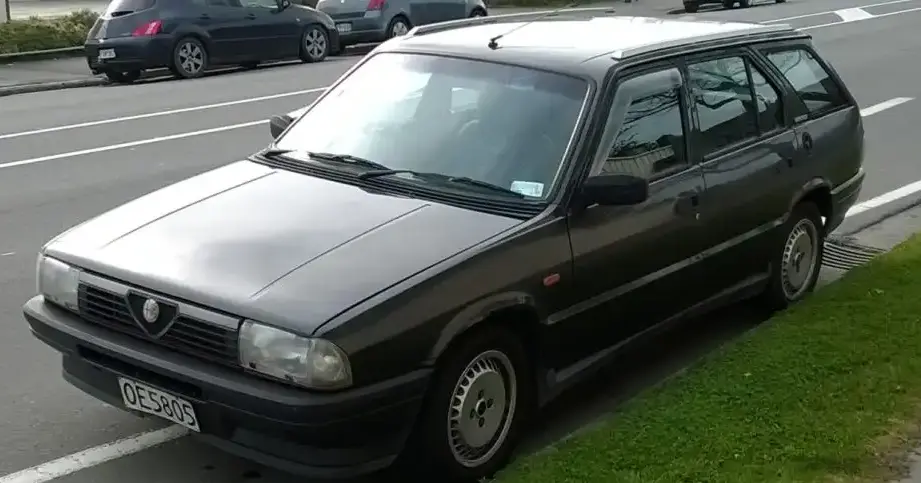
The Alfa Romeo 33 Sport Wagon, specifically the 905A variant powered by the 1.5-liter engine producing 90 horsepower and equipped with a four-wheel-drive system, was a relatively short-lived but significant model within the broader Alfa Romeo 33 range. Produced between 1984 and 1986, it represented a niche offering, combining the practicality of a station wagon body style with the engaging driving experience and all-weather capability expected of the Alfa Romeo brand. This variant aimed to appeal to buyers seeking a versatile vehicle that didn’t compromise on style or driving pleasure, though it occupied a unique position within the 33 lineup.
Technical Specifications
| Brand | Alfa Romeo |
| Model | 33 |
| Generation | 33 Sport Wagon (905A) |
| Type (Engine) | 1.5 (90 Hp) 4×4 |
| Start of Production | 1984 |
| End of Production | 1986 |
| Powertrain Architecture | Internal Combustion Engine |
| Body Type | Station Wagon (Estate) |
| Seats | 5 |
| Doors | 5 |
| Fuel Type | Petrol (Gasoline) |
| Power | 90 Hp |
| Engine Model/Code | 305.20 |
| Engine Aspiration | Naturally Aspirated |
| Engine Oil Capacity | 4 l (4.23 US qt | 3.52 UK qt) |
| Coolant Capacity | 7.5 l (7.93 US qt | 6.6 UK qt) |
Introduction
The Alfa Romeo 33, launched in 1983, was intended as a replacement for the aging Alfa Romeo Giulietta. The Sport Wagon (905A) variant, introduced a year later, expanded the 33’s appeal by offering increased cargo capacity and practicality. The 1.5-liter, 90 hp 4×4 model was positioned as a mid-range offering within the Sport Wagon lineup, slotting below the more powerful 1.6-liter versions. It was designed to provide a balance between performance, fuel economy, and all-weather traction, making it a suitable choice for families and drivers in regions with inclement weather. The 33 Sport Wagon, in general, was a relatively modern design for its time, featuring a wedge-shaped silhouette and a spacious interior.
Powertrain & Engine Architecture
The heart of the 33 Sport Wagon 1.5 4×4 is the Alfa Romeo 305.20 engine, a 1490cc inline-four cylinder unit. This engine is a naturally aspirated, single overhead camshaft design, featuring two valves per cylinder. Fuel delivery is managed by a Bosch mechanical fuel injection system, a common setup for European cars of the era. While not particularly powerful by modern standards, the engine was known for its responsiveness and willingness to rev. The 90 horsepower output is achieved at 6200 rpm, with peak torque of 88 lb-ft (120 Nm) arriving at 4000 rpm. The engine’s relatively small displacement and modest power output contribute to reasonable fuel economy for the time.
The four-wheel-drive system employed in the 33 Sport Wagon is a viscous coupling system. This system normally operates as a front-wheel-drive vehicle, but when slip is detected at the front wheels, the viscous coupling automatically engages the rear wheels, providing additional traction. The transmission is a 5-speed manual, although a 3-speed automatic was also available, though less common. The automatic transmission, while offering convenience, noticeably impacted performance and fuel economy compared to the manual.
Driving Characteristics
The 1.5-liter, 90 hp engine in the 33 Sport Wagon 4×4 provides adequate, but not exhilarating, performance. Acceleration from 0 to 60 mph takes approximately 11-12 seconds, and top speed is around 105 mph. The car feels lively enough for everyday driving, with a responsive engine and precise steering. The four-wheel-drive system provides enhanced grip, particularly on slippery surfaces, making it a confident handler in adverse conditions. Compared to the 1.6-liter versions, the 1.5 feels noticeably less powerful, especially when fully loaded. The automatic transmission, when equipped, further diminishes performance, resulting in slower acceleration and a less engaging driving experience. The gear ratios are tuned for fuel efficiency rather than outright speed.
Equipment & Trim Levels
The 33 Sport Wagon 1.5 4×4 typically came equipped with a reasonable level of standard features for the mid-1980s. These included cloth upholstery, a basic stereo system, and power-assisted steering. Air conditioning was often an optional extra. Interior trim was generally functional and well-built, though not particularly luxurious. The dashboard layout is typical of Italian cars of the period, with a focus on ergonomics and driver visibility. Optional extras included electric windows, central locking, and a sunroof. The exterior featured body-colored bumpers and steel wheels with hubcaps. Higher trim levels offered alloy wheels and upgraded interior materials.
Chassis & Braking
The 33 Sport Wagon utilizes a MacPherson strut front suspension and a torsion beam rear suspension. This setup provides a good balance between ride comfort and handling. The steering is a rack-and-pinion system, offering precise and responsive control. Braking is accomplished via disc brakes on the front wheels and drum brakes on the rear wheels. While adequate for normal driving, the rear drum brakes are a limitation compared to the all-disc setups found on some higher-spec 33 models. Stabilizer bars are fitted to both the front and rear axles to reduce body roll during cornering.
Market Reception & Comparison
The Alfa Romeo 33 Sport Wagon 1.5 4×4 was generally well-received by automotive critics, who praised its stylish design, engaging driving experience, and practicality. However, some critics noted the engine’s lack of outright power and the somewhat agricultural nature of the fuel injection system. Compared to other station wagons of the era, such as the Volvo 240 or the Ford Sierra Estate, the 33 Sport Wagon offered a more sporting driving experience but lacked the same level of outright space and refinement. Within the 33 lineup, the 1.5 4×4 was seen as a compromise between the more affordable 1.3-liter models and the more powerful 1.6-liter versions. It appealed to buyers who wanted the added security of four-wheel drive without the higher price tag of the larger-engined models.
Legacy
The Alfa Romeo 33 Sport Wagon 1.5 4×4, while not a high-volume seller, has gained a following among classic Alfa Romeo enthusiasts. The 305.20 engine is generally considered to be reliable, although regular maintenance is essential. The four-wheel-drive system is relatively robust, but the viscous coupling can eventually wear out and require replacement. Parts availability can be a challenge, as the 33 is now a relatively rare car. Today, well-maintained examples of the 33 Sport Wagon 1.5 4×4 are sought after by collectors and enthusiasts who appreciate its unique blend of style, practicality, and Italian flair. The car represents a distinctive chapter in Alfa Romeo’s history and a reminder of the brand’s commitment to creating engaging and rewarding driving experiences.