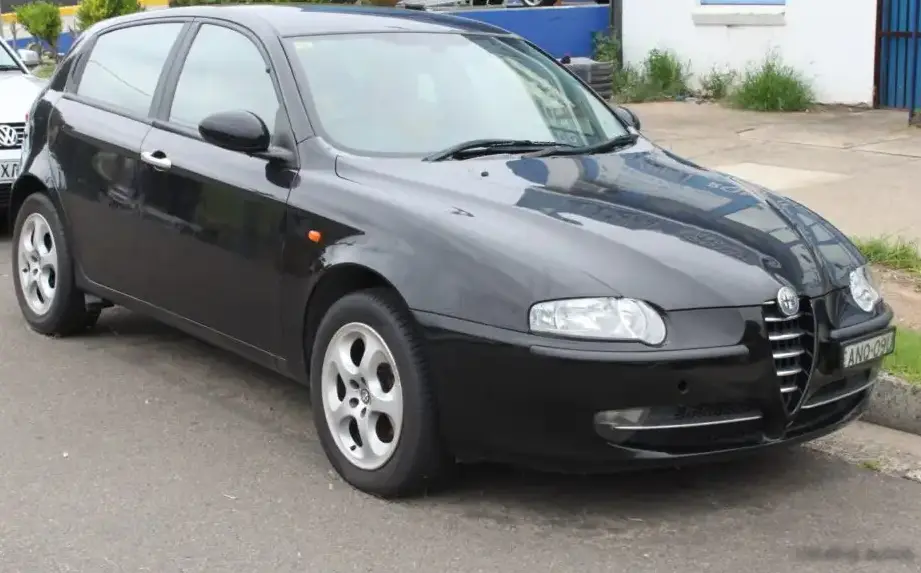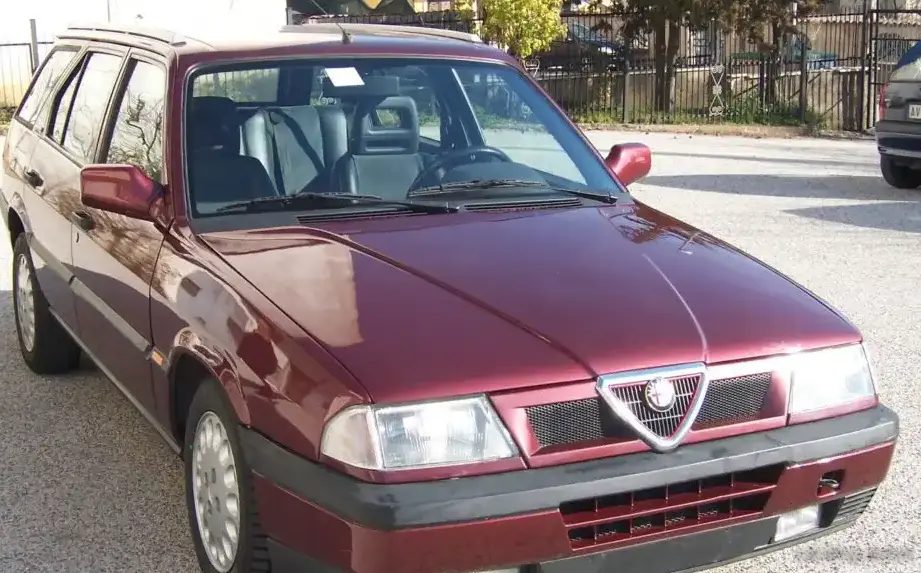
The Alfa Romeo 33 Sport Wagon 1.4 i.e., produced between 1990 and 1994, represented a practical and accessible entry point into the Alfa Romeo lineup. Part of the 907B series, this variant was a five-door station wagon (estate) designed to offer a blend of Italian style and everyday usability. It sat within the broader 33 range, which included both hatchback and wagon body styles, and a variety of engine options. The 1.4 i.e. model, with its 90 horsepower output, was positioned as the entry-level engine choice, appealing to buyers prioritizing fuel efficiency and affordability over outright performance. It was a key model for Alfa Romeo in European markets, offering a unique alternative to more mainstream family cars.
Technical Specifications
| Brand | Alfa Romeo |
| Model | 33 |
| Generation | 33 Sport Wagon (907B) |
| Type (Engine) | 1.4 i.e. (90 Hp) |
| Start of production | 1990 |
| End of production | 1994 |
| Powertrain Architecture | Internal Combustion engine |
| Body type | Station wagon (estate) |
| Seats | 5 |
| Doors | 5 |
| Fuel consumption (urban) | 9.5 l/100 km (24.8 US mpg) |
| Fuel consumption (extra urban) | 5.7 l/100 km (41.3 US mpg) |
| Fuel consumption (combined) | 7.8 l/100 km (30.2 US mpg) |
| Fuel Type | Petrol (Gasoline) |
| Acceleration 0 – 100 km/h | 11.7 sec |
| Acceleration 0 – 62 mph | 11.7 sec |
| Acceleration 0 – 60 mph | 11.1 sec |
| Maximum speed | 177 km/h (109.98 mph) |
| Weight-to-power ratio | 10.6 kg/Hp |
| Weight-to-torque ratio | 8.2 kg/Nm |
| Power | 90 Hp @ 6000 rpm |
| Torque | 116 Nm @ 4500 rpm (85.56 lb.-ft. @ 4500 rpm) |
| Engine layout | Front, Transverse |
| Engine Model/Code | 307.32 |
| Engine displacement | 1351 cm3 (82.44 cu. in.) |
| Number of cylinders | 4 |
| Engine configuration | Boxer |
| Cylinder Bore | 80 mm (3.15 in.) |
| Piston Stroke | 67.2 mm (2.65 in.) |
| Compression ratio | 9.5:1 |
| Number of valves per cylinder | 2 |
| Fuel injection system | Multi-port manifold injection |
| Engine aspiration | Naturally aspirated |
| Valvetrain | OHC |
| Engine oil capacity | 4 l (4.23 US qt | 3.52 UK qt) |
| Coolant capacity | 7.8 l (8.24 US qt | 6.86 UK qt) |
| Kerb Weight | 955 kg (2105.41 lbs.) |
| Max. weight | 1380 kg (3042.38 lbs.) |
| Max load | 425 kg (936.96 lbs.) |
| Trunk (boot) space – minimum | 430 l (15.19 cu. ft.) |
| Trunk (boot) space – maximum | 1350 l (47.67 cu. ft.) |
| Fuel tank capacity | 50 l (13.21 US gal | 11 UK gal) |
| Length | 4200 mm (165.35 in.) |
| Width | 1615 mm (63.58 in.) |
| Height | 1350 mm (53.15 in.) |
| Wheelbase | 2475 mm (97.44 in.) |
| Front track | 1365 mm (53.74 in.) |
| Rear track | 1365 mm (53.74 in.) |
| Drivetrain Architecture | Front wheel drive |
| Number of gears | 5 gears, manual transmission |
| Front suspension | Coil spring |
| Rear suspension | Coil spring |
| Front brakes | Disc |
| Rear brakes | Drum |
| Assisting systems | ABS (Anti-lock braking system) |
| Steering type | Steering rack and pinion |
| Power steering | Hydraulic |
| Tires size | 165/70 R13 |
Powertrain & Engine Architecture
The heart of the 33 Sport Wagon 1.4 i.e. was the Alfa Romeo 307.32 engine, a 1351cc, naturally aspirated, four-cylinder boxer engine. This engine design, while relatively uncommon, contributed to a lower center of gravity, enhancing handling characteristics. The engine featured a single overhead camshaft (OHC) and utilized multi-port fuel injection for improved efficiency and responsiveness. The boxer configuration, with its horizontally opposed pistons, offered inherent smoothness and reduced vibration compared to inline engines. The 90 horsepower output was achieved at 6000 rpm, with a torque figure of 116 Nm (85.56 lb-ft) available at 4500 rpm. The engine was paired with a five-speed manual transmission, which was the standard offering for this variant. While an automatic transmission was available on some 33 models, it was not typically paired with the 1.4 i.e. engine due to the performance limitations.
Driving Characteristics
The 1.4 i.e. Sport Wagon offered a comfortable and predictable driving experience. Acceleration was modest, taking approximately 11.7 seconds to reach 62 mph (100 km/h), and a top speed of 177 km/h (109.98 mph) was achievable. Compared to the more powerful 1.7 or 2.0-liter versions of the 33, the 1.4 i.e. felt noticeably less spirited. However, the lower engine weight contributed to nimble handling, particularly on winding roads. The five-speed manual transmission provided adequate control, although the gear ratios were spaced to prioritize fuel economy rather than outright performance. The relatively low power output meant that the engine needed to be revved to extract the most from it, but the boxer engine’s smoothness made this less of a chore.
Equipment & Trim Levels
The 1.4 i.e. Sport Wagon typically came equipped with a reasonable level of standard features for its time. These included power steering, central locking, and electric front windows. Interior upholstery was typically cloth, with a functional and straightforward dashboard layout. Optional extras included alloy wheels, a sunroof, and upgraded audio systems. The trim level was generally considered to be a mid-range offering, providing a good balance of comfort and practicality without the luxury appointments of the higher-spec models. The focus was on providing a well-equipped and reliable family vehicle at an accessible price point.
Chassis & Braking
The 33 Sport Wagon utilized a relatively simple chassis design, featuring coil spring suspension at both the front and rear. The front suspension employed independent coil springs, while the rear utilized a torsion beam setup. Braking was provided by disc brakes at the front and drum brakes at the rear. ABS (Anti-lock Braking System) was available as an option, enhancing safety and control during emergency braking situations. The suspension setup was tuned for comfort and ride quality, prioritizing a smooth and compliant ride over sporty handling. Stabilizer bars were fitted to both axles to reduce body roll during cornering.
Market Reception & Comparison
The Alfa Romeo 33 Sport Wagon 1.4 i.e. was generally well-received by automotive critics as a practical and stylish family car. However, the 1.4-liter engine was often criticized for its lack of power, particularly when compared to the more potent engine options available in the 33 range. Fuel economy was a strong point, with combined fuel consumption figures around 30.2 US mpg. Compared to rivals like the Ford Escort Estate or Volkswagen Golf Estate, the 33 offered a more distinctive design and a more engaging driving experience, but often at a slightly higher price point. The 1.4 i.e. appealed to buyers who valued style and handling over outright performance and were looking for a reliable and economical family vehicle.
Legacy
The Alfa Romeo 33 Sport Wagon 1.4 i.e. has developed a modest following among classic car enthusiasts. The boxer engine, while requiring regular maintenance, is generally considered to be a robust and reliable unit. Finding well-maintained examples can be challenging, as many have succumbed to rust or neglect. However, the 33 Sport Wagon remains a relatively affordable entry point into the world of classic Alfa Romeos. Its unique styling, engaging driving dynamics, and practical wagon body style continue to appeal to those seeking a distinctive and characterful classic car. Parts availability can be an issue, but a dedicated network of Alfa Romeo specialists and online suppliers helps to keep these cars on the road.