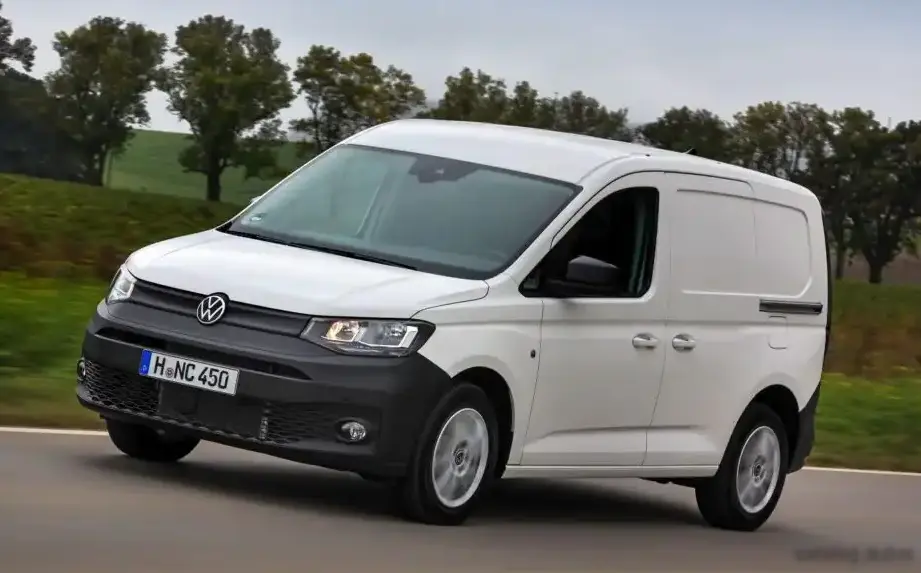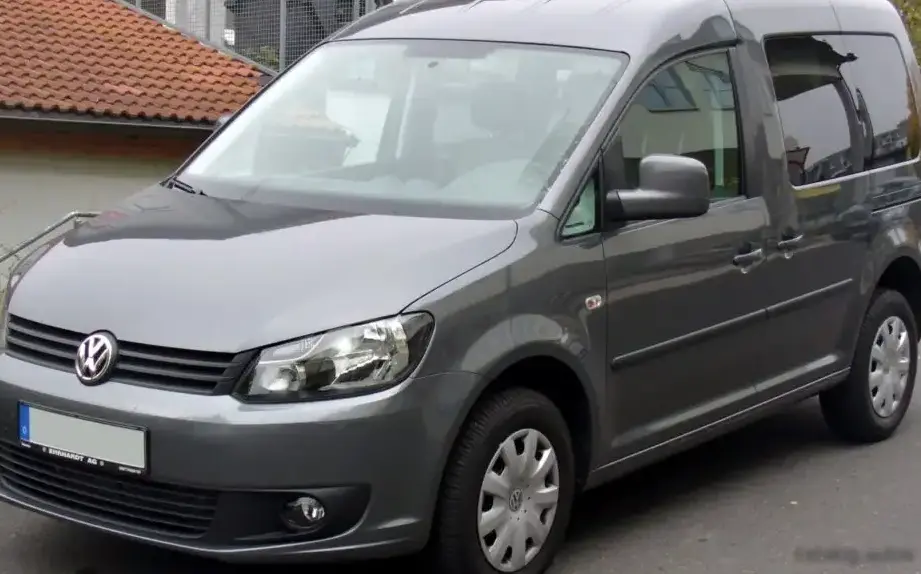
The Volkswagen Caddy III (facelift, introduced in 2010) 1.6 TDI BMT with 102 horsepower and a dual-clutch gearbox (DSG) represents a significant iteration of Volkswagen’s popular compact van. Produced from 2010 to 2015, this variant occupied a crucial mid-range position within the Caddy III lineup, appealing to buyers seeking a balance between fuel efficiency, practicality, and reasonable performance. It was primarily marketed in Europe as a versatile vehicle for both commercial and family use, capitalizing on the Caddy’s reputation for robust build quality and adaptable interior space. This model is based on the Volkswagen Group’s PQ35 platform, also known as the A3 platform, shared with vehicles like the Golf Mk5 and Audi A3.
Technical Specifications
| Brand | Volkswagen |
| Model | Caddy |
| Generation | Caddy III (facelift 2010) |
| Type (Engine) | 1.6 TDI BMT (102 Hp) DSG |
| Start of production | 2010 |
| End of production | 2015 |
| Powertrain Architecture | Internal Combustion engine |
| Body type | Minivan |
| Seats | 5-7 |
| Doors | 5 |
| Fuel consumption (urban) | 5.8 l/100 km (40.6 US mpg, 48.7 UK mpg, 17.2 km/l) |
| Fuel consumption (extra urban) | 5.1 l/100 km (46.1 US mpg, 55.4 UK mpg, 19.6 km/l) |
| Fuel consumption (combined) | 5.3 l/100 km (44.4 US mpg, 53.3 UK mpg, 18.9 km/l) |
| CO2 emissions | 139 g/km |
| Fuel Type | Diesel |
| Acceleration 0 – 100 km/h | 13 sec |
| Acceleration 0 – 62 mph | 13 sec |
| Acceleration 0 – 60 mph | 12.4 sec |
| Maximum speed | 168 km/h (104.39 mph) |
| Emission standard | Euro 5 |
| Weight-to-power ratio | 14.2 kg/Hp, 70.3 Hp/tonne |
| Weight-to-torque ratio | 5.8 kg/Nm, 172.4 Nm/tonne |
| Power | 102 Hp @ 4400 rpm |
| Power per litre | 63.8 Hp/l |
| Torque | 250 Nm @ 1500-2500 rpm (184.39 lb.-ft. @ 1500-2500 rpm) |
| Engine layout | Front, Transverse |
| Engine Model/Code | CAYD |
| Engine displacement | 1598 cm3 (97.52 cu. in.) |
| Number of cylinders | 4 |
| Engine configuration | Inline |
| Cylinder Bore | 79.5 mm (3.13 in.) |
| Piston Stroke | 80.5 mm (3.17 in.) |
| Compression ratio | 16.5:1 |
| Number of valves per cylinder | 4 |
| Fuel injection system | Diesel Commonrail |
| Engine aspiration | Turbocharger, Intercooler |
| Engine oil capacity | 4.3 l (4.54 US qt | 3.78 UK qt) |
| Kerb Weight | 1450 kg (3196.7 lbs.) |
| Max. weight | 2177 kg (4799.46 lbs.) |
| Max load | 727 kg (1602.76 lbs.) |
| Trunk (boot) space – minimum | 918 l (32.42 cu. ft.) |
| Trunk (boot) space – maximum | 3200 l (113.01 cu. ft.) |
| Fuel tank capacity | 60 l (15.85 US gal | 13.2 UK gal) |
| Permitted trailer load with brakes (12%) | 1500 kg (3306.93 lbs.) |
| Permitted trailer load without brakes | 710 kg (1565.28 lbs.) |
| Length | 4406 mm (173.46 in.) |
| Width | 1794 mm (70.63 in.) |
| Width including mirrors | 2062 mm (81.18 in.) |
| Height | 1823 mm (71.77 in.) |
| Wheelbase | 2681 mm (105.55 in.) |
| Front overhang | 878 mm (34.57 in.) |
| Rear overhang | 847 mm (33.35 in.) |
| Ride height (ground clearance) | 159 mm (6.26 in.) |
| Minimum turning circle | 11.1 m (36.42 ft.) |
| Drivetrain Architecture | Front wheel drive |
| Number of gears and type of gearbox | 7 gears, automatic transmission DSG |
| Front suspension | Independent, type McPherson with coil spring and anti-roll bar |
| Rear suspension | Leaf spring |
| Front brakes | Ventilated discs |
| Rear brakes | Disc |
| Assisting systems | ABS (Anti-lock braking system) |
| Steering type | Steering rack and pinion |
| Power steering | Electric Steering |
| Tires size | 195/65 R15; 205/55 R16; 205/50 R17 |
| Wheel rims size | 6J x 15; 6J x 16; 6J x 17 |
INTRODUCTION
The Volkswagen Caddy III facelift, launched in 2010, represented a mid-cycle refresh of the third-generation Caddy. This iteration brought updated styling, improved safety features, and refined engine options. The 1.6 TDI BMT 102 hp DSG variant was a popular choice, particularly in Europe, where compact vans are highly valued for their versatility. The “BMT” designation stands for “BlueMotion Technology,” indicating Volkswagen’s efforts to improve fuel economy and reduce emissions. This model aimed to provide a practical and economical solution for families and businesses alike, offering a comfortable ride and ample cargo space.
Powertrain & Engine Architecture
At the heart of the Caddy III 1.6 TDI BMT DSG lies the CAYD engine code, a 1.6-liter inline-four diesel engine. This engine utilizes a common rail direct injection system, delivering fuel directly into the combustion chamber at extremely high pressure for optimized combustion. A turbocharger with an intercooler is employed to boost power and torque, providing improved responsiveness. The engine features four valves per cylinder and a compression ratio of 16.5:1. The 102 horsepower output is achieved at 4400 rpm, while the peak torque of 250 Nm (184 lb-ft) is available between 1500 and 2500 rpm. This broad torque curve contributes to the engine’s usability in everyday driving conditions. Paired with the engine is a 7-speed dual-clutch gearbox (DSG), offering smooth and rapid gear changes. The DSG transmission allows for both fully automatic operation and manual gear selection via the shift lever or steering wheel-mounted paddles (depending on the trim level).
Driving Characteristics
The 1.6 TDI BMT 102 hp/DSG combination in the Caddy III provides adequate, though not exhilarating, performance. Acceleration from 0 to 100 km/h (0-62 mph) takes around 13 seconds, and the top speed is 168 km/h (104 mph). The DSG transmission helps to maximize the available power, providing quick shifts and keeping the engine within its optimal torque band. Compared to higher-output versions of the Caddy III, such as those equipped with the 2.0 TDI engine, this variant feels less powerful, particularly when fully loaded or climbing hills. However, the 1.6 TDI offers significantly better fuel economy. The gear ratios in the DSG are well-chosen for everyday driving, providing a balance between acceleration and fuel efficiency. The engine is relatively quiet and refined for a diesel, although some engine noise is noticeable during hard acceleration.
Equipment & Trim Levels
The Caddy III 1.6 TDI BMT DSG was typically offered in several trim levels, including Trendline, Comfortline, and Highline. The base Trendline trim included features such as air conditioning, power windows, central locking, and an audio system. Comfortline added features like alloy wheels, cruise control, and a multi-function steering wheel. The Highline trim offered premium features such as leather upholstery, parking sensors, and a more advanced infotainment system. Optional extras included a panoramic sunroof, navigation system, and various driver assistance systems. Interior upholstery was typically cloth, with higher trims offering partial leather options. The dashboard layout was functional and straightforward, with easy-to-read gauges and controls.
Chassis & Braking
The Caddy III utilizes a McPherson strut front suspension with coil springs and an anti-roll bar, providing a comfortable and stable ride. The rear suspension employs a leaf spring setup, which is a cost-effective solution for load-carrying applications. The front brakes are ventilated discs, while the rear brakes are solid discs. ABS (Anti-lock Braking System) is standard. The steering is rack and pinion with electric power assistance, offering precise and responsive handling. The Caddy III’s suspension is tuned to prioritize comfort and practicality over sporty handling. The vehicle’s relatively high center of gravity and leaf spring rear suspension contribute to some body roll during cornering.
Market Reception & Comparison
The Caddy III 1.6 TDI BMT DSG was generally well-received by automotive critics for its fuel efficiency, practicality, and versatility. It was praised for its comfortable ride and spacious interior. However, some critics noted that the 102 hp engine could feel underpowered when the vehicle was fully loaded. Compared to the more powerful 2.0 TDI variants, the 1.6 TDI offered lower running costs but compromised on performance. The 1.6 TDI also provided better fuel economy than gasoline-powered Caddy models. Its main competitors included the Citroën Berlingo, Peugeot Partner, and Renault Kangoo.
Legacy
The Volkswagen Caddy III 1.6 TDI BMT DSG has proven to be a reliable and durable vehicle. The 1.6 TDI engine, while not known for its blistering performance, is generally robust and capable of high mileage with proper maintenance. The DSG transmission, however, can be prone to issues if not serviced regularly. In the used car market, this variant represents a good value proposition for buyers seeking a practical and economical compact van. Its fuel efficiency and relatively low maintenance costs make it an attractive option for both personal and commercial use. Parts availability is generally good, and the Caddy III enjoys a strong reputation for build quality and longevity.