
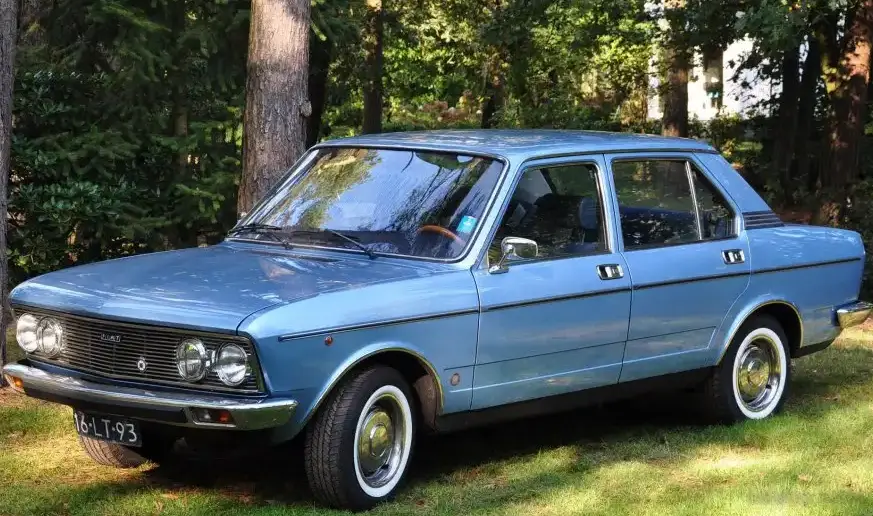
The Fiat 132 1.6 (90 hp) was a variant of the Fiat 132 sedan produced between 1977 and 1981. Positioned as a mid-range offering within the 132 lineup, it aimed to provide a balance of performance and affordability for the European market. The 132 itself was Fiat’s replacement for the 124 and 125 models, representing a significant step up in size, comfort, and overall refinement. This particular 1.6-liter version served as a popular choice for buyers seeking a practical and reliable family saloon, offering a more economical alternative to the larger-displacement engines available in the range.
Technical Specifications
| Brand | Fiat |
| Model | 132 |
| Generation | 132 |
| Type (Engine) | 1.6 (90 Hp) |
| Start of Production | 1977 |
| End of Production | 1981 |
| Powertrain Architecture | Internal Combustion Engine |
| Body Type | Sedan |
| Fuel Type | Petrol (Gasoline) |
| Power | 90 Hp |
| Engine Model/Code | 132 C6.000 |
| Engine Aspiration | Naturally Aspirated |
Powertrain & Engine Architecture
The Fiat 132 1.6 utilized the Fiat 132 C6.000 engine, a 1,608 cc inline-four cylinder petrol engine. This engine featured a cast iron block and an aluminum cylinder head. It employed a single overhead camshaft (SOHC) design, operating two valves per cylinder. Fuel delivery was managed by a Weber 32 ADF carburetor, a common setup for European vehicles of the era. The engine produced 90 horsepower at 6,000 rpm and approximately 109 lb-ft of torque at 4,000 rpm. The engine was known for its relative simplicity and durability, though it wasn’t particularly high-tech compared to some contemporary offerings. The 1.6L engine was typically paired with a four-speed manual transmission, but a three-speed automatic transmission was also available, and is the focus of this article. This automatic transmission, while providing convenience, was not known for its responsiveness or fuel efficiency. It was a traditional hydraulic automatic, lacking the electronic controls found in later designs.
Driving Characteristics
The Fiat 132 1.6 with the automatic transmission offered a comfortable, if not particularly sporty, driving experience. Acceleration was adequate for everyday driving, but the automatic gearbox significantly impacted performance compared to the manual version. The three-speed automatic had relatively wide gear ratios, resulting in noticeable shifts and a tendency to hunt for the right gear, especially under heavy load or when climbing hills. The 0 to 60 mph time was estimated to be around 13-14 seconds, making it slower than the manual counterpart and other similarly sized cars with more powerful engines. The suspension, while comfortable, was tuned more for ride quality than handling precision. Steering was relatively light, making it easy to maneuver in urban environments, but lacked feedback at higher speeds. The overall driving experience was geared towards providing a relaxed and comfortable ride for passengers, rather than engaging the driver.
Equipment & Trim Levels
The 1.6-liter Fiat 132 typically came equipped with a reasonable level of standard features for its time. The interior generally featured cloth upholstery, although vinyl options were available. The dashboard was functional and straightforward, with basic instrumentation including a speedometer, fuel gauge, and temperature gauge. Power-assisted steering was often included, and some models featured a radio as standard equipment. Optional extras included air conditioning, a sunroof, and upgraded interior trim. The trim level of the 1.6L model generally fell between the base model and the more luxurious versions equipped with larger engines. It offered a good balance of features without the added cost of the higher-spec models. The exterior trim typically included chrome bumpers and brightwork, giving the car a relatively upscale appearance.
Chassis & Braking
The Fiat 132 featured a traditional body-on-frame construction, providing a robust and durable chassis. The front suspension utilized independent wishbones and coil springs, while the rear suspension employed a live axle with leaf springs. This setup provided a comfortable ride, but wasn’t particularly sophisticated in terms of handling. Braking was initially accomplished with disc brakes on the front wheels and drum brakes on the rear wheels. Later models often received disc brakes on all four wheels, improving stopping performance. The braking system was hydraulically operated, with no power assistance on base models, although power brakes were often included as standard or optional equipment on the 1.6L variant. Stabilizer bars were fitted to both the front and rear axles to reduce body roll during cornering.
Market Reception & Comparison
The Fiat 132 1.6 (90 hp) was generally well-received in the European market as a practical and affordable family car. Critics praised its comfortable ride, spacious interior, and relatively low running costs. However, the automatic transmission was often criticized for its sluggish performance and lack of refinement. Compared to the 132 1800 and 2000 models, the 1.6 offered less power and performance, but it was also more fuel-efficient and less expensive to purchase and maintain. The 1.6L version competed with other mid-size sedans such as the Ford Taunus, Opel Rekord, and Peugeot 504. In terms of fuel economy, the 1.6L automatic typically achieved around 22-26 mpg, which was reasonable for the time but less than the manual version. Reliability was generally good, although the automatic transmission could be prone to issues if not properly maintained.
Legacy
The Fiat 132, including the 1.6 (90 hp) variant, has become a popular classic car among enthusiasts. The engine, while not particularly powerful, is known for its durability and relative simplicity, making it relatively easy to maintain and repair. The availability of spare parts is generally good, although some components can be difficult to find. The automatic transmission, however, remains a potential weak point, and finding a well-maintained example can be challenging. Today, the Fiat 132 1.6 represents a piece of automotive history, offering a glimpse into the design and engineering of European cars from the 1970s. Well-preserved examples are increasingly sought after by collectors and enthusiasts, and the car continues to provide a comfortable and enjoyable driving experience for those who appreciate its classic charm.
