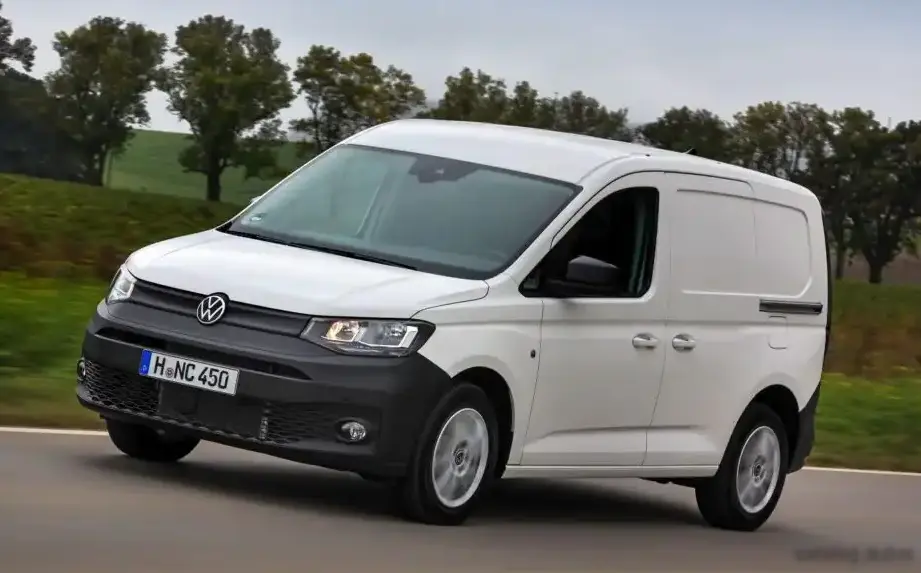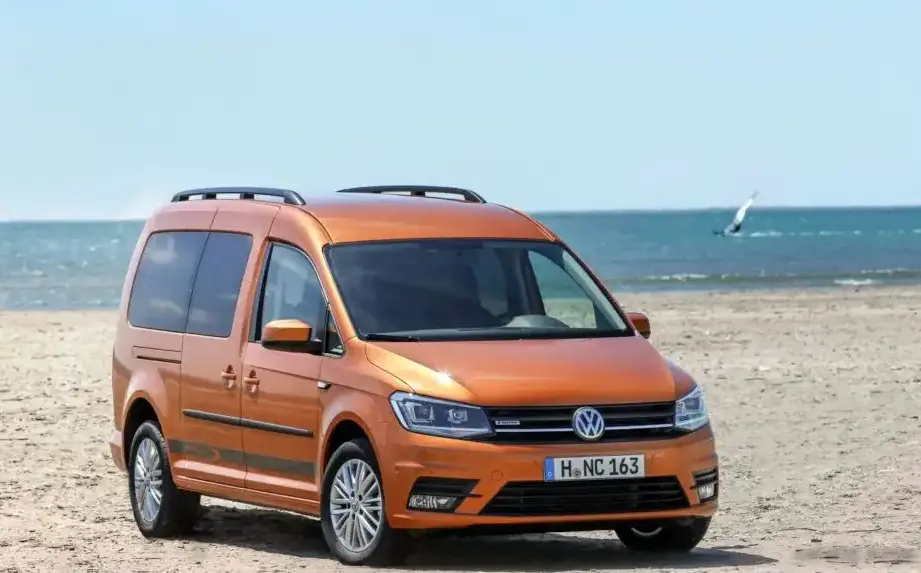
The Volkswagen Caddy IV 1.0 TSI (102 hp) was a front-wheel-drive, compact minivan produced between 2015 and 2018. Positioned as an entry-level offering within the fourth-generation Caddy range (2015-2020), it served as a practical and fuel-efficient option for families and commercial users alike. Built on the Volkswagen Group’s PQ35 platform – also known as the A3 platform – the Caddy IV represented a significant step forward in terms of interior space, safety features, and overall refinement compared to its predecessor. This particular variant, powered by the three-cylinder 1.0 TSI engine and paired with a five-speed manual transmission, aimed to balance affordability with acceptable performance and economy.
Technical Specifications
| Brand | Volkswagen |
| Model | Caddy |
| Generation | Caddy IV |
| Type (Engine) | 1.0 TSI (102 Hp) |
| Start of production | 2015 |
| End of production | 2018 |
| Powertrain Architecture | Internal Combustion engine |
| Body type | Minivan |
| Seats | 5-7 |
| Doors | 4-5 |
| Fuel consumption (urban) | 6.3-6.4 l/100 km (37.3 – 36.8 US mpg, 44.8 – 44.1 UK mpg, 15.9 – 15.6 km/l) |
| Fuel consumption (extra urban) | 4.7 l/100 km (50 US mpg, 60.1 UK mpg, 21.3 km/l) |
| Fuel consumption (combined) | 5.3 l/100 km (44.4 US mpg, 53.3 UK mpg, 18.9 km/l) |
| CO2 emissions | 123-124 g/km |
| Fuel Type | Petrol (Gasoline) |
| Acceleration 0 – 100 km/h | 12.1 sec |
| Acceleration 0 – 62 mph | 12.1 sec |
| Acceleration 0 – 60 mph | 11.5 sec |
| Maximum speed | 172 km/h (106.88 mph) |
| Emission standard | Euro 6 |
| Weight-to-power ratio | 12.4 kg/Hp, 80.5 Hp/tonne |
| Weight-to-torque ratio | 7.2 kg/Nm, 138.1 Nm/tonne |
| Power | 102 Hp @ 5000-5500 rpm |
| Power per litre | 102.1 Hp/l |
| Torque | 175 Nm @ 1500-3500 rpm (129.07 lb.-ft. @ 1500-3500 rpm) |
| Engine layout | Front, Transverse |
| Engine Model/Code | EA211 / CHZG |
| Engine displacement | 999 cm3 (60.96 cu. in.) |
| Number of cylinders | 3 |
| Engine configuration | Inline |
| Cylinder Bore | 74.5 mm (2.93 in.) |
| Piston Stroke | 76.4 mm (3.01 in.) |
| Compression ratio | 10.5:1 |
| Number of valves per cylinder | 4 |
| Fuel injection system | Direct injection |
| Engine aspiration | Turbocharger, Intercooler |
| Valvetrain | DOHC |
| Engine oil capacity | 4 l (4.23 US qt | 3.52 UK qt) |
| Kerb Weight | 1267 kg (2793.26 lbs.) |
| Max. weight | 2180 kg (4806.08 lbs.) |
| Max load | 913 kg (2012.82 lbs.) |
| Trunk (boot) space – minimum | 190 l (6.71 cu. ft.) |
| Trunk (boot) space – maximum | 3200 l (113.01 cu. ft.) |
| Fuel tank capacity | 55 l (14.53 US gal | 12.1 UK gal) |
| Max. roof load | 100 kg (220.46 lbs.) |
| Permitted trailer load with brakes (12%) | 1200 kg (2645.55 lbs.) |
| Permitted trailer load without brakes | 670 kg (1477.1 lbs.) |
| Permitted towbar download | 75 kg (165.35 lbs.) |
| Length | 4408 mm (173.54 in.) |
| Width | 1793 mm (70.59 in.) |
| Width including mirrors | 2079 mm (81.85 in.) |
| Height | 1858 mm (73.15 in.) |
| Wheelbase | 2682 mm (105.59 in.) |
| Front overhang | 879 mm (34.61 in.) |
| Rear overhang | 847 mm (33.35 in.) |
| Ride height (ground clearance) | 155 mm (6.1 in.) |
| Minimum turning circle | 11.1 m (36.42 ft.) |
| Front suspension | Independent, type McPherson with coil spring and anti-roll bar |
| Rear suspension | Rigid axle suspension, Transverse stabilizer, Leaf spring |
| Front brakes | Ventilated discs, 288×25 mm |
| Rear brakes | Disc, 272×10 mm |
| Drive wheel | Front wheel drive |
| Number of gears | 5 gears, manual transmission |
| Tires size | 195/65 R15; 205/55 R16 |
| Wheel rims size | 6J x 15; 6J x 16 |
INTRODUCTION
The Volkswagen Caddy IV 1.0 TSI (102 hp) represented a key component of Volkswagen’s strategy to offer a versatile and affordable light commercial and passenger vehicle. Introduced in 2015 as part of the Caddy IV lifecycle, this variant was designed to appeal to buyers seeking a practical vehicle with reasonable running costs. The 1.0 TSI engine, a member of Volkswagen’s EA211 engine family, was a relatively new addition to the lineup, emphasizing fuel efficiency and reduced emissions. The Caddy IV, in general, offered a significant upgrade in terms of interior space and comfort compared to the previous generation, making it a popular choice for both families and businesses.
Powertrain & Engine Architecture
At the heart of the Caddy IV 1.0 TSI lies the EA211 engine code CHZG, a 999cc, three-cylinder turbocharged gasoline engine. This engine utilizes direct fuel injection, a technology that improves combustion efficiency and reduces emissions. The engine features a single scroll turbocharger with an intercooler, which helps to manage intake air temperature and boost performance. The valvetrain is a dual overhead camshaft (DOHC) design with four valves per cylinder, optimizing airflow for improved power output. The five-speed manual transmission was the standard offering for this variant, providing a balance between fuel economy and driver control. The engine’s relatively small displacement and turbocharging contribute to its responsiveness, although it doesn’t offer the outright power of larger engines in the Caddy IV range.
Driving Characteristics
The 102 hp 1.0 TSI engine in the Caddy IV delivered adequate performance for everyday driving. Acceleration from 0-60 mph took approximately 11.5 seconds, and the top speed was around 106.88 mph. While not particularly sporty, the engine provided sufficient torque (175 Nm or 129 lb-ft) for comfortable cruising and carrying a moderate load. The five-speed manual transmission allowed drivers to effectively manage the engine’s powerband, although the gear ratios were geared towards fuel efficiency rather than outright acceleration. Compared to the more powerful 1.6 TDI diesel or the 2.0 TDI variants, the 1.0 TSI felt less refined and had a more noticeable engine note. However, it offered a smoother and quieter driving experience than the diesel engines, particularly at higher speeds.
Equipment & Trim Levels
The Caddy IV 1.0 TSI (102 hp) typically came equipped with a reasonable level of standard features. These included power windows, central locking, a basic audio system, and ABS brakes. Interior upholstery was typically cloth, and the dashboard featured a functional, if somewhat utilitarian, design. Optional extras included air conditioning, alloy wheels, a touchscreen infotainment system, and parking sensors. Trim levels varied depending on the market, but generally, this variant occupied the entry-level or mid-range position in the Caddy IV lineup. The focus was on providing a practical and affordable vehicle, so luxury features were often reserved for higher-spec models.
Chassis & Braking
The Caddy IV 1.0 TSI utilized a McPherson strut front suspension with coil springs and an anti-roll bar, providing a comfortable and stable ride. The rear suspension employed a rigid axle setup with leaf springs and a transverse stabilizer. This configuration was chosen for its simplicity, durability, and load-carrying capacity. Braking duties were handled by ventilated discs at the front and solid discs at the rear. ABS (Anti-lock Braking System) was standard, enhancing safety during emergency braking situations. The suspension setup was tuned to prioritize ride comfort and stability, rather than sporty handling.
Market Reception & Comparison
The Caddy IV 1.0 TSI (102 hp) was generally well-received by critics as a practical and fuel-efficient option. Its low running costs and reasonable purchase price made it an attractive choice for budget-conscious buyers. However, some reviewers noted that the engine could feel strained when fully loaded or driving uphill. Compared to the diesel variants, the 1.0 TSI offered lower CO2 emissions but slightly higher fuel consumption in certain driving conditions. The diesel models also provided more torque, making them better suited for heavy-duty applications. Against competitors like the Citroën Berlingo and Renault Kangoo, the Caddy IV 1.0 TSI offered a good balance of practicality, reliability, and refinement.
Legacy
The EA211 1.0 TSI engine has proven to be a relatively reliable powertrain, although some owners have reported issues with the timing chain. Regular maintenance, including oil changes and timing chain inspections, is crucial for ensuring long-term reliability. In the used car market, the Caddy IV 1.0 TSI (102 hp) remains a popular choice for those seeking an affordable and practical minivan. Its fuel efficiency and relatively low maintenance costs continue to appeal to buyers. While it may not offer the performance of higher-spec models, it provides a dependable and versatile transportation solution.