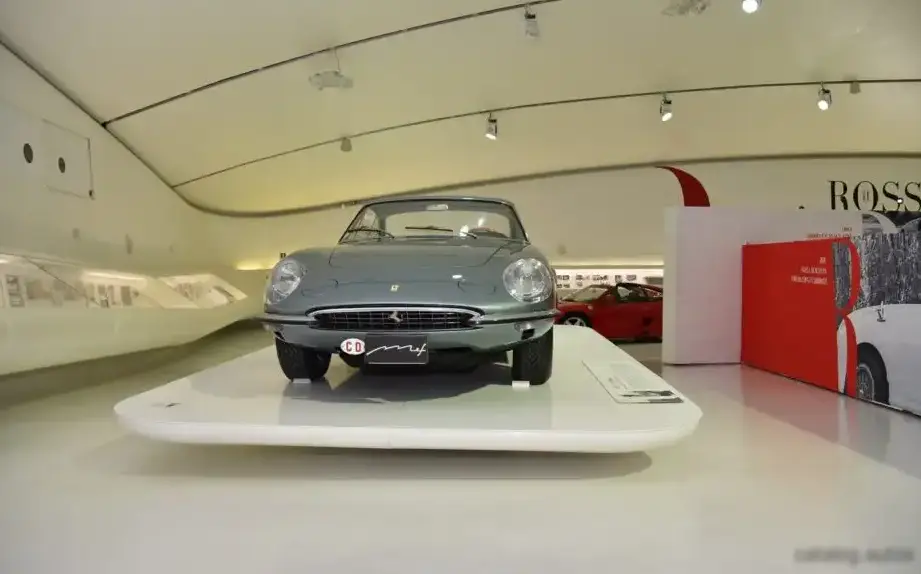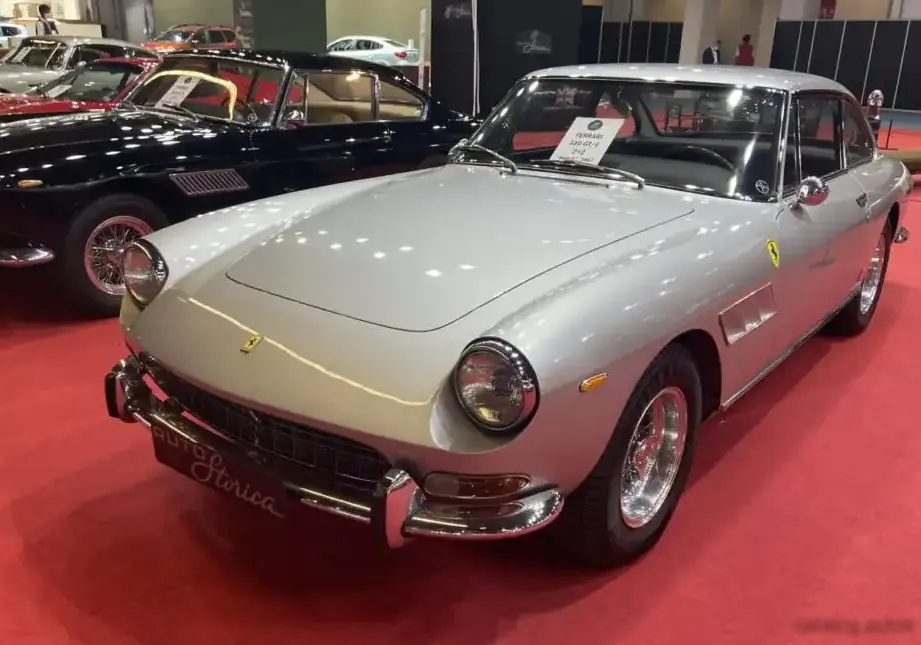
The Ferrari 330 GT 2+2 Series 2, produced between 1964 and 1967, represents a pivotal evolution in Ferrari’s grand touring lineage. Positioned as a more practical, four-seat alternative to the traditional two-seater Ferraris, the 330 GT 2+2 aimed to broaden the marque’s appeal without sacrificing performance or prestige. The Series 2, introduced in late 1964, featured subtle but significant revisions over the initial Series 1, primarily focused on improved interior refinement and detailing. It was built on a chassis derived from the 250 GT 2+2, utilizing a longer wheelbase and a more spacious cabin, and remains a highly sought-after classic Ferrari today.
Technical Specifications
| Brand | Ferrari |
| Model | 330 |
| Generation | 330 GT 2+2 (Serie 2) |
| Type (Engine) | 4.0 V12 (300 Hp) |
| Start of production | 1964 |
| End of production | 1967 |
| Powertrain Architecture | Internal Combustion engine |
| Body type | Coupe |
| Seats | 4 |
| Doors | 2 |
| Fuel consumption (combined) | 18-20 l/100 km (13.1 – 11.8 US mpg, 15.7 – 14.1 UK mpg, 5.6 – 5 km/l) |
| Fuel Type | Petrol (Gasoline) |
| Maximum speed | 245 km/h (152.24 mph) |
| Weight-to-power ratio | 4.6 kg/Hp, 217.4 Hp/tonne |
| Power | 300 Hp @ 7000 rpm |
| Power per litre | 75.6 Hp/l |
| Engine layout | Front, Longitudinal |
| Engine displacement | 3967 cm3 (242.08 cu. in.) |
| Number of cylinders | 12 |
| Engine configuration | V-engine |
| Cylinder Bore | 77 mm (3.03 in.) |
| Piston Stroke | 71 mm (2.8 in.) |
| Compression ratio | 8.8:1 |
| Number of valves per cylinder | 2 |
| Fuel injection system | Carburettor |
| Engine aspiration | Naturally aspirated engine |
| Valvetrain | SOHC |
| Engine oil capacity | 10 l (10.57 US qt | 8.8 UK qt) |
| Coolant | 12.5 l (13.21 US qt | 11 UK qt) |
| Kerb Weight | 1380 kg (3042.38 lbs.) |
| Fuel tank capacity | 90 l (23.78 US gal | 19.8 UK gal) |
| Length | 4840 mm (190.55 in.) |
| Width | 1715 mm (67.52 in.) |
| Height | 1360 mm (53.54 in.) |
| Wheelbase | 2650 mm (104.33 in.) |
| Front track | 1397 mm (55 in.) |
| Rear track | 1389 mm (54.69 in.) |
| Drivetrain Architecture | Rear wheel drive, Internal Combustion engine (ICE) |
| Drive wheel | Rear wheel drive |
| Number of gears and type of gearbox | 5 gears, manual transmission |
| Front suspension | Double wishbone, Transverse stabilizer |
| Rear suspension | Rigid axle suspension, Leaf spring, Coil spring |
| Front brakes | Disc |
| Rear brakes | Disc |
| Steering type | Worm-reduction unit |
Powertrain & Engine Architecture
The heart of the 330 GT 2+2 Series 2 is its 3,967 cc (242.08 cu. in.) Colombo-designed V12 engine. This engine, designated internally as the Tipo 213, was a 60-degree V12 featuring a single overhead camshaft (SOHC) per bank, operating two valves per cylinder. The engine utilized three Weber 40 DCOE carburetors, providing fuel delivery. The 300 horsepower output at 7,000 rpm and 263 lb-ft of torque made it a potent powerplant for its time. The engine’s layout was longitudinal, positioned at the front of the chassis. The Series 2 retained the same robust five-speed manual transmission as the Series 1, providing a direct connection between the engine and the rear wheels. The transmission was known for its precise shift action, though it required a firm hand to operate effectively.
Driving Characteristics
The 330 GT 2+2 Series 2 offered a grand touring experience characterized by smooth power delivery and a comfortable ride. While not as overtly sporting as some of Ferrari’s smaller models, the 330 GT 2+2 possessed ample performance for long-distance cruising and spirited driving. The 5-speed manual transmission allowed drivers to fully exploit the V12’s torque curve. Compared to the later 330 GTC, which featured a more focused driving experience, the 2+2 prioritized comfort and usability. The longer wheelbase contributed to a more stable ride, but also resulted in slightly less nimble handling. The car’s weight, approximately 3,042 lbs, was noticeable, but the powerful V12 compensated for this, providing strong acceleration in all gears.
Equipment & Trim Levels
The Series 2 330 GT 2+2 was relatively well-equipped for its era, though options were plentiful. Standard features included leather upholstery, power windows, and a wood-rimmed steering wheel. The Series 2 saw improvements in interior trim quality compared to the Series 1, with more refined materials and detailing. Optional extras included air conditioning, a radio, and a limited-slip differential. The dashboard layout was typically Italian in its elegant simplicity, with a comprehensive array of gauges providing information on engine vitals. Interior color combinations were largely customizable, allowing buyers to personalize their vehicles.
Chassis & Braking
The 330 GT 2+2 Series 2 utilized a steel tube chassis, providing a strong and rigid foundation for the bodywork. Suspension consisted of double wishbones with a transverse stabilizer at the front, and a rigid axle with leaf springs and coil springs at the rear. This setup provided a comfortable ride, though it wasn’t as sophisticated as more modern independent suspension systems. Braking was handled by disc brakes on all four wheels, providing adequate stopping power for the car’s weight and performance. Steering was accomplished via a worm-reduction unit, which offered a relatively heavy but precise feel.
Market Reception & Comparison
The 330 GT 2+2 Series 2 was generally well-received by automotive critics, who praised its elegant styling, powerful engine, and comfortable interior. It was seen as a more practical and accessible Ferrari than the traditional two-seater models, appealing to a wider range of buyers. Compared to the 250 GT 2+2 it replaced, the 330 GT 2+2 offered increased interior space and a more refined driving experience. Compared to the later 330 GTC, the 2+2 was considered less focused on outright performance, but more suitable for long-distance touring. Fuel economy, unsurprisingly, was not a strong point, averaging around 13-15 mpg in real-world driving. Reliability was generally good for a Ferrari of this era, but maintenance costs remained high due to the complexity of the V12 engine and the need for specialized parts.
Legacy
The Ferrari 330 GT 2+2 Series 2 remains a highly collectible and desirable classic Ferrari. Its combination of elegant styling, powerful engine, and relative practicality has ensured its enduring appeal. The Colombo V12 engine is renowned for its robustness and reliability, though regular maintenance is essential to keep it in top condition. Today, well-maintained examples command significant prices in the collector car market. The 330 GT 2+2 Series 2 represents a significant chapter in Ferrari’s history, bridging the gap between the classic 250-series cars and the more modern Ferraris of the 1970s and beyond. It’s a testament to the enduring appeal of Italian grand touring cars and a reminder of a golden age of automotive design and engineering.