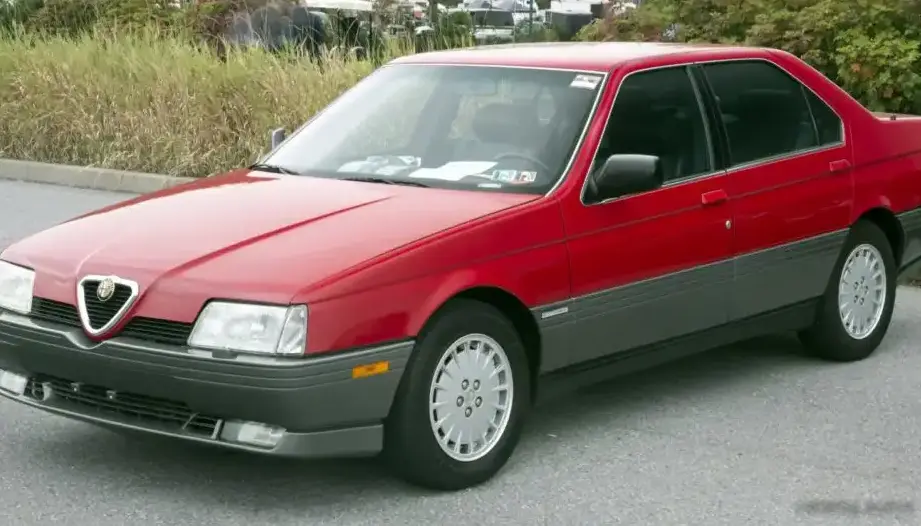
The Alfa Romeo 164 2.0 Twin Spark, produced between 1987 and 1990, represented the entry point into the sophisticated 164 range. Launched as a replacement for the aging Alfa 6, the 164 was a significant departure for Alfa Romeo, embracing a more modern, angular design penned by Pininfarina. This 2.0-liter variant, while not the performance flagship of the lineup, offered a compelling blend of Italian style, comfortable accommodations, and a relatively accessible price point, particularly in European markets. It was positioned as a more practical and economical alternative to the more powerful V6 models, appealing to buyers seeking a refined and stylish sedan for everyday use. The 164 was built on the Tipo Quattro platform, shared with the Lancia Thema, Fiat Croma, and Saab 9000, providing a solid foundation for its blend of performance and comfort.
Technical Specifications
| Brand | Alfa Romeo |
| Model | 164 |
| Generation | 164 (164) |
| Type (Engine) | 2.0 Twin Spark (148 Hp) |
| Start of production | 1987 |
| End of production | 1990 |
| Powertrain Architecture | Internal Combustion engine |
| Body type | Sedan |
| Seats | 5 |
| Doors | 4 |
| Fuel consumption (urban) | 10 l/100 km (23.5 US mpg) |
| Fuel consumption (extra urban) | 6.5 l/100 km (36.2 US mpg) |
| Fuel consumption (combined) | 8.5 l/100 km (27.7 US mpg) |
| Fuel Type | Petrol (Gasoline) |
| Acceleration 0 – 100 km/h | 9.2 sec |
| Acceleration 0 – 62 mph | 9.2 sec |
| Acceleration 0 – 60 mph | 8.7 sec |
| Maximum speed | 210 km/h (130.49 mph) |
| Weight-to-power ratio | 8.1 kg/Hp |
| Weight-to-torque ratio | 6.5 kg/Nm |
| Power | 148 Hp @ 5800 rpm |
| Torque | 186 Nm @ 4000 rpm (137.19 lb.-ft. @ 4000 rpm) |
| Engine layout | Front, Transverse |
| Engine Model/Code | 064.20, 64.103, 064.16 |
| Engine displacement | 1962 cm3 (119.73 cu. in.) |
| Number of cylinders | 4 |
| Engine configuration | Inline |
| Cylinder Bore | 84 mm (3.31 in.) |
| Piston Stroke | 88.5 mm (3.48 in.) |
| Compression ratio | 10:1 |
| Number of valves per cylinder | 2 |
| Fuel injection system | Multi-port manifold injection |
| Engine aspiration | Naturally aspirated engine |
| Valvetrain | DOHC |
| Engine oil capacity | 5.5 l (5.81 US qt | 4.84 UK qt) |
| Coolant capacity | 9 l (9.51 US qt | 7.92 UK qt) |
| Kerb Weight | 1200 kg (2645.55 lbs.) |
| Max. weight | 1625 kg (3582.51 lbs.) |
| Max load | 425 kg (936.96 lbs.) |
| Trunk (boot) space – minimum | 505 l (17.83 cu. ft.) |
| Fuel tank capacity | 70 l (18.49 US gal | 15.4 UK gal) |
| Length | 4555 mm (179.33 in.) |
| Width | 1760 mm (69.29 in.) |
| Height | 1400 mm (55.12 in.) |
| Wheelbase | 2660 mm (104.72 in.) |
| Front track | 1515 mm (59.65 in.) |
| Rear track | 1490 mm (58.66 in.) |
| Drivetrain Architecture | Front wheel drive |
| Number of gears | 5 gears, manual transmission |
| Front suspension | Wishbone |
| Rear suspension | Several levers and rods |
| Front brakes | Ventilated discs |
| Rear brakes | Disc |
| Assisting systems | ABS (Anti-lock braking system) |
| Steering type | Steering rack and pinion |
| Power steering | Hydraulic Steering |
| Tires size | 195/65 R 15 |
Powertrain & Engine Architecture
The heart of the 164 2.0 Twin Spark is the Alfa Romeo 1962cc inline-four cylinder engine, designated with engine codes like 064.20, 64.103, and 064.16. This engine is characterized by its dual overhead camshafts (DOHC) and two valves per cylinder, hence the “Twin Spark” moniker. The engine utilizes Bosch Motronic fuel injection, a multi-port system that delivers precise fuel metering for improved efficiency and responsiveness. The 164 2.0 Twin Spark’s engine was designed to provide a balance between performance and fuel economy. The five-speed manual transmission was standard, offering a relatively direct connection to the engine. The transmission’s gear ratios were tuned for everyday drivability, prioritizing smooth shifts and acceptable acceleration rather than outright performance.
Driving Characteristics
The 164 2.0 Twin Spark offered a distinctly Italian driving experience. While not as quick as the V6 variants, the 148 horsepower engine provided adequate power for comfortable cruising and overtaking. Acceleration from 0-60 mph took around 8.7 seconds, and top speed was approximately 130 mph. The engine’s torque curve was relatively flat, providing usable power throughout the rev range. The front-wheel-drive configuration contributed to predictable handling, although it lacked the dynamic finesse of the later Q4 all-wheel-drive models. Compared to the more powerful 164 3.0 V6, the 2.0 Twin Spark felt less urgent, but it offered a more forgiving and accessible driving experience. The manual transmission, while not particularly sporty, was precise and easy to use.
Equipment & Trim Levels
The 164 2.0 Twin Spark typically came equipped with a respectable level of standard features. Interior appointments included cloth upholstery, power windows, central locking, and an AM/FM radio. The dashboard layout was clean and functional, with a focus on ergonomics. Optional extras included leather upholstery, a sunroof, and upgraded audio systems. The trim level was generally considered the base model, offering a more affordable entry point into the 164 range. The interior materials, while of good quality for the time, were not as luxurious as those found in the higher-spec V6 models.
Chassis & Braking
The 164 2.0 Twin Spark utilized a front-wheel-drive chassis with independent wishbone suspension at the front and a multi-link rear suspension. This suspension setup provided a comfortable ride quality, absorbing bumps and imperfections in the road effectively. The braking system consisted of ventilated discs at the front and solid discs at the rear, supplemented by an anti-lock braking system (ABS) as standard equipment. The ABS system enhanced braking performance and stability, particularly in adverse weather conditions. The steering was rack-and-pinion with hydraulic power assistance, providing light and precise steering feel.
Market Reception & Comparison
The Alfa Romeo 164 2.0 Twin Spark was generally well-received by automotive critics. It was praised for its stylish design, comfortable interior, and refined driving experience. However, some critics noted that the 2.0-liter engine lacked the performance to fully exploit the chassis’ potential. Compared to other sedans in its class, such as the BMW 5 Series and Mercedes-Benz E-Class, the 164 2.0 Twin Spark offered a more distinctive and characterful driving experience, but it lacked the same level of outright performance and build quality. Fuel economy was respectable for the time, averaging around 27.7 US mpg in combined driving. Reliability was generally considered average, with some owners reporting issues with electrical components and cooling system components.
Legacy
The Alfa Romeo 164 2.0 Twin Spark remains a popular choice among Alfa Romeo enthusiasts today. Its relatively affordable price, combined with its classic Italian styling and enjoyable driving experience, make it an attractive option in the used car market. The 2.0-liter Twin Spark engine is generally considered to be reliable, although regular maintenance is essential to prevent issues. Parts availability can be a challenge, but a dedicated network of Alfa Romeo specialists and online retailers can provide support. The 164 2.0 Twin Spark represents a significant chapter in Alfa Romeo’s history, showcasing the brand’s commitment to style, performance, and driving pleasure.