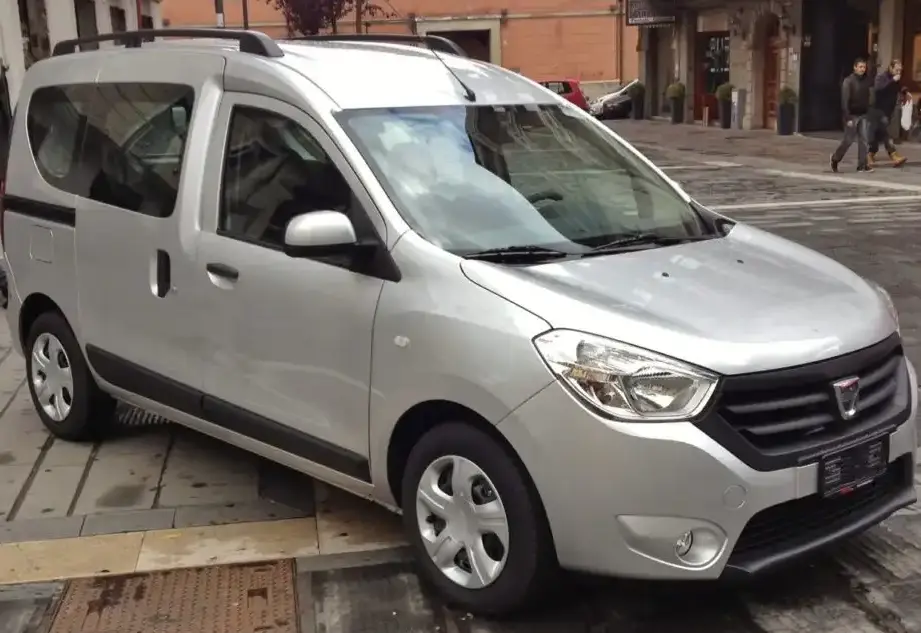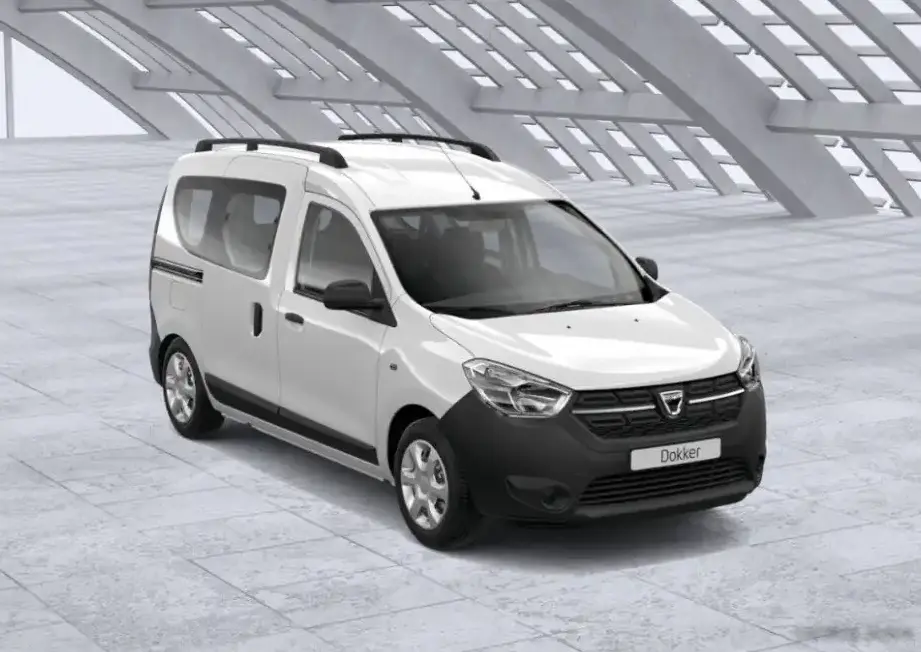
The Dacia Dokker 1.3 TCe (131 hp) represents a significant iteration of the Dokker model, a small MPV produced by the Romanian manufacturer Dacia, owned by Renault. Introduced with the facelift in 2017 and produced through November 2020, this variant aimed to balance practicality, affordability, and a degree of improved performance within the Dokker lineup. It primarily served the European market, offering a budget-friendly, versatile vehicle for families and commercial users. This specific engine and power output positioned it as a mid-range option, bridging the gap between the lower-powered engines and the more expensive, higher-specification trims.
Technical Specifications
| Brand | Dacia |
| Model | Dokker |
| Generation | Dokker (facelift 2017) |
| Type (Engine) | 1.3 TCe (131 Hp) |
| Start of production | January, 2019 |
| End of production | November, 2020 |
| Powertrain Architecture | Internal Combustion engine |
| Body type | MPV |
| Seats | 5 |
| Doors | 5 |
| Combined fuel consumption (WLTP) | 7.1-7.2 l/100 km (33.1 – 32.7 US mpg, 39.8 – 39.2 UK mpg, 14.1 – 13.9 km/l) |
| CO2 emissions (WLTP) | 161-163 g/km |
| Fuel consumption (economy) – urban (NEDC) | 7.6 l/100 km (30.9 US mpg, 37.2 UK mpg, 13.2 km/l) |
| Fuel consumption (economy) – extra urban (NEDC) | 5.3 l/100 km (44.4 US mpg, 53.3 UK mpg, 18.9 km/l) |
| Fuel consumption (economy) – combined (NEDC) | 6.1 l/100 km (38.6 US mpg, 46.3 UK mpg, 16.4 km/l) |
| CO2 emissions (NEDC) | 140 g/km |
| Fuel Type | Petrol (Gasoline) |
| Acceleration 0 – 100 km/h | 9.2 sec |
| Acceleration 0 – 62 mph | 9.2 sec |
| Acceleration 0 – 60 mph | 8.7 sec |
| Maximum speed | 189 km/h (117.44 mph) |
| Emission standard | Euro 6d-TEMP |
| Weight-to-power ratio | 10 kg/Hp, 100.2 Hp/tonne |
| Weight-to-torque ratio | 5.9 kg/Nm, 168.2 Nm/tonne |
| Power | 131 Hp @ 5000 rpm |
| Power per litre | 98.3 Hp/l |
| Torque | 220 Nm @ 1750 rpm (162.26 lb.-ft. @ 1750 rpm) |
| Engine layout | Front, Transverse |
| Engine Model/Code | H5H 470 |
| Engine displacement | 1332 cm3 (81.28 cu. in.) |
| Number of cylinders | 4 |
| Engine configuration | Inline |
| Number of valves per cylinder | 4 |
| Fuel injection system | Direct injection |
| Engine aspiration | Turbocharger, Intercooler |
| Engine oil capacity | 5.4 l (5.71 US qt | 4.75 UK qt) |
| Coolant | 5.45 l (5.76 US qt | 4.8 UK qt) |
| Kerb Weight | 1308 kg (2883.65 lbs.) |
| Max. weight | 1840 kg (4056.51 lbs.) |
| Max load | 532 kg (1172.86 lbs.) |
| Trunk (boot) space – minimum | 800 l (28.25 cu. ft.) |
| Trunk (boot) space – maximum | 3000 l (105.94 cu. ft.) |
| Fuel tank capacity | 50 l (13.21 US gal | 11 UK gal) |
| Permitted trailer load with brakes (12%) | 1200 kg (2645.55 lbs.) |
| Permitted trailer load without brakes | 650 kg (1433 lbs.) |
| Length | 4363 mm (171.77 in.) |
| Width | 1751 mm (68.94 in.) |
| Width including mirrors | 2004 mm (78.9 in.) |
| Height | 1814-1852 mm (71.42 – 72.91 in.) |
| Wheelbase | 2810 mm (110.63 in.) |
| Front track | 1490 mm (58.66 in.) |
| Rear (Back) track | 1478 mm (58.19 in.) |
| Front overhang | 822 mm (32.36 in.) |
| Rear overhang | 731 mm (28.78 in.) |
| Ride height (ground clearance) | 153-190 mm (6.02 – 7.48 in.) |
| Minimum turning circle (turning diameter) | 11.1 m (36.42 ft.) |
| Drivetrain Architecture | The Internal combustion engine (ICE) drives the front wheels of the vehicle. |
| Drive wheel | Front wheel drive |
| Number of gears and type of gearbox | 6 gears, manual transmission |
| Front brakes | Ventilated discs, 280×24 mm |
| Rear brakes | Drum |
| Assisting systems | ABS (Anti-lock braking system) |
| Steering type | Steering rack and pinion |
| Power steering | Hydraulic Steering |
| Tires size | 195/55 R16 |
| Wheel rims size | 6J x 16 |
Powertrain & Engine Architecture
The heart of the Dokker 1.3 TCe is the H5H 470 engine, a 1332cc inline-four cylinder petrol engine. This engine is part of Renault’s newer generation of turbocharged engines, designed for improved efficiency and performance. It utilizes direct fuel injection, a technology that precisely delivers fuel into the combustion chamber, optimizing combustion and reducing emissions. The engine also features a turbocharger and intercooler, which force more air into the cylinders, boosting power output. The 131 hp output is achieved at 5000 rpm, while the peak torque of 220 Nm (162.26 lb.-ft.) is available from as low as 1750 rpm, providing good low-end responsiveness. The engine is transversely mounted at the front of the vehicle. The Dokker 1.3 TCe was exclusively offered with a 6-speed manual transmission, prioritizing fuel economy and driver engagement over the convenience of an automatic.
Driving Characteristics
The 1.3 TCe engine provides a noticeable improvement in performance compared to the lower-powered engine options available in the Dokker range. Acceleration from 0-100 km/h (0-62 mph) takes around 9.2 seconds, making it reasonably sprightly for everyday driving. The turbocharger provides a good surge of power in the mid-range, making overtaking maneuvers easier. However, it’s not a particularly fast vehicle, and the engine can feel strained when fully loaded or climbing steep hills. The 6-speed manual transmission is well-matched to the engine, offering precise shifts and allowing the driver to keep the engine in its optimal power band. The gear ratios are tuned for fuel efficiency, but also provide enough flexibility for various driving conditions. Compared to a hypothetical Dokker with a diesel engine, the 1.3 TCe offers a more responsive and refined driving experience, albeit with slightly higher fuel consumption.
Equipment & Trim Levels
The Dokker 1.3 TCe typically came equipped with a reasonable level of standard features, positioning it as a mid-range offering. These included air conditioning, power steering, electric front windows, a basic audio system with USB connectivity, and ABS brakes. Higher trim levels added features such as alloy wheels, rear parking sensors, a touchscreen infotainment system with navigation, and cruise control. Interior upholstery was typically cloth, with a durable and practical design. Optional extras included metallic paint, fog lights, and a panoramic sunroof. The Dokker’s interior is characterized by its practicality and spaciousness, with ample headroom and legroom for passengers. The rear seats can be folded down to create a large cargo area, making it a versatile vehicle for carrying both passengers and goods.
Chassis & Braking
The Dokker utilizes a relatively simple chassis design, featuring a MacPherson strut front suspension and a torsion beam rear suspension. This setup provides a comfortable ride quality, but doesn’t offer particularly sporty handling. The front brakes are ventilated discs, providing adequate stopping power, while the rear brakes are drums, a cost-saving measure common in this segment. ABS (Anti-lock Braking System) is standard, enhancing safety during emergency braking. The steering is hydraulic, providing a reasonably direct and responsive feel. The Dokker’s suspension is tuned for comfort and practicality, prioritizing ride quality over handling precision. Stabilizer bars are present, helping to reduce body roll during cornering, but the vehicle is not designed for aggressive driving.
Market Reception & Comparison
The Dacia Dokker 1.3 TCe was generally well-received by critics as a practical and affordable MPV. It was praised for its spacious interior, versatility, and fuel efficiency. However, it was also criticized for its relatively basic interior, lack of refinement, and somewhat underwhelming performance. Compared to other MPVs in its class, such as the Citroën Berlingo and Renault Kangoo, the Dokker offered a more affordable price point, but lacked some of the features and refinement of its rivals. Fuel economy was competitive, with combined fuel consumption figures ranging from 7.1 to 7.2 l/100 km. Reliability was generally good, with the 1.3 TCe engine proving to be a relatively robust unit.
Legacy
The Dacia Dokker 1.3 TCe has established itself as a reliable and affordable option in the used car market. The 1.3 TCe engine has proven to be relatively durable, with few major issues reported. Maintenance costs are generally low, thanks to the vehicle’s simple design and readily available parts. While it may not offer the same level of refinement or performance as some of its rivals, the Dokker 1.3 TCe remains a practical and versatile choice for families and commercial users looking for an affordable MPV. Its spacious interior, fuel efficiency, and low running costs continue to make it an attractive option for budget-conscious buyers.