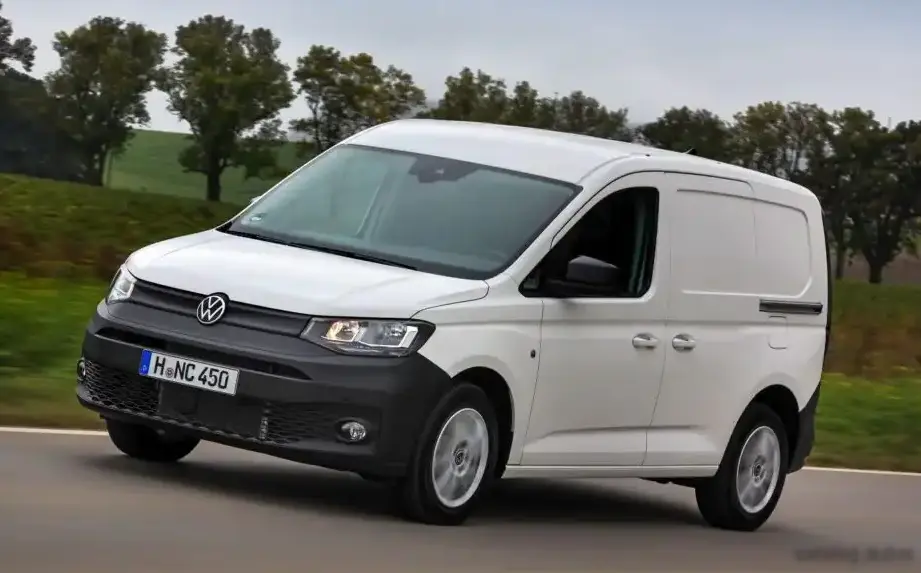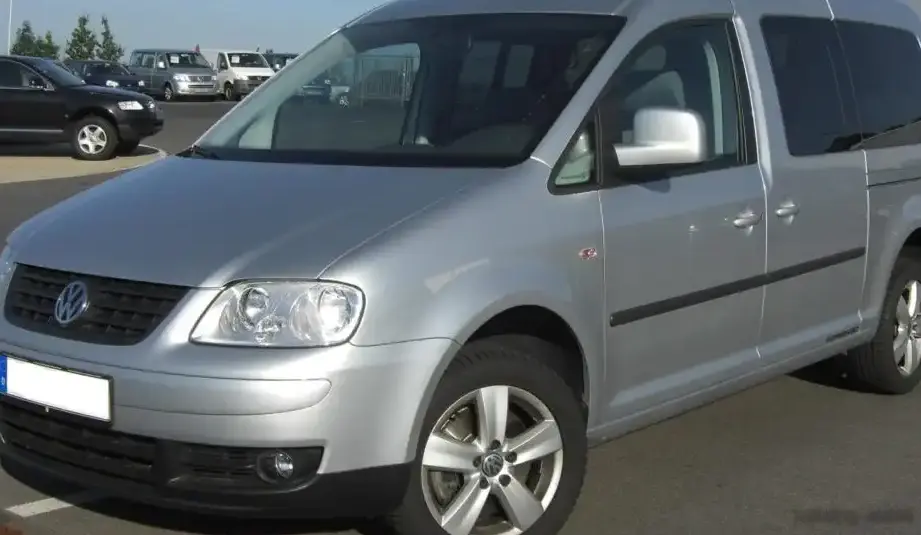
The Volkswagen Caddy Maxi III 1.9 TDI (105 hp) DSG was a popular configuration of Volkswagen’s versatile panel van and passenger vehicle, produced between 2007 and 2010. Positioned as a mid-range offering within the Caddy Maxi III lineup, it combined the fuel efficiency of a diesel engine with the convenience of a dual-clutch gearbox (DSG). This variant aimed to balance practicality, economy, and ease of driving for both commercial and family users. The Caddy Maxi III, built on the Volkswagen Group’s PQ35 platform (also known as the A5 platform), represented a significant increase in interior space and load capacity compared to its predecessor, making it a compelling option in the compact van segment.
Technical Specifications
| Brand | Volkswagen |
| Model | Caddy |
| Generation | Caddy Maxi III |
| Type (Engine) | 1.9 TDI (105 Hp) DSG |
| Start of production | 2007 |
| End of production | 2010 |
| Powertrain Architecture | Internal Combustion engine |
| Body type | Minivan |
| Seats | 7 |
| Doors | 4-5 |
| Fuel consumption (urban) | 8.3 l/100 km (28.3 US mpg, 34 UK mpg, 12 km/l) |
| Fuel consumption (extra urban) | 6 l/100 km (39.2 US mpg, 47.1 UK mpg, 16.7 km/l) |
| Fuel consumption (combined) | 6.9 l/100 km (34.1 US mpg, 40.9 UK mpg, 14.5 km/l) |
| Fuel Type | Diesel |
| Acceleration 0 – 100 km/h | 13.5 sec |
| Acceleration 0 – 62 mph | 13.5 sec |
| Acceleration 0 – 60 mph | 12.8 sec |
| Maximum speed | 166 km/h (103.15 mph) |
| Emission standard | Euro 4 |
| Weight-to-power ratio | 14.8 kg/Hp, 67.4 Hp/tonne |
| Weight-to-torque ratio | 6.2 kg/Nm, 160.5 Nm/tonne |
| Power | 105 Hp @ 4000 rpm |
| Power per litre | 55.4 Hp/l |
| Torque | 250 Nm @ 1900 rpm (184.39 lb.-ft. @ 1900 rpm) |
| Engine layout | Front, Transverse |
| Engine Model/Code | EA188 / BJB |
| Engine displacement | 1896 cm3 (115.7 cu. in.) |
| Number of cylinders | 4 |
| Engine configuration | Inline |
| Cylinder Bore | 79.5 mm (3.13 in.) |
| Piston Stroke | 95.5 mm (3.76 in.) |
| Compression ratio | 19:1 |
| Number of valves per cylinder | 2 |
| Fuel injection system | Pump-nozzle (Unit Injector) |
| Engine aspiration | Turbocharger, Intercooler |
| Engine oil capacity | 4.3 l (4.54 US qt | 3.78 UK qt) |
| Coolant | 8 l (8.45 US qt | 7.04 UK qt) |
| Kerb Weight | 1558-1664 kg (3434.8 – 3668.49 lbs.) |
| Max. weight | 2370 kg (5224.96 lbs.) |
| Max load | 706-812 kg (1556.46 – 1790.15 lbs.) |
| Trunk (boot) space – minimum | 530 l (18.72 cu. ft.) |
| Trunk (boot) space – maximum | 3950 l (139.49 cu. ft.) |
| Fuel tank capacity | 60 l (15.85 US gal | 13.2 UK gal) |
| Permitted trailer load with brakes (8%) | 1500 kg (3306.93 lbs.) |
| Permitted trailer load with brakes (12%) | 1500 kg (3306.93 lbs.) |
| Permitted trailer load without brakes | 750 kg (1653.47 lbs.) |
| Length | 4875 mm (191.93 in.) |
| Width | 1794 mm (70.63 in.) |
| Width including mirrors | 2062 mm (81.18 in.) |
| Height | 1834 mm (72.2 in.) |
| Wheelbase | 3002 mm (118.19 in.) |
| Front track | 1537 mm (60.51 in.) |
| Rear (Back) track | 1542 mm (60.71 in.) |
| Front overhang | 880 mm (34.65 in.) |
| Rear overhang | 993 mm (39.09 in.) |
| Ride height (ground clearance) | 173 mm (6.81 in.) |
| Minimum turning circle (turning diameter) | 12.2 m (40.03 ft.) |
| Drivetrain Architecture | The Internal combustion engine (ICE) drives the front wheels of the vehicle. |
| Drive wheel | Front wheel drive |
| Number of gears and type of gearbox | 6 gears, automatic transmission DSG |
| Front suspension | Independent, type McPherson with coil spring and anti-roll bar |
| Rear suspension | Leaf spring |
| Front brakes | Ventilated discs |
| Rear brakes | Disc |
| Assisting systems | ABS (Anti-lock braking system) |
| Steering type | Steering rack and pinion |
| Power steering | Electric Steering |
| Tires size | 205/55 R16 |
| Wheel rims size | 16 |
INTRODUCTION
The Volkswagen Caddy Maxi III 1.9 TDI (105 hp) DSG, produced from 2007 to 2010, was a key variant within the third generation of the Caddy Maxi. The Caddy Maxi, an extended wheelbase version of the standard Caddy, offered significantly increased cargo and passenger space. This model catered to a broad audience, from families needing a spacious and practical vehicle to small businesses requiring a reliable and economical van. The 1.9 TDI engine, coupled with the 6-speed DSG transmission, provided a balance between fuel efficiency, reasonable performance, and driving convenience. It occupied a middle ground in the Caddy Maxi III range, offering a step up in refinement and ease of use compared to the base models, while remaining more affordable than the higher-powered TDI variants.
Powertrain & Engine Architecture
At the heart of the Caddy Maxi III 1.9 TDI (105 hp) DSG lies the EA188 series 1.9-liter inline-four diesel engine, specifically the BJB engine code. This engine utilized a pump-nozzle (unit injector) fuel injection system, a technology known for its precise fuel delivery and efficiency. The engine featured a single overhead camshaft (SOHC) operating two valves per cylinder. A turbocharger with an intercooler was employed to boost power and torque. The 105 horsepower output was achieved at 4000 rpm, while peak torque of 250 Nm (184 lb-ft) was available from a low 1900 rpm, providing good pulling power for a vehicle of this type. The engine’s transverse mounting and front-wheel-drive configuration contributed to its compact footprint. The 6-speed DSG (Direct-Shift Gearbox) transmission offered quick and smooth gear changes, enhancing the driving experience compared to a traditional automatic transmission. The DSG utilizes two separate clutches for odd and even gears, allowing for pre-selection of the next gear and minimizing interruption in power delivery.
Driving Characteristics
The Caddy Maxi III 1.9 TDI (105 hp) DSG offered a comfortable and practical driving experience. While not particularly sporty, the engine provided adequate power for everyday driving and hauling loads. The DSG transmission contributed to smooth acceleration and responsive gear changes. The 6-speed configuration helped to keep engine speeds relatively low at highway speeds, improving fuel economy and reducing noise. Compared to the more powerful 2.0 TDI variants, the 1.9 TDI felt less eager to accelerate, particularly when fully loaded. However, the lower power output also translated to better fuel economy. The gear ratios were tuned for practicality and efficiency, prioritizing low-end torque over outright speed. The front-wheel-drive layout provided predictable handling, although it could exhibit some torque steer under hard acceleration. The suspension, tuned for comfort, absorbed bumps and imperfections in the road reasonably well, making it a pleasant vehicle for long journeys.
Equipment & Trim Levels
The Caddy Maxi III 1.9 TDI (105 hp) DSG typically came equipped with a reasonable level of standard features. These included power windows, central locking, an audio system (often with CD player), and ABS brakes. Air conditioning was often included, but could be an optional extra depending on the specific market and trim level. Interior upholstery was typically cloth, with durable and practical materials used throughout the cabin. Higher trim levels offered upgrades such as alloy wheels, upgraded audio systems, and parking sensors. The Caddy Maxi’s modular interior allowed for flexible seating configurations, with options for folding rear seats and removable cargo area panels. Optional extras included a sunroof, navigation system, and various comfort and convenience features.
Chassis & Braking
The Caddy Maxi III utilized an independent McPherson strut suspension setup at the front, providing good handling and ride comfort. The rear suspension employed a leaf spring design, a cost-effective solution that offered adequate load-carrying capacity. Front brakes were ventilated discs, providing strong stopping power, while rear brakes were typically solid discs. ABS (Anti-lock Braking System) was standard, enhancing safety and stability during braking. The steering system was a rack and pinion type with electric power assistance, offering precise and responsive steering feel. The vehicle’s relatively high center of gravity and front-wheel-drive layout meant that it wasn’t a particularly sporty handler, but it provided predictable and safe handling characteristics.
Market Reception & Comparison
The Caddy Maxi III 1.9 TDI (105 hp) DSG was generally well-received by critics and buyers alike. It was praised for its practicality, fuel efficiency, and comfortable ride. Compared to the higher-powered TDI variants, the 1.9 TDI offered a more affordable entry point into the Caddy Maxi range. However, some critics noted that the engine could feel underpowered when fully loaded or when driving uphill. In terms of fuel economy, the 1.9 TDI outperformed the 2.0 TDI models, making it an attractive option for those prioritizing running costs. Compared to competitors such as the Citroën Berlingo and Renault Kangoo, the Caddy Maxi offered a more refined interior and a more sophisticated driving experience.
Legacy
The Volkswagen Caddy Maxi III 1.9 TDI (105 hp) DSG has proven to be a reliable and durable vehicle. The 1.9 TDI engine, while not the most technologically advanced, is known for its robustness and longevity. The DSG transmission, when properly maintained, is also generally reliable. Today, these vehicles can be found on the used car market at relatively affordable prices. Common issues include wear and tear on suspension components, and potential problems with the DSG transmission if maintenance has been neglected. However, with regular servicing and preventative maintenance, these vehicles can continue to provide years of reliable service. The Caddy Maxi III 1.9 TDI (105 hp) DSG remains a popular choice for those seeking a practical, economical, and versatile vehicle.