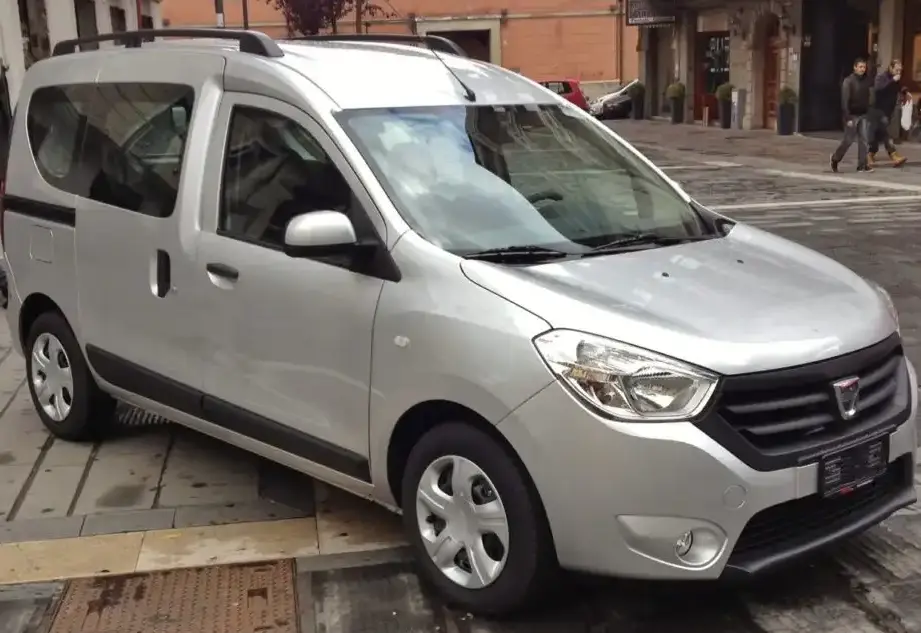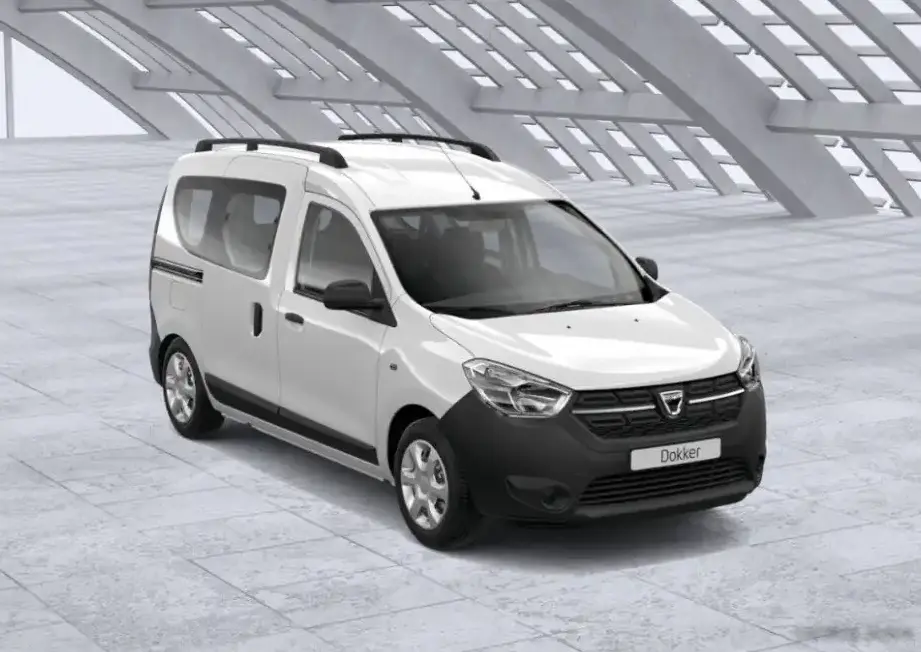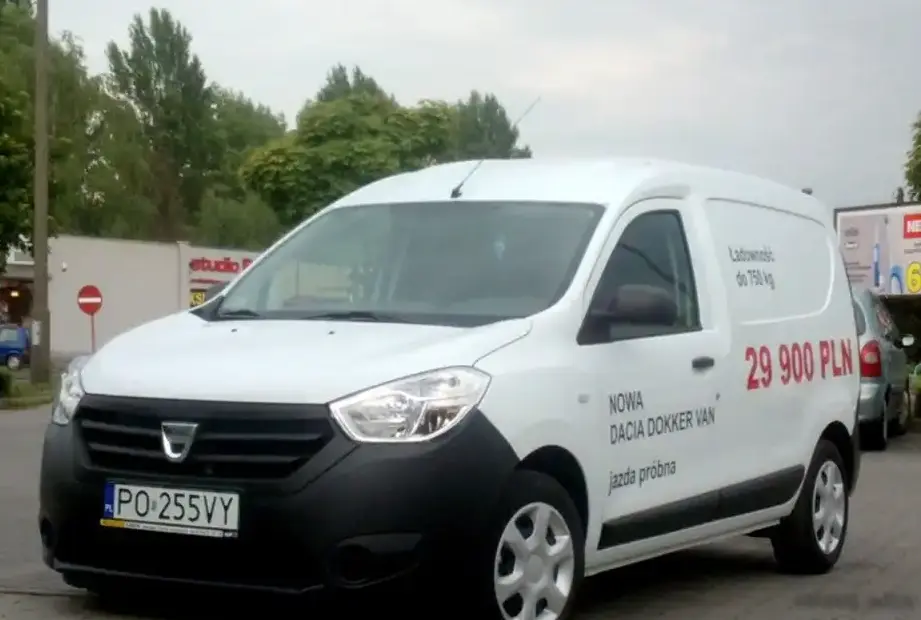
The Dacia Dokker Van 1.5 dCi (90 hp) with a Diesel Particulate Filter (FAP) was a commercially-oriented vehicle produced by the Romanian manufacturer Dacia between March 2013 and March 2017. Positioned as an entry-level workhorse within the Dokker Van range, it offered a practical and affordable solution for small businesses and tradespeople. The Dokker Van itself is based on the Dacia Logan MCV platform, sharing many components with its passenger-carrying counterpart, but optimized for cargo capacity and utility. This particular 90 horsepower variant represented a balance between fuel efficiency and adequate performance for typical urban and regional delivery tasks.
Technical Specifications
| Brand | Dacia |
| Model | Dokker |
| Generation | Dokker Van |
| Type (Engine) | 1.5 dCi (90 Hp) FAP |
| Start of production | March, 2013 |
| End of production | March, 2017 |
| Powertrain Architecture | Internal Combustion engine |
| Body type | Minivan |
| Seats | 2 |
| Doors | 5 |
| Fuel consumption (urban) | 5.2 l/100 km (45.2 US mpg, 54.3 UK mpg, 19.2 km/l) |
| Fuel consumption (extra urban) | 4.1 l/100 km (57.4 US mpg, 68.9 UK mpg, 24.4 km/l) |
| Fuel consumption (combined) | 4.5 l/100 km (52.3 US mpg, 62.8 UK mpg, 22.2 km/l) |
| Fuel Type | Diesel |
| Acceleration 0 – 100 km/h | 13.9 sec |
| Acceleration 0 – 62 mph | 13.9 sec |
| Acceleration 0 – 60 mph | 13.2 sec |
| Maximum speed | 162 km/h (100.66 mph) |
| Weight-to-power ratio | 13.2 kg/Hp, 75.7 Hp/tonne |
| Weight-to-torque ratio | 5.9 kg/Nm, 168.2 Nm/tonne |
| Power | 90 Hp @ 3750 rpm |
| Power per litre | 61.6 Hp/l |
| Torque | 200 Nm @ 1750 rpm (147.51 lb.-ft. @ 1750 rpm) |
| Engine layout | Front, Transverse |
| Engine Model/Code | K9K 612 |
| Engine displacement | 1461 cm3 (89.16 cu. in.) |
| Number of cylinders | 4 |
| Engine configuration | Inline |
| Number of valves per cylinder | 2 |
| Fuel injection system | Diesel Commonrail |
| Engine aspiration | Turbocharger, Intercooler |
| Engine oil capacity | 4.5 l (4.76 US qt | 3.96 UK qt) |
| Coolant capacity | 4.5 l (4.76 US qt | 3.96 UK qt) |
| Kerb Weight | 1189 kg (2621.3 lbs) |
| Max. weight | 1959 kg (4318.86 lbs) |
| Max load | 770 kg (1697.56 lbs) |
| Trunk (boot) space – minimum | 3300 l (116.54 cu. ft) |
| Trunk (boot) space – maximum | 3900 l (137.73 cu. ft) |
| Fuel tank capacity | 50 l (13.21 US gal | 11 UK gal) |
| Length | 4363 mm (171.77 in) |
| Width | 1751 mm (68.94 in) |
| Height | 1809 mm (71.22 in) |
| Wheelbase | 2810 mm (110.63 in) |
| Drivetrain Architecture | The Internal combustion engine (ICE) drives the front wheels of the vehicle. |
| Drive wheel | Front wheel drive |
| Number of gears | 5 gears, manual transmission |
| Assisting systems | ABS (Anti-lock braking system) |
| Steering type | Steering rack and pinion |
| Tires size | 185/65 R15 |
| Wheel rims size | 15 |
Powertrain & Engine Architecture
The Dacia Dokker Van 1.5 dCi (90 hp) utilized the Renault-Nissan Alliance’s K9K 612 engine, a 1.5-liter inline-four cylinder diesel. This engine, a mainstay in many European small vehicles, is known for its relatively simple design and robust construction. The K9K 612 features a single overhead camshaft (SOHC) operating two valves per cylinder. Fuel is delivered via a common rail direct injection system, allowing for precise fuel metering and contributing to both efficiency and reduced emissions. A turbocharger with an intercooler is employed to boost power output, providing 90 horsepower at 3750 rpm and 200 Nm (147.51 lb-ft) of torque at 1750 rpm. The engine is equipped with a Diesel Particulate Filter (DPF) to meet Euro 5 emissions standards. The Dokker Van 1.5 dCi (90 hp) was exclusively offered with a five-speed manual transmission, designed for durability and ease of maintenance.
Driving Characteristics
The 90 hp engine in the Dokker Van provided adequate, though not exhilarating, performance. Acceleration from 0-60 mph took approximately 13.2 seconds, and top speed was around 100.66 mph. The engine’s torque peak at 1750 rpm meant that usable power was available from low engine speeds, making it suitable for carrying loads and navigating urban environments. However, when fully loaded or tackling steep inclines, the engine could feel strained, requiring frequent gear changes. Compared to higher-output versions of the Dokker Van, such as those with the 110 hp engine, the 90 hp variant offered a more economical driving experience, but at the expense of outright performance. The five-speed manual transmission was well-matched to the engine’s characteristics, providing a reasonable spread of gears for various driving conditions.
Equipment & Trim Levels
The Dokker Van 1.5 dCi (90 hp) was typically offered in a basic trim level, reflecting its commercial focus. Standard equipment generally included power steering, ABS brakes, a driver’s airbag, and a basic audio system. The interior was functional and durable, with hard-wearing plastic trim and cloth upholstery. The cargo area was the primary focus, offering a generous 3300 to 3900 liters of space depending on the rear seat configuration. Optional extras included air conditioning, a passenger airbag, and upgraded audio systems. The emphasis was on providing a practical and affordable vehicle for businesses, rather than luxury or extensive features.
Chassis & Braking
The Dokker Van utilized a simple yet effective chassis design. It featured a MacPherson strut front suspension and a twist beam rear suspension. The rear brakes were typically drum brakes, while the front brakes were disc brakes. This configuration was chosen to keep costs down and provide adequate stopping power for the vehicle’s weight class. The steering was a rack and pinion system, providing reasonable precision and feedback. The suspension was tuned for comfort and load-carrying capacity, rather than sporty handling. Stabilizer bars were often omitted or smaller in diameter to prioritize ride quality over cornering performance.
Market Reception & Comparison
The Dacia Dokker Van 1.5 dCi (90 hp) was generally well-received in the commercial vehicle market, particularly in Europe. Critics praised its affordability, practicality, and fuel efficiency. Compared to other small vans in its class, such as the Fiat Doblo Cargo and the Citroën Berlingo, the Dokker Van offered a compelling value proposition. The 90 hp engine was considered adequate for most urban delivery tasks, but some reviewers noted that it could feel underpowered when fully loaded. Fuel economy was a strong point, with combined fuel consumption figures around 52.3 US mpg. Reliability was generally good, owing to the engine’s simple design and robust construction.
Legacy
The Dacia Dokker Van 1.5 dCi (90 hp) has proven to be a reliable and durable workhorse for many small businesses. The K9K engine, while not known for its refinement, is generally considered to be long-lasting and relatively inexpensive to maintain. On the used car market, these vans are often available at very affordable prices, making them an attractive option for budget-conscious buyers. The simplicity of the design and the availability of spare parts contribute to its continued appeal. While newer vans offer more advanced technology and features, the Dokker Van 1.5 dCi (90 hp) remains a practical and economical choice for those seeking a no-frills, dependable commercial vehicle.