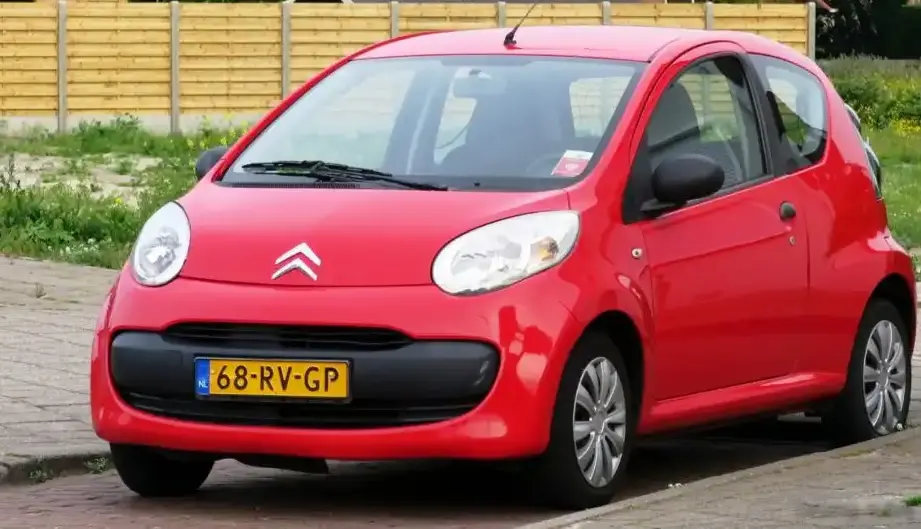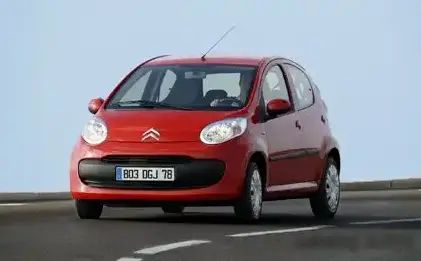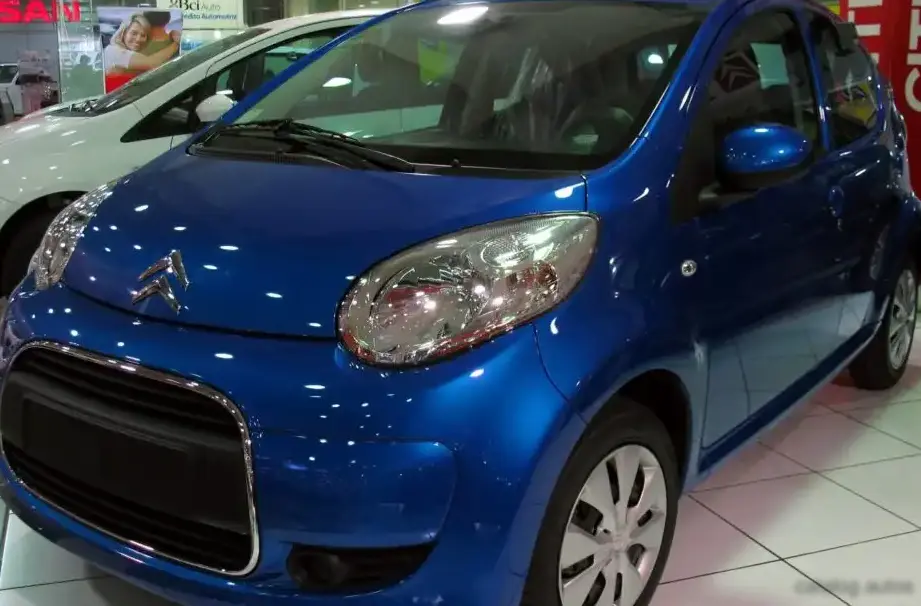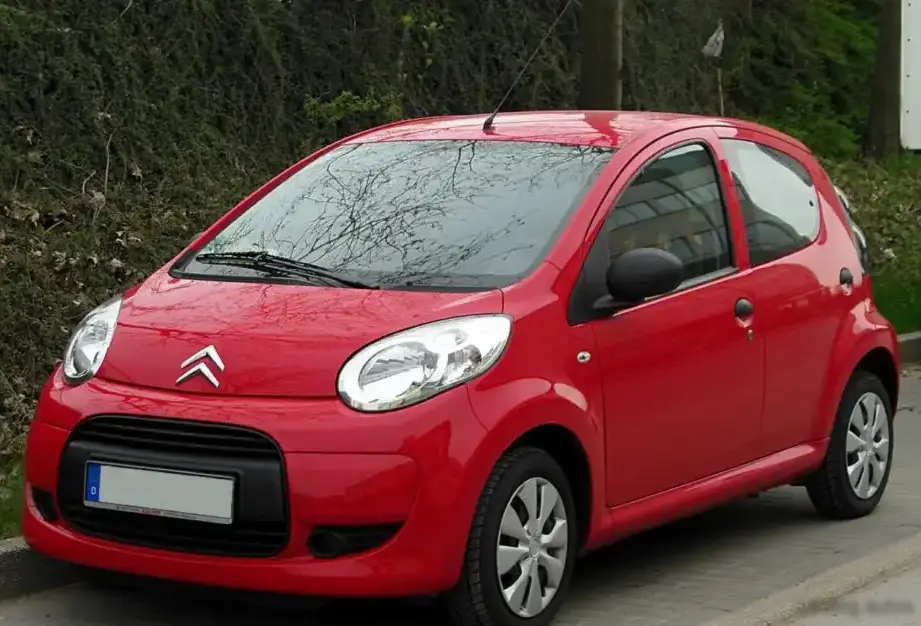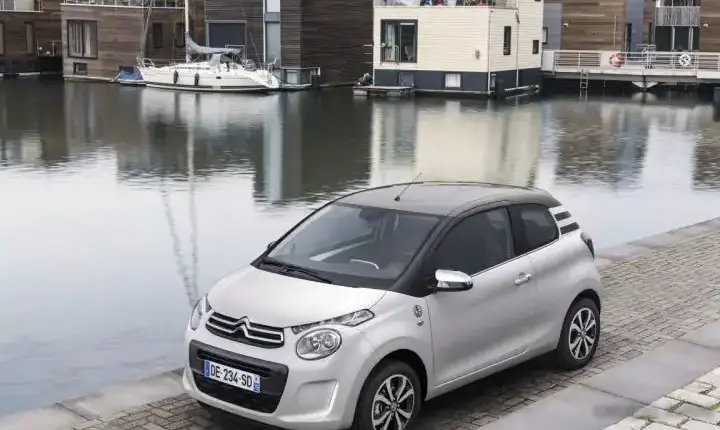
The Citroen C1 II Airscape 1.0 VTi (72 hp) S&S, produced from 2019 to 2022, represents a key variant within the second generation of Citroen’s city car. Positioned as an entry-level offering within the C1 II range, the Airscape trim focused on providing an affordable and fuel-efficient option for urban drivers. This 3-door hatchback, built on the shared Toyota-Citroen platform (often referred to as the A3 platform internally), aimed to deliver practicality and a touch of style in a compact package. The “S&S” designation indicates the inclusion of Citroen’s Stop & Start system, designed to improve fuel economy in city driving conditions. This particular model was primarily sold in the European market, where demand for small, economical vehicles remained strong.
Technical Specifications
| Brand | Citroen |
| Model | C1 |
| Generation | C1 II (Phase I, 2014 3-door) |
| Type (Engine) | Airscape 1.0 VTi (72 Hp) S&S |
| Start of production | April, 2019 |
| End of production | January, 2022 |
| Powertrain Architecture | Internal Combustion engine |
| Body type | Hatchback |
| Seats | 4 |
| Doors | 3 |
| Fuel consumption at Low speed (WLTP) | 5.4-5.5 l/100 km (43.6 – 42.8 US mpg, 52.3 – 51.4 UK mpg, 18.5 – 18.2 km/l) |
| Fuel consumption at Medium speed (WLTP) | 4.4-4.5 l/100 km (53.5 – 52.3 US mpg, 64.2 – 62.8 UK mpg, 22.7 – 22.2 km/l) |
| Fuel consumption at high speed (WLTP) | 4.1-4.2 l/100 km (57.4 – 56 US mpg, 68.9 – 67.3 UK mpg, 24.4 – 23.8 km/l) |
| Fuel consumption at very high speed (WLTP) | 5.4-5.5 l/100 km (43.6 – 42.8 US mpg, 52.3 – 51.4 UK mpg, 18.5 – 18.2 km/l) |
| Combined fuel consumption (WLTP) | 4.8-4.9 l/100 km (49 – 48 US mpg, 58.9 – 57.6 UK mpg, 20.8 – 20.4 km/l) |
| CO2 emissions (WLTP) | 108-111 g/km |
| Fuel consumption (economy) – urban (NEDC) | 4.3 l/100 km (54.7 US mpg, 65.7 UK mpg, 23.3 km/l) |
| Fuel consumption (economy) – extra urban (NEDC) | 3.4 l/100 km (69.2 US mpg, 83.1 UK mpg, 29.4 km/l) |
| Fuel consumption (economy) – combined (NEDC) | 3.7 l/100 km (63.6 US mpg, 76.3 UK mpg, 27 km/l) |
| CO2 emissions (NEDC) | 85 g/km |
| Fuel Type | Petrol (Gasoline) |
| Acceleration 0 – 100 km/h | 12.6 sec |
| Acceleration 0 – 62 mph | 12.6 sec |
| Acceleration 0 – 60 mph | 12 sec |
| Maximum speed | 160 km/h (99.42 mph) |
| Emission standard | Euro 6d |
| Weight-to-power ratio | 11.9 kg/Hp, 84.2 Hp/tonne |
| Weight-to-torque ratio | 9.2 kg/Nm, 108.8 Nm/tonne |
| Power | 72 Hp @ 6000 rpm |
| Power per litre | 72.1 Hp/l |
| Torque | 93 Nm @ 4400 rpm (68.59 lb.-ft. @ 4400 rpm) |
| Engine layout | Front, Transverse |
| Engine Model/Code | CFB 1KR |
| Engine displacement | 998 cm3 (60.9 cu. in.) |
| Number of cylinders | 3 |
| Engine configuration | Inline |
| Cylinder Bore | 71 mm (2.8 in.) |
| Piston Stroke | 84 mm (3.31 in.) |
| Number of valves per cylinder | 4 |
| Fuel injection system | Multi-port manifold injection |
| Engine aspiration | Naturally aspirated engine |
| Engine oil capacity | 3.1 l (3.28 US qt | 2.73 UK qt) |
| Coolant | 3.6 l (3.8 US qt | 3.17 UK qt) |
| Engine systems | Start & Stop System |
| Kerb Weight | 855 kg (1884.95 lbs.) |
| Max. weight | 1240 kg (2733.73 lbs.) |
| Max load | 385 kg (848.78 lbs.) |
| Trunk (boot) space – minimum | 196 l (6.92 cu. ft.) |
| Trunk (boot) space – maximum | 780 l (27.55 cu. ft.) |
| Fuel tank capacity | 35 l (9.25 US gal | 7.7 UK gal) |
| Length | 3466 mm (136.46 in.) |
| Width | 1615 mm (63.58 in.) |
| Width including mirrors | 1884 mm (74.17 in.) |
| Height | 1460 mm (57.48 in.) |
| Wheelbase | 2340 mm (92.13 in.) |
| Front track | 1425 mm (56.1 in.) |
| Rear (Back) track | 1420 mm (55.91 in.) |
| Front overhang | 666 mm (26.22 in.) |
| Rear overhang | 460 mm (18.11 in.) |
| Ride height (ground clearance) | 120 mm (4.72 in.) |
| Minimum turning circle (turning diameter) | 9.6 m (31.5 ft.) |
| Drivetrain Architecture | The Internal combustion engine (ICE) drives the front wheels of the vehicle. |
| Drive wheel | Front wheel drive |
| Number of gears and type of gearbox | 5 gears, manual transmission |
| Front suspension | Independent, type McPherson with coil spring and anti-roll bar |
| Rear suspension | Semi-independent, coil spring |
| Front brakes | Ventilated discs |
| Rear brakes | Drum |
| Assisting systems | ABS (Anti-lock braking system) |
| Steering type | Steering rack and pinion |
| Power steering | Electric Steering |
| Tires size | 165/65 R14; 165/60 R15 |
| Wheel rims size | 14; 15 |
INTRODUCTION
The Citroen C1 II Airscape 1.0 VTi (72 hp) S&S, launched in 2019, is a front-wheel-drive, three-door hatchback designed for urban mobility. As part of the second-generation C1 (introduced in 2014), this variant builds upon the collaborative platform shared with Toyota, resulting in a mechanically similar vehicle also sold as the Toyota Aygo. The Airscape trim level specifically denotes a focus on open-air driving enjoyment with a retractable fabric roof, differentiating it from the standard C1 hatchback. This model aimed to provide an affordable, economical, and stylish option for city dwellers, particularly appealing to younger drivers and those seeking a practical second car.
Powertrain & Engine Architecture
At the heart of the C1 Airscape 1.0 VTi S&S lies Citroen’s CFB 1KR, a 998cc inline three-cylinder petrol engine. This engine, part of Citroen’s PureTech family, utilizes a naturally aspirated configuration and multi-point fuel injection. The engine’s compact size and lightweight construction contribute to the C1’s overall efficiency. The “VTi” designation indicates variable valve timing on the intake side, optimizing performance and fuel economy. The engine produces 72 horsepower at 6000 rpm and 93 Nm (68.59 lb-ft) of torque at 4400 rpm. Paired with this engine is a 5-speed manual transmission, chosen for its simplicity and efficiency. The Stop & Start system automatically shuts off the engine when the vehicle comes to a halt, further reducing fuel consumption and emissions. The engine’s architecture is relatively simple, contributing to its reliability and ease of maintenance.
Driving Characteristics
The 1.0-liter engine, coupled with the 5-speed manual transmission, delivers modest but adequate performance for urban driving. Acceleration from 0 to 60 mph takes approximately 12 seconds, and the top speed is around 99 mph. The engine feels best suited to lower speeds, providing sufficient power for navigating city streets and merging into traffic. The gear ratios are tuned for fuel efficiency rather than outright performance, meaning the engine needs to be revved to extract maximum power. Compared to potential higher-output versions (which weren’t offered on this generation C1), the 72 hp variant prioritizes economy over speed. The lightweight nature of the C1 helps to mitigate the engine’s limited power, making it feel nimble and responsive in city environments. The manual transmission provides a direct connection to the engine, allowing for precise control and efficient gear changes.
Equipment & Trim Levels
The Airscape trim level, even as an entry-level offering, included several standard features. These typically included power steering, central locking, electric front windows, and an audio system with USB connectivity. Safety features such as ABS, Electronic Stability Control (ESC), and multiple airbags were also standard. The Airscape’s defining feature is its retractable fabric roof, providing an open-air driving experience. Interior upholstery was typically basic cloth, with a functional and durable design. Optional extras included air conditioning, alloy wheels, and a touchscreen infotainment system with navigation. The dashboard layout is simple and user-friendly, prioritizing ease of use over elaborate design.
Chassis & Braking
The C1 Airscape utilizes a McPherson strut front suspension and a semi-independent coil spring rear suspension. This setup provides a comfortable ride quality, well-suited for navigating uneven city roads. The front brakes are ventilated discs, offering adequate stopping power, while the rear brakes are drums, a cost-saving measure common in this segment. The steering is electrically assisted, providing light and precise control. The C1’s relatively lightweight construction contributes to its agile handling. Stabilizer bars are present to reduce body roll during cornering, enhancing stability.
Market Reception & Comparison
The Citroen C1 II Airscape 1.0 VTi S&S was generally well-received by critics for its affordability, fuel efficiency, and practicality. It was often praised as an ideal city car, easy to park and maneuver in tight spaces. Compared to other trims in the C1 lineup, the 1.0-liter engine offered the best fuel economy, making it an attractive option for budget-conscious buyers. However, some reviewers noted the engine’s lack of power, particularly when driving on highways or with a full load. Compared to competitors like the Fiat 500 and Volkswagen Up!, the C1 offered a more affordable price point, but with a less refined interior and driving experience. Its fuel economy figures were competitive within its class, and its reliability proved to be generally good.
Legacy
The Citroen C1 II Airscape 1.0 VTi S&S has established a reputation as a reliable and economical city car in the used car market. The 1KR engine, while not known for blistering performance, is generally considered durable and relatively inexpensive to maintain. The simplicity of the powertrain contributes to its long-term reliability. The Airscape’s retractable roof adds a unique appeal, making it a popular choice among those seeking a fun and affordable open-top experience. As a used car, it represents a good value proposition for buyers seeking a practical and economical urban vehicle.